Traditional Chinese restaurants take root in Chicago


 |
|
[Photo/Agencies] |
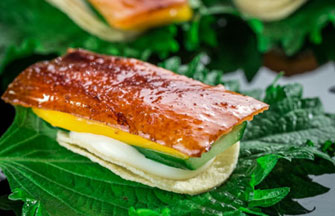
CHICAGO - Five Chinese restaurants representing the rich diversity of Chinese cuisine have become well established in Chicago's Chinatown, serving traditional Chinese foods popular among both Chinese and foreigners.
Lao Sze Chuan, Lao Beijing, Lao Shanghai, Lao You Ju and Lao Hunan represent the culinary styles of western, northern, eastern and central China. The five restaurants belong to the same owner, Chinese American Hu Xiaojun.
"Lao" in the Chinese language stands for tradition, authenticity and time-honored fame, though it literally means "old" in English, Hu said.
Hu, a native of Chengdu city in Sichuan province, graduated from Sichuan Higher Institute of Cuisine in 1989. After graduating from the institute, Hu became the deputy chief of Shudu Hotel. He also opened his own restaurant and taught cuisine in a military academy.
Hu came to the United States as a skilled worker in 1993 and served as a chef in a restaurant at 600 N Michigan Avenue in Chicago. China Smart Sourcing in Chicago recruited chefs from Sichuan at that time.
After coming to the United States, Hu worked hard and studied. At first, he majored in computer science. After saving money and accumulating experience, he decided to give up his studies and concentrate on cuisine again. As Hu worked in an American-style Chinese restaurant, he hoped that one day, he too could own his own restaurant that served genuine Chinese food.
LAO SZE CHUAN A HIT
After working in Chicago for four years, Hu opened "Lao Sze Chuan" (Old Sichuan Restaurant) in Chinatown. At first, Hu's friends discouraged him from opening a true Sichuan-style restaurant, as they worried that local customers could not stand the hot and spicy taste.
Yet Hu, an expert in Chinese cuisine, insisted on his dream. He said he believed that as long as anything was really good, it would finally be embraced by the public.
Hu told a little about how he came up with a name for his restaurant.
"Many restaurants have different names in Chinese and English. I told myself that I must have the same name both in English and Chinese; I hoped that foreign customers would get used to the Chinese name. As for the reason why I used the word 'Lao' instead of 'old,' I told friends that I must use the name 'Lao Sze Chuan' because 'Lao' here means traditional and genuine Sichuan cuisine."
Hu also explained how he chose a logo for his restaurant.
"Using the image of a hot pepper as a logo was designed by myself. The logo has four meanings: At first glance, it looks like a lovely hot pepper, as hot taste is the soul of Sichuan cuisine. Secondly, it looks like a crescent, as the moon is a symbol of longing for one's native town in traditional Chinese culture. Thirdly, it resembles a river, and Sichuan means the land of rivers. Fourthly, it resembles the letter 'C,' which can be linked to Chinese food and Chicago."
Hu has three criteria for the dishes served at his restaurant. They must be traditional Chinese dishes; they must currently be popular in China, and he visits China frequently to make sure this is the case; and there should be innovations. Therefore, his restaurant features a large menu.
A customer who only gave his name as Bechtel said, "I love the food here. We come here very often, almost once a week, or once every other week. The food here is better than other restaurants in Chinatown. The food here is very authentic, you know. I lived in China for some time. Many American restaurants have American Chinese food. But in this restaurant, it is the real Chinese food, and it's the best."
PROMOTING CHINESE CUISINE
Hu's business has prospered and expanded rapidly, attracting the attention of U.S. media. The publicity in turn further promoted Hu's business and helped his restaurants attract more customers.
In the first year when Hu arrived in Chicago, he taught how to cook Chinese food on a weekly TV program on Channel 13 in Chicago. In just two years, he was feted like a star on Chicago's Chinese food scene. The program help the local public gain a better understanding of Chinese cuisine, while his rising fame helped prepare him to start his own business. He also attended the annual event "Taste of Chicago" to promote Chinese cuisine. Lao Sze Chuan even became a Michelin star restaurant.
Hu also attended various social activities in addition to running his own business. He taught the homeless in Chicago how to cook Chinese food and gave lectures in Chicago's City Hall and Northwestern University.
Suprisingly, Hu has also become a political activist. When Richard Michael Daley, former mayor of Chicago, visited China in 2011, Hu was a member of his delegation. When Rahm Emanuel was running for mayor of Chicago, he went to Chinatown to meet Hu so as to win votes from the Chinese community. Hu said that the overseas Chinese should attend various social and political activities so that they could become better integrated in mainstream American society.
Regarding the future of Chinese cuisine, he said that Chinese restaurants have entered a new phase in overseas markets. What started out as family businesses have often evolved into high-quality and efficiently-run businesses. Encouraged by this growing popularity of Chinese cuisine in the United States, Hu said he now plans to open a higher-end Chinese restaurant in downtown Chicago.