Ghost Street, Food Paradise


 |
|
Ghost Street's red lanterns seem to bring good luck to both the restaurants and the diners. Provided to China Daily |
The heart of Beijing's culinary underground is a dim, red-lit alley that shimmers into life after dark and then fades at dawn. Han Bingbin explores the capital's famous Guijie.
Doing business in the midst of all the coffin shops and morticians under the dim halo of kerosene lamps, the vendors looked like ghosts. That's supposedly how Guijie first got its name.
But soon, people discovered there was a bit of the supernatural lurking as well.
According to long-time residents, many businesses have come and gone since the days of the coffin shops, morticians and the thoroughfare to the cemeteries. And many have gone bankrupt, including a State-owned department store.
Two things became apparent: Only restaurants seem to do well along Ghost Street, and only if they open after dark and conduct business in the night. And so, the superstitious believe that the spirits that linger are "hungry ghosts" who like to gather to the aroma of delicious food.
In these brash new days however, ghostly legends easily fade, and the shades from Hades are shunted aside in favor of culinary trends and distractions.
Ghost Street is now known as a paradise for the catering business. Today, the 1.5-km long alley is crowded with more than 150 shops, more than 90 percent of which are restaurants.
Its proximity to the Worker's Stadium where thousands of football fans and concert-goers gather periodically is a good guarantee that the restaurant owners at Guijie never have to worry about empty seats.
Every night, winter and summer alike, more than 4,000 people patronize the restaurants here, according to Xiang Kui, a manager at Hua's Restaurant, one of the street's oldest restaurants, which established its first outlet in Guijie in 1998.
Ghost Street has also become a tourist attraction. During the Beijing Olympics, waiters here were trained to understand and speak simple English, and restaurants started offering menus in English.
It is also near Sanlitun, every expatriate's favorite nighttime haunt, and that has helped Guijie become an expatriate hangout as well.
Out of the 1,000 diners that Hua's Restaurant hosts each night, about 40 percent are foreigners.
One comment on popular online tourist guide tripadvisor.com described Guijie as an "amazing selection of restaurants for such a variety of fine Chinese food at a reasonable price".
In Xiang's opinion, there is no better place to eat out in Beijing, or even the world.
When the street started to show its business potential around 2000, officials had planned to change its name, as they thought the original may not be auspicious, Xiang says.
But many restaurant owners spoke up against the proposal, fearing that the name change would somehow ruin the fengshui, the geomantic conditions that the Chinese believe affect fate and fortune, especially that of business.
Fortunately, another Chinese character that sounds like "ghost" but means "food basket" was identified. Soon after, a bronze tripod of the "food basket" was erected at the street entrance, officially endorsing Ghost Street's position as the capital's culinary hub.
Around the same time, Hua's restaurant promoted its first "spicy crayfish festival" and started a trend that has continued to this day.
In the summer, you may find more than half the restaurants on Guijie selling the lip-numbingly spicy crustaceans - which has become the signature dish along the food alley.
These days, Guijie is the weather vane of culinary trends in Beijing, a barometer of what's good eating, and what's popular.
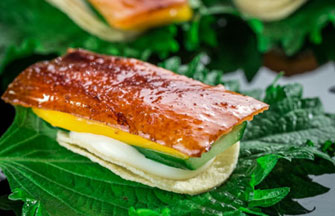
Be it Peking roast duck or the current favorite - baked whole fish - Guijie's eateries are quick on the mark, and always the first to offer them to their foodie clientele. But one thing never changes. This is where you go for that extra spicy kick.
But there is a fly in the soup. Not all restaurants on Ghost Street are above board. There are a few which have been found wanting - just as their customers have found themselves being shortchanged.
Earlier in the year, a reporter with Beijing News went undercover and exposed the darker aspects of these dishonest eateries - ranging from fish that suddenly shrank in weight on the way to the kitchen after customers had picked them out from the tanks out front, and dishes that were cooked with recycled ingredients.
The Beijing authorities immediately descended on the 15 restaurants and ordered them to get their acts together within a "specified time".
For honest operators like Xiang, these cooks from hell are a blot on Guijie's reputation.
"I hope every restaurant can do its part and be professional. Our reputations are bound together."
But in the meantime, gourmets and gourmands will still flock to Ghost Street as the red lanterns brighten after dark. They just have to look more carefully at the restaurants they patronize, and avoid the phantom practices.
Contact the writer at hanbingbin@chinadaily.com.cn.
|
Related readings: |