The new tea party


Tea is not just a drink. It is an integral part of the cultural and historical heritage of China. And, like all aspects of culture, it is always evolving. Pauline D. Loh tracks the trends from Kunming, Yunnan, and Beijing that indicate tea culture is undergoing significant changes.
Tea, like wines, mellow as they age, developing smoothness and subtlety in taste that is lacking in brash new brews. Similarly, Chinese tea culture traces its roots back to Lu Yu (AD 733-804), the patron saint who elevated tea drinking to an art about 1,300 years ago.
 |
|
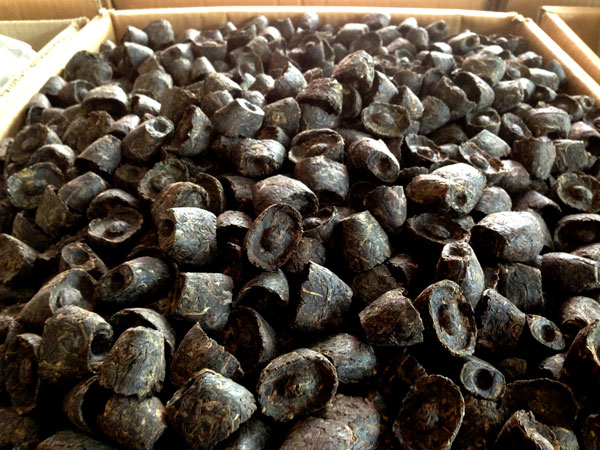
Loose tea leaves are pressed into ingot-shaped bricks. They were traditionally carried on the backs of horses to Tibet on the chama gudao, the ancient Tea and Horse Caravan Route. [Photo/China Daily] |
In the current economic climate, tea in China is enjoying a renaissance of awareness and appreciation that crosses psychographic and demographic barriers, with tendrils of influence reaching far across the seas.
Tea culture has always reveled in the attention of the upper classes whenever the country is settled and prosperous.
It used to be the drink that lubricated gentle prose and poetry from scholars of classic literature. It was the drink of the gentry and equally the drink of the agrarian poor, whose daily solace after a hard day's work in the fields would be a pot of hot water flavored by a few precious leaves.
It's no different now, although rare are the rough brews thrown together in large copper pots meant only to quench the thirst of the sweaty manual class.
Instead, there is a whole new order, where leaves are carefully classified according to taste, terroir and the ting-a-ling of cash registers and whole new support industries are flourishing alongside catering to the new tea connoisseurs.
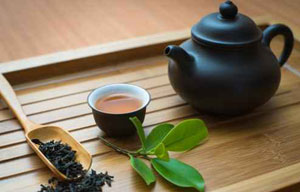
New kilns and old kilns are producing tea wares that range from rustic ceramics to delicate porcelains. There are tea pots of every size and shape, cups as delicate as eggshells, tiny jugs that allow the brew to breathe before being poured into cups, holders that support tea colanders, ewers that hold tea cups between brews, tea urns that store the leaves
Then there are the tea slabs and tables made from blocks of sculpted tree roots and slabs of black stone and marble.
 |
|
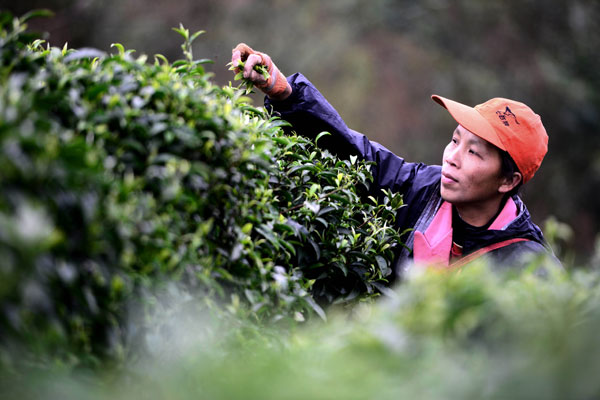
Tea farmers in the Guangxi Zhuang autonomous region are busy picking spring tea in the fields. [Photo/China Daily] |
For a price, tea connoisseurs can enjoy their tea-making with the full paraphernalia, although tags are seldom fewer than four figures and the zeroes may stretch to hundreds of thousands of yuan for the true collectors.
Tea is big business. And the collectors and connoisseurs are willing to pay.
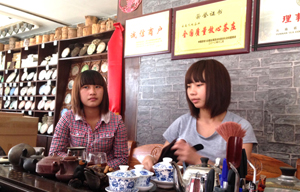
In Kunming, the capital of Southwest China's Yunnan province, specialist shops display tea tables created from ancient tree roots, mostly imported from Myanmar. The tabletops are smoothed and carved, and matching stools make it a set. The going price for a good set is no less than 10,000 yuan ($1,629), and the better woods can cost up to 100,000 yuan.
Tea slabs sculpted from a single block of black stone start from 5,000 yuan upward.
In Kunming, too, the tea merchants are laughing all the way to the bank, especially those who have had the foresight to bank up on stocks of pu'er tea.
Orders are pouring in all over the country and from abroad.
|
|
|