The heart of Xinjiang cuisine


 |
|
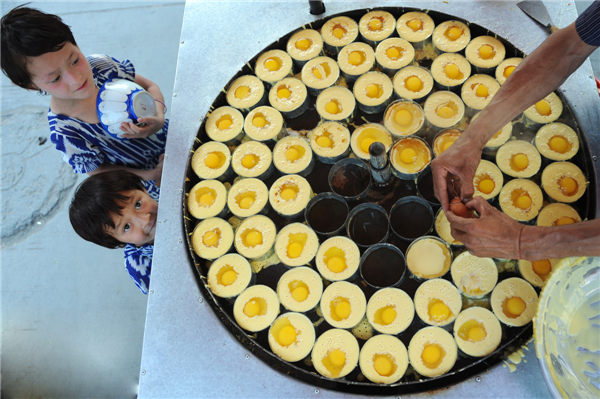
Two children wait at a street-food stand in Kashgar, Xinjiang Uygur autonomous region. Zhang Yi/China Daily |
The diet in the Xinjiang Uygur autonomous region is characteristic of Muslim food and also inherits the relatively strong taste of foods in northwestern China. Most Xinjiang dishes taste tangy and spicy, and are made of beef and mutton cuts that are stir fried, roasted, steamed or made by other cooking methods.
The inland climate, with little rainwater and vast desert, rule seafood out of court in Xinjiang, but the region has abundant resources of cattle and sheep.
Uygur meals are largely based on mutton, beef, chicken, goose, carrots, tomatoes, onions, peppers, eggplant, celery, various dairy foods and fruits. A typical breakfast usually includes home-baked bread (naan), firm but smooth yogurt, olives, raisins and almonds, all washed down with tea.
Cumin seeds, red pepper flakes, salt and black pepper are most frequently used in preparing Xinjiang food.
Xinjiang food began taking roots in China when Islam made inroads into the country. The ethnic groups of the region all have their own food prohibitions and features. Generally speaking, pork is strictly forbidden on the dining table.
Uygur people like to treat guests with tea, naan and fruits before the main dishes are served. Most Uygur foods are eaten with chopsticks, a custom that has been adopted from Han Chinese culture since the 19th century. Other ethnic groups in Xinjiang generally have varied cooking and eating methods: Kazakhs there, for example, usually eat with their hands.
Uygur hosts like to lay out a tablecloth before dining, and it's not considered good form to leave food or put food back from their plates. Most of them don't eat dove and horse meat, and soy sauce is not much used.
Hui ethnic people don't eat meat that comes from animals killed by non-Muslims or consume animal blood. Jokes about food are also frowned upon.
Xinjiang cuisine can be found across China; many locals have migrated to other cities to run Xinjiang restaurants or food stands, which has helped to popularize the distinctive cuisine around the country.