|
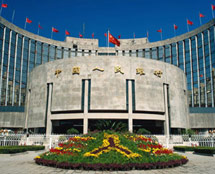 Governor Zhou Xiaochuan of China's central bank said Friday overseas media reports on the expected appreciation of the Chinese currency, yuan, or Renminbi (RMB), on May 18 is not "correct." Governor Zhou Xiaochuan of China's central bank said Friday overseas media reports on the expected appreciation of the Chinese currency, yuan, or Renminbi (RMB), on May 18 is not "correct."
"Can we take that seriously? Of course not," Zhou said in response to a question raised by Xinhua correspondent at a seminar sponsored by the Chinese Academy of Social Sciences.
"It is foreigners, especially some individual foreigners, who predicted yuan's appreciation on May 18," he said.
Probably due to external pressure, people again discuss the possibility of the yuan's appreciation, Zhou explained.
Currently, the yuan is pegged to the US dollar at a stable rate of about 8.27 to 1. China has maintained a unified, managed floating exchange rate regime based on supply and demand of foreign exchange in the market since 1994. The yuan appreciated 38 percent against the US dollar between 1994 to 1997.
As a big country, China could only reform its exchange rate regime mainly starting from internal pressure and incentives, so "we'll design our reform measures in accordance with the logic of the reform, no matter they concern taxation, interest rate or exchange rate," Zhou said.
However, he said, since China plays an increasingly important role in international finance, China will also pay great attention to the opinions from all sides and the impact on the world economy, especially that of neighboring countries, when it considers taking reform measures, said the central bank governor.
When the financial crisis swept Asia in 1997, China insisted in not devaluing its currency and kept the RMB exchange rate stable in a responsible manner, and narrowed the floating scope of the RMB exchange rate since then.
With the devaluation of the US dollar in recent years, the RMB exchange rate against other major currencies was dropping actually, which some foreigners claimed as a measure by the Chinese government to stimulate its soaring export.
But China did not lower the yuan artificially to pursue its own interests, the country's former foreign exchange chief Guo Shuqing said recently.
Chinese leaders have said on several occasions that there is no timetable for the exchange rate reform, and it is a complicated job and should be done step by step.
"When we're to reform the exchange rate regime, we should take into full consideration the macro-economic climate, the bearing capacity of the country's financial system, the performance of the financial market and the impact on regional and global economies," Guo said.
Chinese economists believe China's current exchange rate needs to be adjusted at a proper time and in a proper way.
"There is little possibility that the government will appreciate the yuan in the first half of this year," said Ha Jiming, a senior economist with the China International Financial Corporation.
Ha predicted the yuan's appreciation might come in the latter half this year.
According to industry insiders, huge amounts of "hot money" have sneaked into China under capital accounts or based on no real trade, betting on the yuan's appreciation in the near future. More than 130 billion US dollars of hot money is believed to have flowed into China by 2004.
This huge sum of capital could cause overheating whatever sector it is invested in, which has been exemplified by the real estate market. The flooding of hot money has added to the pressure on the revaluation of the yuan.
"China is working on a plan for a more flexible exchange rate of its currency, but the specific measures might come around unexpectedly," said Premier Wen Jiabao at a press conference after the conclusion of the annual session of the Chinese legislature in March.
(Xinhua)
|
 English