CHINA> About ROK

|
CHINA> About ROK
|
|
South Korea praises G20 successes
(China Daily)
Updated: 2009-09-14 15:45
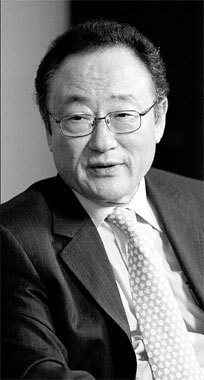
South Korea is gearing up for the next gathering of world leaders at the G20 summit in Pittsburgh, Pennsylvania, Sept 24 through Sept 25, South Korea's special presidential envoy, Sakong II, said during a recent interview in Beijing with China Business Weekly reporter Fu Jing. Sakong said South Korea wants to play a bigger role in the global economic recovery, and that his country and China will cooperate regionally to help reshape the world's financial architecture. Sakong is president of the Institute for Global Economics in Seoul following posts as Minister of Finance (1987-88) and Senior Secretary to the President for Economic Affairs (1983-87) of the Republic of Korea. He has written many books on South Korea's economy and is now leading a team to coordinate his president's position at the G20 summit. Q: During your recent talk with Chinese Vice Premier Wang Qishan, what issues did you discuss? A: We covered many topics regarding the current global economic situation. And we talked about the upcoming G20 Pittsburgh summit and beyond. We shared the consensus that the G20 mechanism has achieved a lot since the last two summits, one in Washington and the other in London in April. Thanks to the G20, the world has coordinated policies to fight the financial crisis, which could be the worst since the Great Depression in the 1920s and 1930s. And we agreed that the world should continue concerted efforts to achieve balanced and sustained growth in the future. Q: Some economists said that the hardest times already have passed for China, and that the economy in South Korea is picking up, too. What are your opinions on the global economic situation so far? A: It's true that both China and South Korea have been climbing up from the bottom. But it doesn't mean we are fully out of the woods yet. China and South Korea implemented fiscal stimulus plans earlier than other countries in a forceful manner to recover earlier than other economies. However, both economies rely heavily on external situations, so it's too early to say we are out of the recession. We should continue what we are doing now and implement the stimulus for some time to come. Q: In your understanding, what is the biggest danger ahead for the world's economy? A: The world economy can experience a so-called W-shape recovery. This is what the world's history has shown. It happened in the 1920s and 1930s. In the 1990s, Japan encountered such a recovery. And so at this point, we should be very careful as so many uncertainties are still ahead. For China and South Korea, we should be very cautious to avoid a W-shape recovery. Currently, consumption in both countries is still weak, and the current recovery mainly depends on government spending. So until the private sector takes off, we should be very, very careful. Q: Last November, China and South Korea signed a currency-swap agreement. Are there plans to expand the currency swap? A: We Koreans are very appreciative of China's arrangement of a currency swap in case foreign trade expansion needs that.
China is planning to expand its use of renminbi in trade, and I think the plan is desirable since the trade volume between China and South Korea is getting bigger and bigger. A substantial amount of trade can be done through the use of regional or local currencies. And if both countries need to do that to facilitate trade, it's a desirable thing to do. Q: At the regional and international level, China and South Korea have bigger roles to play. During your talk with Vice Premier Wang Qishan, did you talk about how to expand cooperation? A: You know the world is deeply and closely integrated. Therefore, there are many things to be done at the international level. Yet, we also have to do many things at the national level. However, if we don't have mechanisms at the international level, we cannot achieve many things properly at the national level. A gap still exists at the regional level. Regional cooperation should supplement, instead of getting rid of, the international mechanism. For example, we have a regional financial cooperation mechanism in Asia, and the benefit of that mechanism will go to the rest of the world. This time in fighting the financial crisis, China and South Korea shared the view that the world had achieved a great deal at the past two G20 summits in Washington and London. The world's leaders showed a united determination to shake off the recession, and that was why the global financial crisis ended its free fall. China and South Korea have worked hard with the international community to reform the global financial system. The G20 leaders, and China's efforts in particular, worked on a communiqu at the G20 summit in London in April. We found that regional cooperation has helped result in successful global efforts. In fighting the financial crisis, the G20 summit mechanism has worked well compared with previous mechanisms such as the G7. I don't mean to criticize the G7. The G7 didn't include many global actors such as China and South Korea. But the G20 includes not only advanced economies, but also emerging economies, and it covers more than 85 percent of the world's GDP. In this way, the G20 can achieve more. The G20 summit in London has already shown that it has produced deliverable results that made the global financial sectors respond swiftly. Wang Qishan and I have reviewed the progress to ensure all the goals set at the London summit can be achieved. Q: What is South Korea's new initiative in combating the financial crisis? A: South Korea would like to host the G20 summit that will follow the next gathering of world leaders. The leaders will decide it at the Pittsburgh summit. Chinese Vice Premier Wang Qishan is very supportive of our willingness to host the G20 summit, and many other countries have also agreed that the next summit should be in Asia. By doing that, China and South Korea can respond more closely to reshape the world's financial architecture. Chinese President Hu Jintao is expected to meet his South Korea counterpart, Lee Myung-bak, in the United States soon to discuss the next G20 summit and possible cooperation at bilateral, regional and international levels. |
||||||||
主站蜘蛛池模板: 凤山市| 仪征市| 德清县| 济阳县| 和硕县| 泗水县| 广宗县| 金溪县| 双柏县| 同德县| 阿瓦提县| 藁城市| 保定市| 廉江市| 金山区| 佛冈县| 登封市| 渝北区| 凌源市| 杭锦旗| 偃师市| 全南县| 莱西市| 岳西县| 镇赉县| 定结县| 随州市| 百色市| 五大连池市| 巫山县| 朝阳市| 攀枝花市| 宝鸡市| 正镶白旗| 西和县| 华阴市| 洮南市| 黑龙江省| 会同县| 湖口县| 寻甸| 张北县| 新竹县| 天全县| 青铜峡市| 崇文区| 上蔡县| 武邑县| 安宁市| 石景山区| 运城市| 越西县| 平远县| 高清| 麻城市| 江门市| 靖安县| 万载县| 郓城县| 徐闻县| 诏安县| 兰州市| 安阳县| 华阴市| 顺义区| 海林市| 南充市| 手游| 金溪县| 连江县| 铜陵市| 望江县| 安徽省| 崇仁县| 青浦区| 文安县| 子洲县| 开原市| 正蓝旗| 屯昌县| 西安市| 南充市|