The 10 measures to heal the overheated housing market
Updated: 2012-09-11 06:49
By Ho Lok-Sang(HK Edition)
|
|||||||


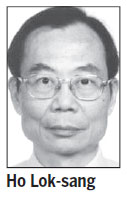
I applaud the 10 measures announced on Aug 30 by the Chief Executive that form part of his strategy to deal with the overheated housing market. The 10 new measures are appropriate and represent more or less the best that the SAR government can hope to accomplish, given the constraints of physical laws of nature and the economic laws of the market.
It is very clear that the measures will not immediately cool the market sufficiently for us to expect great numbers of Hongkongers to be able to afford a home. The current tightness in the market has been built up over the years, and in all fairness, no one can expect that anyone could overturn that reality in such a short time and cool down the market without toppling the economy.
The Chief Executive has done the right thing by tackling supply rather than demand. Many critics say that "water from afar cannot help put out a fire close by." They are right, but no one can deny that the policy takes many steps in the right direction. Anyone who imagines the present situation can be remedied with a policy conjured with the wave of a magic wand is not being realistic.
As an economist, I also think that the responsibility of the government is simply to make sure that there will be sufficient supply to meet the market demand from home-buyers. Trying to manipulate the rise or decline of housing prices will certainly lead to undesirable consequences. The costs will simply be too great.
Leung is certainly doing the right thing by designating all the My Home Purchase Scheme units as for-sale units right away. I have criticized that scheme from day one, and am happy that the government has effectively abandoned this poorly conceived policy.
Perhaps the most controversial policy is the "Hong Kong property for Hong Kong people" initiative. This is an entirely new concept. It is now proposed that housing designated to be sold to Hong Kong people should not be resold to anyone from outside Hong Kong for at least 30 years. That is until that prohibition has lapsed, the properties may be resold only to Hong Kong people. First time as well as second-hand unit buyers must not be companies. The government will announce which plots of land will be designated as reserved for Hong Kong people in each quarter.
Since properties on land auctioned on "for Hong Kong people" leases will exclude anyone from outside Hong Kong as possible buyers, they must be affordable to Hong Kong people. Presumably, those with stronger purchasing power potentially could out-bid Hong Kong people when they compete for a unit that is not subject to such restrictions. So we can safely expect that such homes will sell for less. But these units should sell for less for still another reason - namely that these units are likely to experience lower capital gains than units that are not subject to the restriction. Clearly, the "investment value" of these units will be less.
It may be argued that with some properties explicitly designated to be out of reach for non-Hong Kong people, those buyers will look to units which are under no such restriction. Since these other units will be fewer in numbers, by virtue of the new restrictive policy, there is reason to expect that the prices of units available for unrestricted sale would increase, relative to what they would have been had the Hong Kong only policy not be announced.
A price spiral in the unrestricted market could drive more people to buy homes designed "for Hong Kong people." So the prices of these "for Hong Kong people" units will also rise on this account. But the prices should still be lower than if all the units were free of the restrictive designation.
Under the government plan, enough land will be released to allow for 65,000 new residential units over the next three to four years. At the same time, about 75,000 new public housing units will become available in the next few years. Clearly, these figures fall far short of the very ambitious figure of 85,000 per year combined supply of Mr Tung Chee-hwa. This is in line with Mr Leung's pledge during his campaign for the Chief Executive post, that he would seek change amid stability. Such caution in handling the housing market is welcomed.
The author is director of the Centre for Public Policy Studies, Lingnan University.
(HK Edition 09/11/2012 page3)