'Bubble management' is risky and costly in market economy
Updated: 2013-07-09 07:02
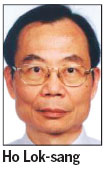
By Ho Lok-sang(HK Edition)
|
|||||||


Last weekend, thousands of property brokers and decorators, homeowners, and their sympathizers marched in protest against the Special Stamp Duty, the Buyer Stamp Duty, and the Double Stamp Duty, which were introduced by the HKSAR government to cool down the property market. The government has justified its extraordinary measures with the extraordinary circumstances being faced.
There's no denying that Hong Kong's home prices have risen spectacularly in the past few years, and that to many, they are unaffordable. However, with a short supply, only some buyers can purchase; others have to be priced out of the market. This is the essence of "price rationing" that always characterizes a market economy. Lowering prices will not create more supply. Lowering prices by increasing non-price costs such as stamp duties will also not improve affordability. Transaction statistics suggest that more Hong Kong people became first-time owners before the launch of the cooling-off measures than after - with many would-be buyers opting instead to rent rather than to buy. Thus, evaluated against the criterion of helping Hong Kong people become homeowners, the policy definitely scores a failing grade.
From the government's view, it now appears that the primary rationale of the measures is to counteract the "irrational exuberance" over property prices, rather than to help first-time buyers. It says the measures are to ensure that the property market behave in a healthy, balanced manner. Further deviation of prices from economic fundamentals would only create more risks for the economy down the road. Given that the measures certainly were off the mark in terms of helping people acquire their first homes, the government's latest statement offers a redeeming justification for the measures, which is managing the bubble, and preventing a perceived property bubble from growing too big.
As sensible as this may sound, however, "bubble management" is always dangerous and problematic. It was the US Federal Reserve Board's bubble management that caused the 1929 stock market crash, signaling the beginning of the Great Depression. In a more recent case, 17 increases in the Federal Funds Rate (FFR) began in mid-2004, after the FFR hit bottom at 2.75 percent were in part in order to check the "irrational exuberance" over the housing market. The housing market eventually collapsed, and the damage to the economy spread wide and deep.
Trying to manage housing prices to "reasonable" levels is a vain policy goal - a pretense that bureaucrats are wiser than the market in determining what is a reasonable price.
The government's main role in the housing market is, rather than managing housing prices with such levers as the rates of stamp duties and interest rates, always only to ensure that long-term supplies meet long-term demand. Supplies can never move quickly enough to match the sudden swings in demand that can occur overnight. In particular, overbuilding will take years to be eliminated.
Bubble management is always costly. In preempting the market, all the administrative measures exact a cost on efficiency. Jobs are lost, wastefulness is engendered, owners who need to cash out are arbitrarily penalized, and building developments are slowed down. There's also the danger that the bubble crashes with dire consequences. We have seen that happen before.
The SAR government's logic is that it was hoping that, by reining in demand and boosting supply, it will "buy time". When supplies are big enough, the extraordinary stamp duties can be removed. The risk is that the government will not dare to remove the stamp duties before home prices fall "sufficiently", but when home prices have fallen "sufficiently" the economy will be in such poor shape that buyers will have disappeared, causing housing prices to spiral downward out of control, leading to even bigger swings in housing prices.
The author is director at the Center for Public Policy Studies, Lingnan University.
(HK Edition 07/09/2013 page1)