Nostalgia for bitter memories
Updated: 2013-09-27 06:59
By Li Yao(HK Edition)
|
|||||||


They were tong lau, Chinese-style buildings that once marked the clear line of demarcation between the people and their colonial masters - now in their last days, the old structures are being recalled with fondness and nostalgia. Li Yao writes.
Winnie Wu, 53, has lived her whole life in Sham Shui Po. It's not a very nice neighborhood today. Maybe it never was. It's working-class. And the tong lau, the Chinese-style low-rise, walkup buildings, in the neighborhood have entered the stage of advanced crumbling. Most tenants put up with tiny units, that are subdivided. The places are not very sanitary, lighting and ventilation are poor, and as one expects in a walk-up, there are no elevators.
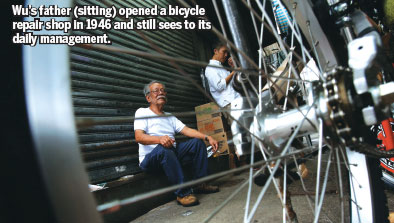
Wu and her elder brother run the bicycle repair shop opened by their father, in 1946, in a shophouse. A shophouse is a type of tong lau that was both a residence and commercial premises. Wu grew up here. She had six siblings, all crammed into the upper floor with her parents. It was less than 10 square meters but, as the saying goes, there's no place like home. Some of the kids slept in bunks. The others were on the floor.
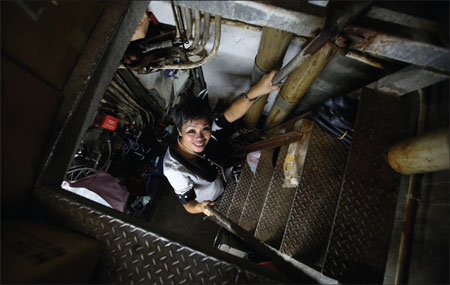
Even getting up to the second floor could be an adventure. They'd grab hold of an iron chain hanging from the ceiling, and hang on, so they wouldn't fall over, climbing the narrow stairway. Nobody sleeps up there now. They use it for storage. But the iron chain is still there, still in use, several times a day when Wu climbs up and down to fetch spare parts her brother demands.
"I showed my daughter where I lived in my childhood. Her reaction was 'Mum, you must be kidding'", Wu said.
Most of the other shops that were around when Wu was a girl are long gone, places that sold drinks, did laundry. Most of the shops still operating in Sham Shui Po these days sell textiles.
"Our customers can stand by and chat while their bicycles are fixed. They enjoy it. In other stores, they put down their bikes and the owner tells them what day to come back," Wu said.
People who like to ride bikes are always making new friends, naturally falling into discussions, sharing experiences, favorite routes to ride. Wu's going on a four-day cycling trip to Taiwan in December. One of her customers, a photographer, invited her along.
The government wants to tear down the old shophouses to make way for more modern development. Some people are practically up in arms that the government would consider demolishing this part of Hong Kong's heritage and history. Wu isn't particularly bothered.
"The police know our background. They never pressure us over fire hazards. If the shops are demolished, our family owns other properties and can move the business there," she said.
The shadow of wrecking ball
For the past 24 years, Chung Man, 63, has managed a jewelry shop in Cheung Sha Wan. The threat of demolition is like a "presence" for him. The tong lau next door to him was torn down already. A high-rise apartment building went up in its place. "The one where my store is located has not been demolished because there are several owners who haven't reached an agreement yet," he said.
Chung grew up in the area. The old public housing estate where he spent his boyhood years is gone. So is the school he attended. The textile and electronic factories that once were all over the neighborhood closed or went to the mainland. The grocery stores were replaced by supermarkets, the barber shops and record stores became drugstores and shops that sold gas tanks for cooking. Sham Shui Po was bursting with vitality once. Not anymore.
The merchants who used to bring the neighborhood to life every day have retired, or moved on. Some probably have died, of course. Chung said his store is the gathering place for neighbors. Some come back whenever there's talk of new redevelopment plans.
Wu's bicycle repair store and Chung's jewelry shop were highlighted last month by architects from the Chinese University of Hong Kong. The idea was to raise public awareness to the fact that the tong lau shops may be gone, in the not very distant future - razed to dust. A dozen shops were selected for the exhibit. The architects and their students drew up the floor plans, each offering a little sketch of the history of the place.
The Conservancy Association Centre for Heritage co-organized the exhibition and encouraged people to visit the shops. Lau Kwok-wai, the Centre's executive director, said young people especially need to check out the old communities before they disappear, and all districts will look indistinguishable from one another, with densely packed high-rises.
Preservation efforts
The Urban Renewal Authority has designated a few tong laus as heritage sites. Critics aren't greatly impressed, saying there's not much a facelift can do for the old relics. Some point out a place on Johnston Road, Wan Chai, where the four-story Woo Cheong Pawn Shop was built in 1888. That building was renovated in 2007 for HK$15 million. The success of the renovations have gone unnoticed by many. For one thing, there's a fairly pricey British restaurant up on the third floor, so other than regular clientele, not many people go there.
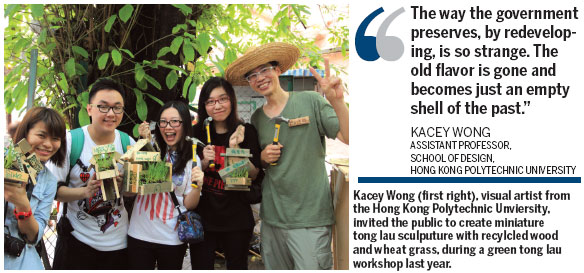
"The way the government preserves, by redeveloping, is so strange. The old flavor is gone and becomes just an empty shell of the past," said Kacey Wong, assistant professor at the Hong Kong Polytechnic University School of Design,
The Wan Chai Market, on Queen's Road East, was built in 1937 and listed as a historic building. "While the market's faade was preserved, the government did some crazy things. They let real estate developers stick a skyscraper on top of what remained of the market," Wong said.
When preserving tong laus, the trick is to revitalize the space with its integrity and dignity, Wong said. "Or, the heritage will vanish. In one or two generations, nobody will be aware that these things ever existed. It's very dangerous that people did not see the past and have no respect for history", Wong reasoned.
Tong lau preservation has been abandoned to the private sector, largely - even to expatriates who have worked with designers to refurbish the interiors while retaining the original exterior structures. Wong says there's a good example on Wan Chai Road, where a businesswoman oversaw the successful transformation of a tong lau into a hotel.
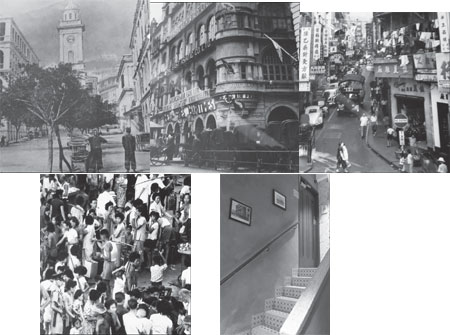
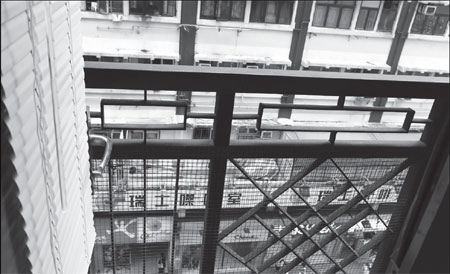
Fanny Cheuk, the hotel owner, bought the five-story tong lau in 2008. It was built near the place and around the time she was born, in 1963. It became her way to recreate childhood memories, and share them with visitors. The renovations took a year. Today, on the walls leading up the staircase are old photos of Hong Kong, dating from the 19th century. In all the rooms are everyday items from that era - around the 60s -rotary phone, soap, shampoo, Chinese cologne. There's an old back scratcher.
She's done it the right way, say the lovers of old buildings. The restored building offers travelers what they're looking for, something distinctive, even unique. Once inside, people feel like they've stepped back into that era, said Wong.
Contact the writer at liyao@chinadaily.com.cn
|
Winnie Wu grabs the iron chains hanging from the ceiling to climb up to the upper floor of her family's shophouse in Sham Shui Po. |
|
"Mingle by the Park", a hotel refurnished from a five-story tong lau built 50 years ago on Wan Chai Road. On the way up the staircase, photos of old Hong Kong are shown on the wall. |
(HK Edition 09/27/2013 page3)