Understand the basics of electoral democracy
Updated: 2014-05-13 07:27
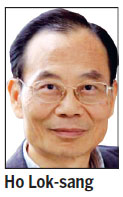
By Ho Lok-sang(HK Edition)
|
|||||||


In an earlier column I discussed the spirit and substance of democracy (June 25, 2013). I noted that the spirit of democracy lies in the responsiveness of the government to the needs of its people. The substance of democracy lies in the effective delivery of what people need. Whether the government is elected does not necessarily mean it is substantively democratic. An elected government which is corrupt, fails to uphold the law, protect its citizens from health hazards, provide education and decent infrastructure is not substantively democratic.
Nevertheless, electoral democracy, which the West considers the essence of democracy, is still desirable. Electoral democracy is government by the people. Substantive democracy, as I defined it, is government for the people. When both electoral democracy and substantive democracy prevail then people will identify the government as a true government of the people.
However, electoral democracy is based on several premises. The failure of any one of these will render it inoperative. First, electoral democracy requires a respect for rules and procedures. People must be ready to follow rules and procedures which have been established through accepted standards and procedures. You cannot have electoral democracy if people feel free to deviate from established rules and procedures. Second, electoral democracy requires a willingness to accept the consequences which follow rule-based processes. This means people should let whoever wins the election use the power he or she legally obtained through electoral process. People must not arbitrarily challenge an elected government's rule before its term ends. In addition, given that the laws of a country have been enacted through due process they should then be respected. Thus, we have the third and fourth requirements: The elected government must govern according to the law. It must not arbitrarily deviate from the law. If the elected government fails badly in its task, people can impeach it - but only according to the law.
Unfortunately for democracy, all of these premises are routinely broken in many countries which claim to be democratic. Many elected governments routinely deviate from the law. Recently, a Japanese civil group sued at the Tokyo District Court over Japanese Prime Minister Shinzo Abe's controversial visit to the Yasukuni Shrine. They argued that Abe's move was unconstitutional. Abe even interfered with press freedom by reorganizing Japan Broadcasting Corporation (NHK) and appointing a conservative former businessman to head it.
In Taiwan, Ma Ying-jeou was elected and is still the island's leader serving out his term in office. But he has had to deal with students protesting against the passing of the Cross-Straits Service Trade Agreement without a clause-by-clause review. They stormed the Legislative Yuan and even the Executive Yuan, aided and cheered on by the opposition party.
In Thailand, Yingluck Shinawatra was elected prime minister. She was accused of abuse of power and corruption. But instead of following legal means to oust her from office, the opposition party chose to take their campaign to the streets. They attempted to "close down Bangkok" and use mass protests to force Yingluck to step down.
The fact is: If everyone feels free to impose his own will on others, this is an expression of a dictatorial - and not a democratic - instinct. If we believe no one should have the right to dictate one's will upon us, why do we think we have the right to dictate our will upon others? Thai opposition leader Suthep Thaugsuban advocates an unelected "People's Council" to promote his version of political reform. But does this really reflect the political aspirations of ordinary Thai people? If people are not happy with the result, they will take to the streets and do things their way. This is clearly not democracy or the rule of law, but more like the rule of the jungle.
In a civilized society which accepts the rule of the law, everyone abides by the rules and procedures in accordance with the law. They should respect the results that follow such rules and procedures. The law is certainly not perfect. It is everybody's responsibility to help improve it. Yes, we need checks and balances to prevent the abuse of power by the ruling elites. But we also need checks and balances to prevent the abuse of power by interest groups. The law can and should be amended to adapt to changes in values, norms, technology and knowledge. But respect for every individual as an equal member of society must always be upheld. This is to protect minorities from the tyranny of the majority and also from mob rule. It must always be maintained and enforced.
I think Hong Kong is such a civilized society. Is this statement now to be used in the past tense?
The author is director of the Center for Public Policy Studies at Lingnan University.
(HK Edition 05/13/2014 page9)