White paper reaffirms judicial independence
Updated: 2014-07-01 05:47
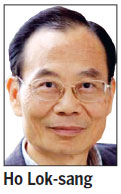
By Ho Lok-Sang(HK Edition)
|
|||||||


Some 1,800 lawyers and law students marched on June 27 to protest against the white paper on the implementation of "One Country, Two Systems". They alleged the white paper threatens judicial independence and were expressing their concerns. Their main position - that judicial independence is central to the rule of law, fundamental to Hong Kong's prosperity and people's sense of justice - is a valid one. However, the allegation that the white paper attempts to undermine judicial independence does not hold up. If anything the white paper reaffirms judicial independence and clarifies Hong Kong's high degree of autonomy under the Basic Law. The central government is committed to upholding the Basic Law and "One Country, Two Systems". Unfortunately, language can be imprecise, and in this instance, the language of the white paper was misread and misinterpreted. This is the reason why organizers of "Occupy Central" are benefiting from the unfounded fears of Hong Kong people. The number of votes cast during the June 20 poll far exceeded most people's expectations.
At the end of the white paper, it is made abundantly clear that Beijing is committed to upholding the Basic Law and "One Country, Two Systems" principle. It says: " 'one country, two systems' is not only the best solution to the Hong Kong question left over from history but also the best institutional arrangement for the long-term prosperity and stability of Hong Kong after its return to the motherland. Firmly advancing the cause of 'one country, two systems' is the common wish of all the Chinese people, the Hong Kong compatriots included, and is in the fundamental interests of the country and people, the general and long-term interests of Hong Kong and the interests of foreign investors."
Denis Chang, writing in the SCMP, argued that "the white paper ... has - by what it says and does not say - stressed the state's unitary nature and 'comprehensive jurisdiction' to the detriment of the SAR's high degree of autonomy. Its attempt to introduce an ambiguous requirement of 'patriotism' as a qualification for those administering the SAR (including judges) militates against judicial independence, separation of powers and the rule of law."(June 28)
Chang, and those who joined him on Friday, should remember that one element of "the country's interest" is maintaining Hong Kong's prosperity and stability. Therefore, the presumption that there is some conflict between the country's interests and Hong Kong's is wrong. Chang should also note that the country's best interest is not just the interest of some central government officials. The word "patriotic" is not allegiance to any person in particular. The country's interests transcend the narrow interests of any official. Asking judges to be patriotic is really no different from asking them to act professionally to serve "without fear or favor".
Allen Lee, the veteran politician and TV host, told me that pages 7-8 were the most problematic and caused the most concerns. Section 1 in Chapter 2 carries the heading: "The Central leadership directly exercises jurisdiction over the HKSAR in accordance with the law." This annoys some people. However, it has to be seen in its historical context. The power of administration was historically a point of contention between China and Britain during Sino-British negotiations. Britain proposed that it might maintain the power of administration after the handover of sovereignty. But late paramount leader Deng Xiaoping vehemently refused. So the power of administration reverted to Beijing along with sovereignty. Today, the central government, though still holding the power of administration, has conferred this power upon the Chief Executive and his team. They rule Hong Kong on behalf of the central government.
Allen Lee was concerned about the expression "Supporting and guiding the administration of the chief executive and government of the HKSAR in accordance with the law". He said the word "guide" had never been used before. However, it is commonly known that the CE reports to Beijing every year about developments in Hong Kong and what he has done during this time. Is it really that strange that during these sessions central government officials may "guide" or engage in some dialogue with the CE - and that the discussion may include some advice? This does not constitute any interference in the SAR's affairs. This point is made very clear in the second section of the white paper, which carries the heading: "The HKSAR exercises a high degree of autonomy in accordance with the law". This section also highlights the independence of the judiciary and details the broad range of jurisdiction enjoyed by the SAR government. The white paper also states that the Court of Final Appeal may employ judges from other common law jurisdictions. This emphasizes respect for common law tradition.
Language is often imprecise. For those suspicious of Beijing's intentions, it is easy to read between the lines and wrongly infer what the white paper does not say. This is unfortunate. So there is an urgent need to put the record straight.
The author is director of the Center for Public Policy Studies at Lingnan University.
(HK Edition 07/01/2014 page9)