Hong Kong racing against time to push 'game changer' in banking
Updated: 2016-12-30 06:57
By Luo Weitengin Hong Kong(HK Edition)
|
|||||||


Hong Kong banks are joining a cluster of their Asian counterparts in testing the disruptive potential of the much-hyped blockchain technology - the next big thing poised to reshape the traditional banking industry in the near future.
Bank of China (Hong Kong) has found itself among the very first batch of local lenders to put the technology into practice.
The city's largest mortgage lender, which deals with more than 20,000 appraisal reports each year, is teaming up with the SAR government's Applied Science and Technology Research Institute to roll out a property valuation system for homes loans based on blockchain technology.
The system wrapped up its very first property valuation deal on the day the system was officially launched at the end of last month.
Besides the two major partnering banks, the system is looking to expand its use with a Chinese mainland-based bank and another local lender by January at the latest, and attract a few more property valuation firms, apart from the existing two, to join the game by the first quarter of next year, said Rocky Cheng Chung-ngam, general manager of the information technology department at Bank of China (Hong Kong).
The go-to technology, defined as a decentralized ledger of all transactions across a peer-to-peer network, can be used to improve the efficiency of processing mortgages by allowing property valuations to be listed, verified and shared with a click of the button through the secure decentralized network of banks and surveyors.
Cheng believed that the emergence of blockchain technology could find its roots in the widespread use of the internet. The technology behind bitcoin and other cryptocurrencies enables buyers and sellers to interact directly across the internet without verification by a trusted and central third-party intermediary.
Blockchain-focused applications go well beyond the quick property valuations. With many regional peers joining the fray, Hong Kong is stepping up its pace to apply the technology to more areas in a bid to secure the "early mover" advantage.
The next field where blockchain technology could be applied involves trade-finance invoices. Almost three to four banks in the SAR, including Bank of China (Hong Kong), are currently studying an industry-wide framework of trade finance based on such distributed-ledger technology, which is expected to be worked out within the next six months, according to Cheng.
He noted that blockchain technology has what it takes to be a "game changer" for the banking business. According to law firm White & Case, the distributed-ledger technology could reduce banks' infrastructure costs around the world by $15-20 billion a year.
There's no doubt that lenders across the globe are embracing the "game changing" technology with more concrete action.
As a recent IBM study showed, a full 15 percent of the surveyed 200 global banks are geared up to run blockchain solutions as early as 2017, and see commercial blockchain solutions "at scale".
"Our survey of commercial and retail banks reveals that the industry is hurtling toward blockchain adoption faster than many expected," said the study.
Likewise, a report by professional services firm Accenture showed that nine out of 10 major US, Canadian and European banks today are exploring the technology in the area of payments, while 17 percent of these major banks are at "the forefront of revolution", meaning those solutions are already in use.
The success of blockchain technology depends much on uniform standards to avoid possible duplicate construction. The more banks go separate ways to map out their own networks, the more difficult it would be for the industry as a whole to reap the technology's benefits, Cheng observed.
For the time being, however, it's no easy task to convince the city's lenders from different camps to accept a unified framework.
So far, only large institutions may afford to be the early adopters. The point is that the pacesetters will have a bigger say in influencing and determining standards and business practices that future followers may have to abide by, said Cheng.
As the IBM report pointed out, the "trailblazers" are better able to anticipate disruption, fending off new competitors along the way.
To some extent, an industry-wide framework comes from the race among those pioneers to be the standard-setter and rule-maker, said Cheng.
As innovation always comes with much regulatory uncertainty, Bank of China (Hong Kong) has chosen to work with the SAR government from the outset. Apparently, despite all the hype, the city's de facto central bank would like to remain sober minded about the highly sought-after technology.
In a white paper released last month, the Hong Kong Monetary Authority (HKMA) highlighted the money-laundering risks associated with blockchain technology.
Although the regulator recognized the fact that the technology allows information or records to be transferred and updated by network participants in a trustworthy, secure and efficient way, the white paper reiterated its reservations about the vague picture of corresponding governance, risk management and legal issues.
As the World Federation of Exchanges noted in September, collaboration with the industry will allow regulators to better understand the technology, how future infrastructure will look like and what the impact will be on financial markets. And, above all, it's how they could perform their regulatory tasks most effectively.
Hong Kong's financial watchdog joined a cluster of its global counterparts in September to launch the financial technology supervisory sandbox scheme for banks - a useful tool widely expected to provide a safe environment for businesses to test innovative products, while providing appropriate safeguards to contain the consequences of failure for customers.
Although the HKMA believed it's still "premature" to draw any conclusion from blockchain technology, the sandbox scheme marks a major push for collaboration and exchange of information between the banking industry and the regulator.
As Hong Kong bets big to sharpen its edge as the world-renowned financial center by doubling up its efforts to make the promising financial technology a success, Cheng said it's really a race against time and other major financial hubs.
And, blockchain technology is probably one of the fields where Hong Kong could look at to take the lead.
sophia@chinadailyhk.com
|
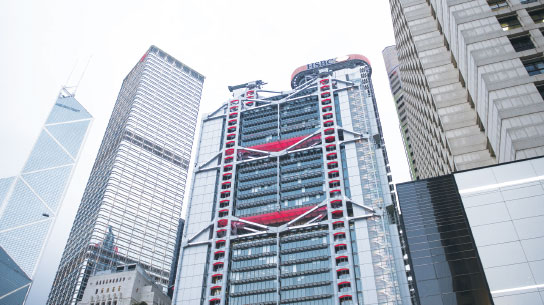
Blockchain technology is expected to flourish in Hong Kong's banking industry, which is set to be the next big thing in reshaping the traditional banking industry in the near future. provided to china daily |
(HK Edition 12/30/2016 page1)