Keeping a vital waterway safe
|
Li Feng / China Daily |
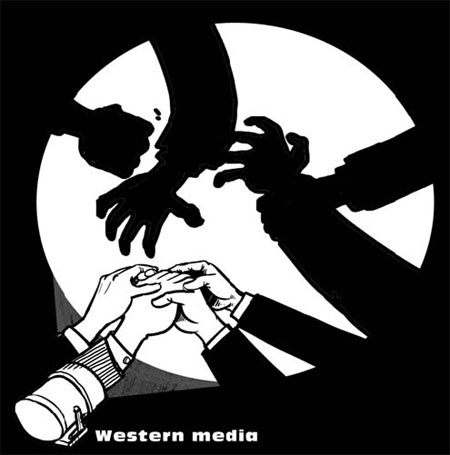
As soon as the four-country joint patrol began along the Mekong River, some Western media outlets started trying to sow the seeds of distrust among China, Laos, Myanmar and Thailand, saying China is actually "flexing its muscles" in the region. This, however, is not surprising, for the Western media have used similar tricks against China in the past.
The Greater Mekong sub-region (GMS) has been a place for strategic contention among the world's major powers. The Mekong region is one of the emerging economic zones in Asia, where the United States, Japan, the European Union and India have not only remained active, but also extended their influence.
The past few years have seen China and ASEAN member states, especially Cambodia, Laos and Vietnam, strengthen their economic and political cooperation, which has made the major powers uncomfortable. The newly established joint patrol mechanism could have aggravated their discomfort because they feel it would eventually undermine their influence.
What the Western media forget is that the mechanism is key to safeguarding the security of not only Chinese cargo ships on the Mekong, but those of the other three countries as well. Furthermore, it's Chinese police not military that cooperate with their counterparts to patrol along the river, so it's absurd to say China "is flexing its muscles" in the region. They also forget that the mechanism was necessitated by the bloody murders of 13 Chinese sailors in the Golden Triangle region two months ago.
The Mekong River waterway serves as a bond of economic cooperation between China and the GMS countries and it is an important trade route in the China-ASEAN free trade zone. The joint patrol mechanism safeguards security along the Mekong to facilitate multilateral cooperation.
Started by China, Myanmar, Laos and Thailand in 2001, the Lancang-Mekong waterway has become a vital route for cross-border transport, and economic and trade cooperation in the GMS. But the waterway, which runs along the borders of the four countries, passes through harsh topography, marked with dense forests, deep gorges and wild nature where communication is difficult, making it a haven for criminals. Therefore, cargo ships plying the Mekong can easily fall victim to pirates.
Joint law enforcement by China, Laos, Myanmar and Thailand can help maintain order and ensure the safety of personnel and property on and along the waterway and strengthen economic and trade exchanges among them.
Besides, the joint mechanism can enhance strategic trust between China and the three other countries, and this is something some Western media outlets cannot digest.
True, China has some disputes with its neighboring countries. But so do other countries with their neighbors.
Since the security of the Lancang-Mekong waterway concerns the economic development and stability of all the four countries, they have already reached a consensus on the measures to be taken against terrorists, narcotics smugglers, arms and ammunition traffickers and abductors, who generally target women and children.
The establishment of the joint-patrol mechanism is in line with the interests of China, Laos, Myanmar and Thailand and will strengthen their mutual trust. China helps Laos and Myanmar with patrol equipment and personnel training, reflecting its role as a responsible emerging country. It also reflects China's sincerity in tackling challenges from non-traditional security threats to maintain regional stability.
The joint patrol mechanism can boost GMS economic cooperation. With transportation on the Mekong River becoming safer and the completion of related cross-border regulations, GMS cooperation will expand to include Cambodia and Vietnam, ultimately making it a six-country affair. This will optimize cargo transportation, exchange of personnel and flow of funds through the Mekong, boosting China-ASEAN sub-region cooperation.
Despite all this, the joint patrol mechanism faces challenges. For instance, on Monday, only two days after the joint patrols began, some media reports said three Myanmar soldiers of a joint patrol team were killed in a clash with a group of armed men on the Mekong River. China's Ministry of Public Security denied the report later, though.
Where and how did such a damaging rumor emerge might not be known. But it reflects that police from the four countries could come up against the language barrier and suffer for lack of efficient channels of exchanging information. The patrol police should be equipped with special communication equipments, too. These are some of the shortcomings that have to be addressed urgently.
Moreover, it is also important that the mechanism clarifies who should be in charge of a joint patrol, or else in an emergency such as a gang attack, it will be impossible for the patrol team to fight back efficiently.
The Mekong runs for more than 4,000 kilometers, so joint patrol team members should have endurance and need highly maneuverable boats equipped with advanced communications facilities. They also need sufficient supplies of food, medicine and fuel.
The Mekong River has many dangerous sections, and when ships sail through very narrow strips of water they can be close to riverbanks, making them more vulnerable to pirate attacks. That's why, compared with other waterways, the Mekong calls for greater vigilance especially when transporting cargo.
China has to improve the mechanism and facilitate strategic coordination if it wants to prevent the differences in the four countries' political systems, economic development levels and cultures from undermining the effectiveness of the joint patrols - and to keep the world's major powers from fomenting trouble in the region. This will determine whether China and its partners can make their security cooperation on and along the Mekong a success.
The author is a research scholar at the Institute of South and Southeast Asian Studies, under China Institutes of Contemporary International Relations.