


'Made in China' spells success for Kenyan
Designer says the variety of low-cost, quality fabrics has given her an edge in the world of haute couture
China's economic growth has opened a window of opportunity for many up and coming entrepreneurs around the developing world, including Africa.
One of them is 35-year-old Mercy Makena, who says that fashion is part of her soul. The Kenyan fashion designer says she has found new frontiers in China as a source for fabrics.
|
Kenyan designer Mercy Makena says she has found new frontiers in China as a source for fabrics. Provided to China Daily |
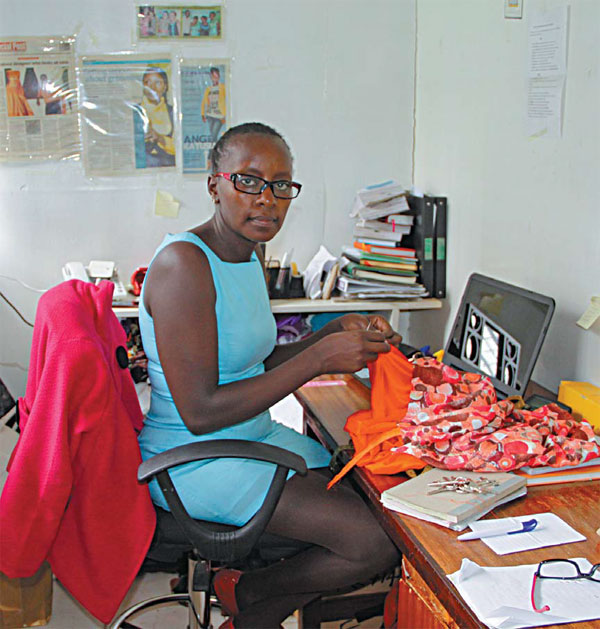
"I'm quite excited about the great openings created by China," says Makena, who has successfully carved herself a niche in Kenya's fashion industry. She spoke with China Daily recently in Nairobi.
"It is a good journey because every time I travel there, I bring back goods that are not only unique but that clients really appreciate," she says.
The designer says China is opening doors to many small business owners from East Africa, who gain access to "high quality products at affordable prices".
"For China to open doors for us small-company owners, to be able to go and purchase in small quantities, has enabled us to bring back home quality that is actually needed, as opposed to waiting for other wholesalers who bring in fabrics from our downtown market and sell us cheap quality," says Makena. She has been using imported fabrics from China to mend high-quality outfits for a growing number of middle-class and high-end clients across several African countries, including Kenya, Uganda and Tanzania.
According to Makena, the idea of sourcing materials from the giant Asian economy came about after interacting with fellow businesspeople in Kenya who had prior connections with the Chinese market.
"I realized once you are able to identify your niche in the local market, then you can go there and source your products at a fair price, and which are of very high quality, and that give you a competitive edge back home," she says.
Gaining entry into the diverse Chinese marketplace has paid off handsomely, the Kenyan entrepreneur says.
As a young girl growing up in a rural village in Meru on the slopes of Mount Kenya, she knew little about fashion but she saw and admired what her mom was doing running a tailoring shop.
At the time, "I discovered that I loved stitching clothes," she says as she recalls how she started off from a humble background. "It's a passion since I was young," she adds.
According to Makena, her mother was a hardworking businesswoman. "My mom had a tailoring shop she didn't put it up to inspire me or anyone else in the family; she just set up a shop for herself amongst other business ventures, such as a butchery," she says.
Today the soft-spoken Kenyan has become a household name, dressing the most glamorous female television anchors and celebrities in East Africa. She ships in fabrics from China, which she uses to craft designs for her growing customers.
Following in her mother's footsteps, she set up a fashion business in Nairobi in January 2000, right after completing her high school education.
"At first, my parents were worried, but I was determined," she says. "I wanted to go into clothing; the line wasn't clear then but I was very sure that I wanted to go into clothing.
"What inspired me was the need for quality clothing in the market," she says, adding that starting off wasn't easy. At the time, she could only afford to hire a stall in downtown Nairobi, a location frequented by walk-in clients.
"It was quite challenging when it came to space, but I was able to secure a space where I would share with someone else.
"We would rent everything from the machine to the shop itself, which were payable at the end of the month. You just needed to work hard to have money to pay the owners at the end of the month," she says.
Within a few years, Makena had nurtured a growing clientele, while at the same time saving for the growth of her business.
"With determination and client satisfaction, I grew my clientele base and within a period of three years, I was able to own three shops in that particular market," says the mother of three.
She later moved her operations to the city center where she opened a fashion house.
"When my clientele started growing to include celebrities, I realized that I needed to put a few things in place because, No 1, they would not take anything less than quality, and they would pay for it," Makena says.
"Yes, the demand is there but the demand is quality."
Regarding the demands that a celebrity clientele comes with, she says: "You must be able to cheerfully work with them and amidst all their desires, be able to provide for them quality fabrics, quality finishing items and quality accessories, deliver on time and also be able to source out for the current trends in town so that they stay ahead of the game."
She says celebrities are always looking for the best, as they want to set themselves apart as trendsetters.
"I'm a person who genuinely desires that people dress well," she adds.
Her fashion business, known as Nakyma Fashion House, mostly deals with orders from the corporate world, focusing on women's wear.
"That's our main line. We design from scratch and have something that works with someone's body structure, tone and color," she says.
Makena says her business is expanding thanks to the growing middle class in the region.
"We are also now getting into weddings because the same clients keep asking us for more," she says, adding that "some want us to design" their wedding wear.
She says she has opened up a sub-section for weddings and African wear to meet the growing market. This, she says, includes evening dresses, mostly formal clothes that can transition from the day to a night cocktail party dress.
"We also accessorize for them. We are able to get them bags, shoes and purses to go with their clothing designs so that we help them with the mix and match of their everyday wear."
Despite her success, challenges also abound, she says.
According to Makena, some Chinese retailers still insist on selling their goods in large quantities, though with time they have been able to reach compromises.
"Initially, they were insisting on selling in bulk, but the minute you talk to them about who you are, that you want variety, you don't want just one because you are not a manufacturer but you're a designer of made-to-measure per person they are able to listen and give you what you want," she says.
Another huge challenge that African shoppers have to contend with is the language barrier.
Most Chinese do not speak English or other international languages, apart from Chinese. This presents a gigantic hurdle for many entrepreneurs from Africa who know very little Chinese.
But as they say, where there is a will there is a way.
"We have been able to keep up with it because there are translators who help us to navigate the market," Makena says, adding that her only suggestion is that "if they would learn a bit more English, especially at the airports it would help a lot."
The Kenyan fashion designer laments that there have been cases of counterfeit goods finding their way to the African continent. "If you choose not to buy counterfeit, then they shouldn't choose to send it to you," she says, referring to two incidents where she received fake goods.
"It has happened to me twice and I returned the goods, but the sender never exchanged them," she says.
Born into family of six sisters, Makena believes that Africa is the place to be now because of the economic growth and development activities taking place. "There are a lot of opportunities in Africa, one only needs to get into it with full confidence."
While applauding China for allowing small and medium-sized entrepreneurs to access high-quality goods, she appealed to Chinese authorities to create a bank that can partner with African nations to allow African start-ups to access affordable interest loans.
"This can help in such a way that when we go there, we are recognized as buyers of their goods, and when they come here, they are recognized.
"That would give us mileage to grow faster as opposed to when we have our banks on this side which are not recognized on the other side," says Makena, who has been traveling to China four times a year since 2012.
For China Daily
















