


Joys of minimalism
A Japanese author says an uncluttered life can make all the difference. Associated Press reports in New York.
If you haven't communed with your socks lately, thanked your shoes for their hard work or bowed (at least mentally) to your home in appreciation, maybe it's time to consider it.
"It is very natural for me to say thank you to the goods that support us," says Marie Kondo, whose method of lovingly connecting with belongings that "spark joy" and bidding a fond but firm farewell to the rest is popular in Japan and now catching on elsewhere.
|
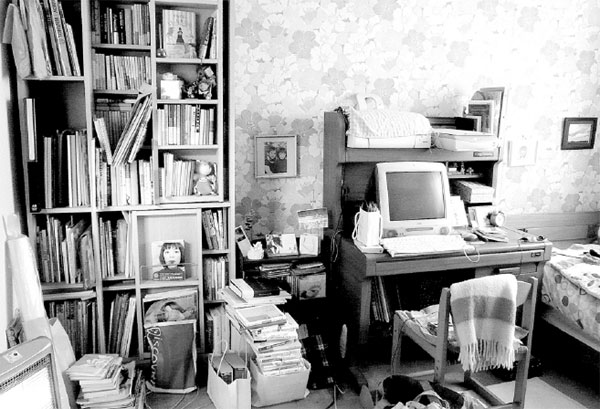
A client's room before it was decluttered (below) by Marie Kondo in Japan. Kondo's book about tidying is a best-seller in Japan, Germany and Britain and has recently been published in the United States. Photos by Associated Press |
Kondo's book, The Life-Changing Magic of Tidying Up: The Japanese Art of Decluttering and Organizing, is a best-seller in Japan, Germany and Britain and has recently been published in the United States. Kondo has been the subject of a movie in Japan, and the waiting list for her services, once three months long, is now so extensive that she has temporarily stopped accepting more clients.
Her "KonMarie method", as she calls it in the diminutive and illustration-free volume, encourages a rapid, dramatic and transformative one-time organizing event - completed methodically and lovingly in no more than six months. It's not an ongoing battle against clutter.
Kondo sees "tidying" as a cheerful conversation in which anything that doesn't "spark joy" is to be touched, thanked and ceremonially sent on its way toward a better life elsewhere, where it can discover a more appreciative owner.
The result can be life-changing, she says. Clients suddenly find themselves surrounded entirely by things that provide clarity, unencumbered by belongings that carry past baggage (unwanted gifts, clothes that no longer fit) or anxieties about the future (does anyone need more cotton swabs than there are days of the year?). Even her book, she says, should be quickly discarded when it's no longer needed.
Part of what makes her method unusually speedy is that instead of decluttering room by room, she tackles a household by subject, starting with what's easiest to part with. So, all the clothes, then all the books, then documents, then miscellany and, last and most difficult, photos and mementos.
Instead of deciding what to discard, she says, the focus should be on what to keep: which few things spark sufficient joy or are truly necessary.
How to contend with family members unready to join in the celebratory purge?
If possible, carry the bags out of the house yourself. "There's no need to let your family know the details of what you throw out or donate," she writes, although she advises against secretly disposing of other people's things. "You can leave communal spaces to the end. The first step is to confront your own stuff."
After joyfully relegating mountains of unneeded or unloved belongings to the trash or charity, she then turns to organizing what's left.
The key, she says, is storing things mostly in drawers, arranged so that everything can be seen at a glance and nothing is stacked, a practice decidedly unkind to items at the bottom.
So T-shirts and socks (the ones you've kept because they make you happy) are rolled - no painfully balled-up socks with moaning elastic here - and beautifully arranged like sushi in a bento box.
Closets are meticulously arranged to fit everything from electric fans (at the bottom) and spare blankets (on top) to carefully arranged clear drawers of beloved belongings and a shelf or two with a few joy-sparking books.
Papers and documents - there won't be many since few are truly necessary and they generally hold so little joy - are likewise filed and not stacked.
Kondo says she has been obsessed with "tidying" since she was 5, opting to arrange shoes and pencils in school when other kids played in the playground. She began communing with her belongings in high school and, after years of work at a Shinto shrine, realized her calling as a professional consultant on attaining the joy of minimalism.
"The inside of a house or apartment after decluttering has much in common with a Shinto shrine ... a place where there are no unnecessary things, and our thoughts become clear. It is the place where we appreciate all the things that support us," she says. "It is where we review and rethink about ourselves."
















