


Ruyi makes a fashion statement with SMCP
Chinese textile giant snaps up French luxury brands to tap growing market
Shandong Ruyi Group, a major Chinese textile producer, has purchased a majority stake in SMCP, owner of French fashion brands Sandro, Maje and Claudie Pierlot, in a bid to develop its global business.
The deal has cost Ruyi about 1.3 billion euros ($1.48 billion), making it one of the largest overseas investments by a Chinese company this year.
|
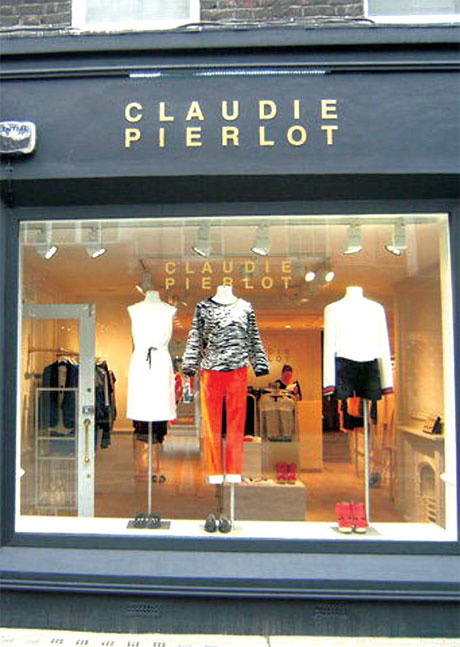
Claudie Pierlot's window displays in Paris. SMCP is owner of French fashion brands Sandro, Maje and Claudie Pierlot. Photos provided to China Daily |
"It's a win-win and marks a great achievement for Ruyi on its way to becoming a global leader," says Qiu Yafu, the company's president. "We can benefit from SMCP's brand recognition and rich experience in fashion, including its talent and design experience, and SMCP can access China's huge market through us."
SMCP has 1,118 outlets in 33 countries and regions worldwide. Qui says Ruyi will maintain the French company's creative team and its headquarters in Paris.
"We can enhance our competitiveness in every link of the supply chain, from design and manufacture to marketing and retail," he adds.
Private equity firm Kohlberg Kravis Roberts and the founders of SMCP will continue to own shares in the French company.
Houston Huang, managing director and head of China of JP Morgan global investment banking, who helped broker the deal, says the acquisition is a good example of Chinese companies going global.
"Chinese companies - large, small, private or state-owned - are embarking on a spree of overseas mergers and acquisitions, stimulated by government policies that encourage overseas expansion. Chinese companies can also learn from the foreign companies through overseas expansion," he says.
JPM is the sole adviser for the deal and sole underwriter for Ruyi.
"The overseas mergers and acquisitions are also in line with the current supply-side reform. Take Ruyi, for instance, its major business is textiles, yet this industry also faces the challenge of overcapacity. The acquisition of SMCP can help Ruyi move up the value chain and tap into the increasingly expanding domestic luxury market," says Huang.
According to Dealogic, which provides global banking and investment analysis, Chinese companies sealed overseas M&As worth a total $111.9 billion last year.
Ministry of Commerce data suggest that the surge is being driven by smaller companies rather than larger, state-owned or private enterprises.
In January, China's nonfinancial outbound investment hit 78.7 billion yuan ($12.1 billion; 10.6 billion euros), almost three times the number in December and a rise of 18.2 percent year-on-year. Of the total ODI in January, 92.5 percent came from smaller enterprises, up 175 percent on the same period last year.
"As SMCP has a wide sales network in Europe, Ruyi can expand its brand recognition and influence through cooperation with SMCP," Huang says. "And because Ruyi has rich experience in marketing in China and Japan, SMCP can expand its market share in Asia.
"China has become the most important light luxury consumer market, and SMCP has affordable luxury brands that have surged in popularity among China's middle class. The acquisition can help Ruyi expand development in China, and also meet the increasing needs of consumers."
Ruyi is ranked in the top four of China's 500 textile companies and had a consolidated annual revenue of more than 30 billion yuan last year. The company previously invested in Tokyo-based Renown Inc, which sells the Aquascutum and D'urban brands in Japan.
"China's luxury goods industry has a bright future," says Lu Jinyong, a professor at the University of International Business and Economics. "With the increase in incomes, consumer attention will continue to shift more toward the light luxury segment.
"The luxury market remains one of the most lucrative, so Chinese companies are fast climbing on to the upper chain of the industry. As Chinese spend more on high fashion, local companies are going shopping for global brands to expand their businesses."
Last year, Chinese shoppers bought 46 percent of all luxury goods sold worldwide. However, 78 percent of that was purchased outside China.
huhaiyan@chinadaily.com.cn
















