


Celebrity culture is marching East
While Chinese politics does not embrace the celebrity mechanism, China is far from immune to the seductions of fame
Writing in the 1970s, the Italian sociologist Francesco Alberoni described celebrities as a "powerless elite", because they did not possess authoritative or institutional power. Since then, the rise of a celebrity industry associated with expansion of the media, internet and entertainment industries, has changed celebrity culture beyond all recognition. Celebrities are still an elite, but they are no longer powerless.
As the lives and loves of celebrities have become ubiquitous in Western popular culture, performers like Angelina Jolie, Bono and Beyonce have acquired huge stores of cultural, economic and even political capital. Donald Trump, a celebrity businessman with no political experience, has shown it is even possible to ride the affordances of fame to within reach of the White House.
The American presidential election is a combination of soap opera and reality TV, covered by media enthralled by dramatic storylines, drawing on metaphors from sports and war, playing to a global audience on television and social media. As each day brings further revelations, insults and gaffes, pored over by a proliferating pundit class, the political process in the US looks increasingly like a made-for-TV production.
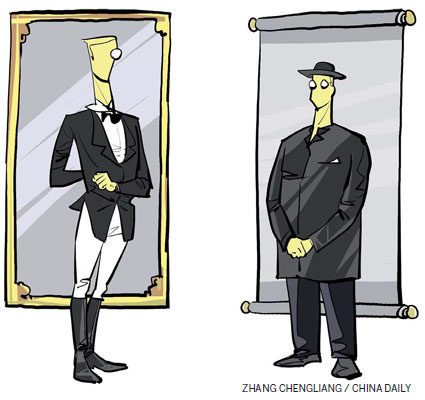
When the Sixth Plenary Session of the 18th Communist Party of China Central Committee concluded in Beijing on Oct 18, the contrast could not be starker. While elite politics receive abundant coverage in China's media, we can be fairly sure there will be no intemperate tweets, personal attacks or unsavory stories emanating from the meeting.
Unlike in the US, where electoral competition demands politicians embrace the media and entertainment industries, celebrity and elite politics have not, as yet, converged in China. It is unimaginable that any Chinese leader would play the saxophone on a late-night chat show as Bill Clinton did, or dance with Ellen DeGeneres as Barack Obama, or hang out with the Spice Girls as Tony Blair did (let alone be a frequent guest on shock jock Howard Stern's radio show, like Donald Trump).
Chinese officials prefer to follow a script that promotes the decorum and gravitas of office. They don't do sit-down personal interviews or fraternize with performers trailing paparazzi photographers. And for all the Chinese government's massive online presence, no one in the Politburo has a social media account.
Yet, while Chinese politics does not embrace the celebrity mechanism, China is far from immune to the seductions of fame. In a country that has long emphasized public restraint and traditional values, celebrity is big business and subtly pervasive.
Chinese and Western celebrities are prominent in China, on billboards, in magazines and in social media. Chinese movie and pop stars are as glamorous, worshipped and wealthy as their Western counterparts. But the Chinese celebrity industry's balance of serving popular tastes with political correctness has resulted in a celebrity culture that is distinct from the West.
Chinese celebrities are expected to uphold certain standards of behavior and act as positive role models for society. The triviality and excess surrounding celebrity lifestyles in the West are generally replaced with narratives of persistence, cultivation of talent and high standards of morality.
Celebrities may be akin to carnival performers, but in an orderly society the carnival is also ordered, with performers and audiences assigned distinct roles. Celebrity is conferred on people who generally conform to dominant social norms. China's own celebrity CEO, Jack Ma, became rich and famous through hard work and perseverance, and his success acts as an example for others to emulate.
But the commodification of individuals with talent and looks is not alien to China. From luxury cars to clothes and watches, Chinese celebrities endorse some of the world's most glamorous brands. And many ordinary Chinese appear increasingly susceptible to the attractions of "DIY celebrity".
Writing in their excellent 2011 book Online Society in China, scholars David Herold and Pete Marolt argue that Chinese internet users prefer anonymity, eschewing "performance" in favor of simply "living online". Borrowing the words of Chinese media scholar Hu Yong, the majority of people were "onlookers", happy with their role as observers.
However, there are signs of a changing emphasis, from merely worshipping the stars to wanting to become one - or at least the truncated version of fame available to DIY celebrities.
It is a truism that anyone can become famous via the internet. Admittedly, there are more examples of becoming infamous, symbolized in China by the cases of Furong Jiejie, Muzi Mei and Guo Meimei.
But nowadays there are examples of Chinese using the internet to seek fame and perhaps wealth: from the profusion of live-streaming apps like Ingkee and the crass stunts featured on video site Kuaishou, to more mundane expressions of "me-casting" manifest in public declarations of love, body challenges and China's ongoing selfie craze.
While these trends can appear vulgar, they are mainly harmless modes of entertainment and self-expression. Banal as they are, they portend changes in the social mores of mainly younger people, challenging traditional values such as protecting face and public reticence.
The rise of individualism among the younger generation in China is well known. Among the expansion of subcultures and behaviors considered unbecoming by their parents are changing expectations and attitudes. These include feelings about public performance, mediatization and celebrity.
There is little research on the social and political implications of these changes, but there are signs that the Chinese government is aware of the need to connect with younger people, including the vast expansion of e-government services and the professionalization of political communications.
As Chinese celebrity culture continues to mature and expand its reach, and positive attitudes toward fame become normalized among the young, it will become something that future governments may find it easier to adapt to rather than merely seeking to control.
For now though, a Chinese version of The Donald remains agreeably far off.
Dr Jonathan Sullivan is director of the China Policy Institute, University of Nottingham. His views do not necessarily reflect those of China Daily.
















