University aims to bolster global presence of traditional medicine
The Shanghai University of Traditional Chinese Medicine (TCM) has pledged to boost the international development of TCM education and further promote the global presence and acceptance of this field of medicine.
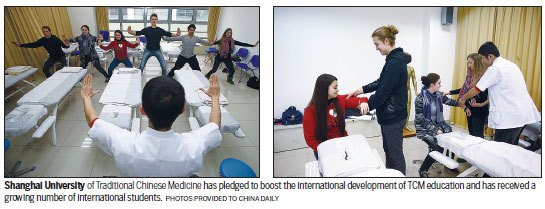
Established in 1956, the university is among the first four TCM colleges in China. The university said the number of international students enrolled in the university has been growing over the years. By the end of 2016, there were more than 1,500 international students pursuing long-term academic programs at the university.
Over the past four decades, the university has produced nearly 10,000 TCM doctors, acupuncturists and physical therapists for more than 100 countries and regions.
In addition to attracting more international students, the university is also focusing on expanding its global network and collaborating with foreign partners.
For example, the university has established a host of TCM facilities across the world through partnerships with well-known overseas universities and organizations as well as English magazines on TCM culture.
"TCM is gaining wider recognition in the world and an increasing number of researchers have been winning global awards in recent years," said Xu Jianguang, president of the university. "This medical style has become more widely used across the world."
"However, we have identified many problems that need to be solved before TCM can become more widely accepted in the world. As a key higher education institute in TCM in China, we have the responsibility to cultivate more talents in this field and help address these issues," Xu added.
One of these problems is the lack of unified standards and regulations for TCM on the global level. One of the parties working to address this issue is the ISO/TC 249 committee that was established in 2009. The secretariat of the committee is based in the Shanghai University of Traditional Chinese Medicine. To date, the committee has created 21 international standards regarding aspects such as herbs and use of acupuncture needles.
In 2009, the university started to work with the World Health Organization (WHO) on the 11th edition of the International Classification of Diseases, marking the first time that TCM was included in the WHO's encoding system. This move also created a foundation for the integration of TCM services into national health systems.
In 2014, the World Federation of Chinese Medicine Societies Committee for Standardization was set up in the university. The committee is responsible for the development and formulation of international standards. A year later, the university established the TCM International Standardization Institute, an important platform that facilitates research, development and formulation of TCM standards.
In light of the Belt and Road Initiative, the university has commenced a new round of TCM studies in countries and regions related to the initiative.
"We will carry out a series of studies regarding hot topics, such as how TCM can be involved in the construction of an economic corridor in countries and regions along the Belt and Road routes, how this medical field can be a part of FTA negotiations and how we can go about creating an evaluation system for TCM centers," said Xu.
According to a white paper released by the State Council news office, TCM practices have spread to as many as 183 countries and regions. Figures from WHO show a total of 103 state members have approved the use of acupuncture and 18 of them have included such treatments in their medical insurance provisions.
wanghongyi@chinadaily.com.cn