 |
 |

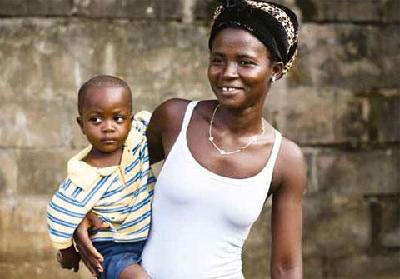
A new campaign's been launched to help eliminate new HIV infections among children by 2015. It's called Believe it, Do it.
It's estimated nearly 400,000 children become infected with the AIDS virus every year -- mostly in low and middle income countries. In 2010, 250,000 children under age 15 died of HIV-related causes.
UNAIDS officials said around 3.4 million children under the age of 15 are currently living with HIV. What's more, about 42,000 women die annually from complications relating to HIV and pregnancy.
Problem areas
The Believe it. Do it campaign follows last year's UN High Level Meeting on AIDS. It aims to raise awareness of the Global Plan endorsed by leaders to end new childhood HIV infections by 2015.
Karusa Kiragu of Kenya is a UNAIDS senior advisor on child and maternal health. Kiragu said there are only two regions of the world where mother-to-child-transmission continues to be a major problem. But they are big regions.
"It is a problem in sub-Saharan Africa and India - precisely 22 countries that make-up about 90 percent of mother to child transmission burden globally. So because we've been able to zero-down on exactly where it's a problem – and because it has been solved elsewhere – we feel we must solve it in other places as well where it's a problem. And it's an issue of equity. If it can be done somewhere else, we should be able to do it in other places," she said.
The Believe it. Do it campaign is being launched prior to Mother's Day with the idea that "every day is Mother's Day." The targeted audience is not in sub-Saharan Africa or India, but rather mothers in the US, Britain and other major industrialized countries. Kiragu said their support is needed for the Global Plan to succeed.
"I think it's important," she said, "for societies to be informed and educated about what's going on outside their borders. I think in many ways it helps mothers in the United States understand that when there are discussions around overseas development assistance, for example, when there are discussions around giving US taxpayer money oftentimes to other countries, it is going to help in these sorts of issues – issues that are very personal and very individual at a family level. These challenges, even if they don't exist in the US, they do exist elsewhere."
Right medicines, correct doses
She said the know-how and affordable resources exist to end most mother-to-child-transmission of HIV. She says without antiretroviral treatment, HIV is transmitted from mothers to their infants during childbirth about 40 percent of the time. With treatment, that drops to just two percent.
"In some countries as high as 90 percent of women who need ARVs to prevent mother-to-child transmission are getting them, in some countries only 12 percent. So it depends on where you are. But each one of these countries is also trying to provide not just the antiretrovirals, but the best quality antiretroviral -- the one that will give them the maximum impact. So it's a combination not only of access, but access to quality antiretrovirals," she said.
Kiragu says those babies that are born with HIV despite best efforts need special care.
"The treatment for children is more complicated, whereas medicine for adults is simply [to] take a regular dose and that is that. For children the dose you take depends on the weight of the child. So someone has to be calibrating this for a child. If they don't get treatment, 50 percent of them will not see their second birthday. And every child deserves a second birthday, a third and a fourth and much beyond. So medicines for children are really, really important," she said.
UNAIDS Executive Director Michel Sidibe called the Global Plan to end childhood HIV infections "an amazing opportunity," but he warned "the clock is ticking" and public support is needed.
Better treatment for HIV-positive pregnant women
Much progress, much to do on HIV
Bill Clinton on HIV/AIDS: much more needs to be done
(來源:VOA 編輯:旭燕)

添加Chinadaily_Mobile
你想看的我們這兒都有!

中國首份雙語手機報
學英語看資訊一個都不能少!
關注和訂閱


電話:8610-84883645
傳真:8610-84883500
Email: languagetips@chinadaily.com.cn