 |
 |

當(dāng)前位置: Language Tips> 新聞播報(bào)
"Everyone is a book," is the slogan of a peculiar library in the southern Chinese city of Nanning. Here, the "books" are literally people.
It is the Human Library of Nanning, where people with specific stories to tell have replaced books. Visitors "read" the living tomes by listening to their stories and asking them questions.
"Here you can read people who have special stories or whose work you might never encounter in your own life," said Huang Huajun, a college student and founder of the library.
Human Libraries started in Denmark in 2000, the brainchild of a group of young people who wanted to promote tolerance and understanding via the spoken word. In China, these novel libraries flourish in cities such as Shanghai and Chengdu, and are gaining popularity with young people.
Huang stumbled upon the concept in Hong Kong last year and, together with like-minded schoolmate Huang Jingyan, established the Nanning library in April.
"There is a Chinese saying that it's better to travel thousands of miles than to read a thousand books, but we believe reading thousands of people is an even better idea," said Huang Huajun.
Her collection so far consists of 22 "living books" - people who either have distinctive life stories or represent groups that remain largely unknown to the public.
The library has no fixed location, nor does it open every day. Instead, it arranges for readers to meet their "books" on the last Saturday of each month.
On Saturday, dozens of readers met seven living books at a local cafe. Most of them knew about the event through the library's micro blog and had registered in advance.
The living books included a funeral director, a part-time musician, a travel buff with profound knowledge of how to use guidebooks and the parents of an autistic child.
Zhang Na shared the story of her family's experience of managing her son's autism over a decade.
Zhang's son was diagnosed in 1998, when he was only 3, and she had to study the condition and work out training methods on her own. At that time, China lacked advanced autism therapy. Zhang's painstaking efforts greatly improved her son's condition and, hoping to help other families with similar problems, she founded a school in 2003 to offer training to autistic children and their parents.
He Wen has come to the library three times as a "reader." “I found that many people are doing things that are not well-known to the public but are really meaningful to society," he said.
For Huang Huajun, the most exciting part of the human library has been expanding its readership. She now attracts around 80 people to each gathering and has up to 10 volunteers who help with the organization.
The library has no income and no permanent sponsorship. It is largely a voluntary group and the two Huangs sometimes pay the costs out of their own pocket.
Questions:
1. What is a human library?
2. Where is one such library?
3. Where did the idea come from?
Answers:
1. People with specific stories to tell replace books. Visitors "read" the living tomes by listening to their stories and asking them questions.
2. Nanning in South China.
3. Human Libraries started in Denmark in 2000, the brainchild of a group of young people who wanted to promote tolerance and understanding via the spoken word.
(中國(guó)日?qǐng)?bào)網(wǎng)英語(yǔ)點(diǎn)津 丹妮 編輯)

About the broadcaster:
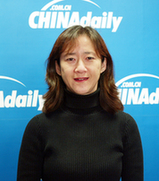
Nelly Min is an editor at China Daily with more than 10 years of experience as a newspaper editor and photographer. She has worked at major newspapers in the U.S., including the Los Angeles Times and the Detroit Free Press. She is also fluent in Korean.

添加Chinadaily_Mobile
你想看的我們這兒都有!

中國(guó)首份雙語(yǔ)手機(jī)報(bào)
學(xué)英語(yǔ)看資訊一個(gè)都不能少!
關(guān)注和訂閱

口語(yǔ)
關(guān)于我們 | 聯(lián)系方式 | 招聘信息
電話:8610-84883645
傳真:8610-84883500
Email: languagetips@chinadaily.com.cn