Drink the best wine this Christmas
(lifestyle.uk.msn.com)
Updated: 2006-11-30 16:47
 |
Large Medium Small |
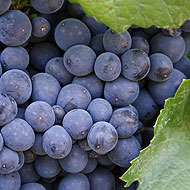 Christmas time is the perfect time for enjoying the most delicious wine with your turkey and pudding. And to make sure what you're quaffing is only the best, we ask an expert to give his top tips on buying the best bottles.
Wine FAQs
Food and drink journalist Richard Ehrlich, answers some of your most common qualms and queries about wine.
1. What is 'corked' wine?
The term 'corked' refers to a fungus called TCA for short (2, 4, 6-trichloroanisole), which occurs naturally in some corks. TCA creates odours and flavours resembling wet cardboard, damp basements, or mould. The odour may be mild or strong; in small doses, the effect may simply be one of dampening down the flavour of the wine, so it appears not to taste of much at all.
Once most people have smelled a badly corked wine, they can spot it next time. But things get more difficult when the effect is dampening down the flavours, or when the mouldy smell is very faint. Even experienced tasters sometimes miss it. If you think you have a corked bottle in a restaurant, tell the waiter - this is one of the irrefutable reasons for rejecting the bottle. At home, re-seal the bottle and take it back to the place where you bought it. They should exchange it without question.
2. Are screwcaps as good as corks?
Yes! Screwcaps avoid the problem of TCA (see previous question). An increasing number of producers recognise this, and use screwcaps even for their most expensive wines; indeed, a few producers (mostly in the New World) use screwcaps for all their wine.
There is a question mark about one aspect of screwcaps: their efficient exclusion of outside air through the tight seal created by the cap's plastic liner. Some people think outside air is crucial in wines designed for long ageing. And others think that total exclusion of air may lead to what are called 'reductive' flavours - don't ask, it's too complicated even for me.
But these doubts are dismissed by many, and more important: the ageing questions apply only to a tiny percentage of the wines sold. You don’t have anything to worry about if you're planning to drink the wine soon after purchase.
3. What should I do when the waiter asks me to taste the wine I've ordered?
You're supposed to decide whether it is acceptable under the Trades Descriptions Act -accurately described and fit for its intended purpose, namely enjoyment. Look at the label to make sure that the name and vintage are what you saw on the wine list. When the bottle is opened and a sample poured, swirl it around and taste it.
If it is (a) good and (b) as you would expect that particular wine to taste, then in theory you’re done. But if you have picked up anything in the wine that you think is wrong, bring it to the waiter’s attention. This can be nerve-wracking, but it's your money at stake and you have a right to enjoy yourself. If it’s just a matter of not liking the wine, rather than seeing a fault in it, you’re on shaky legal ground. But most restaurants will make a switch, just to make you a happy customer.
4. My partner/best friend loves a wine that I don't like at all, and he/she knows more about wine than me. Does that mean I'm wrong?
No. Ask any experienced wine taster what qualities you need to enjoy wine and they will put trusting your own judgement near the top of the list. And professional tasters sometimes hate wines that other professionals love.
However, the more you learn about wine, the more your taste will develop. You will understand better the wines you already love, and come to like others that you don't think much of now. This is part of the joy of learning about wine: knowledge makes it more fun, not less. You can kick-start the process by asking your friend to explain why they like a particular wine.
Talking to others is immensely useful in acquiring wine knowledge; think of it as a reading group discussing bottles rather than books. A wine course is a great place to do this, with professional guidance as an added bonus.
5. What's the difference between Champagne and other sparkling wines?
At the legal level, the crucial difference is that in most countries, the only sparkling wines calling themselves Champagne must have been produced in that French region. At the technical level, the differences are less obvious.
Many types of non-Champagne fizz are made using the méthode champenoise (or méthode traditionelle): by a seconday fermentation of still (flat) wine in the bottle, producing carbon dioxide gas as a by-product. This is a very simple explanation of the method.
The more complicated difference between Champagne and the competition is quality. Champagne still is, at its best, the finest sparkling wine on earth. But wines from New Zealand, California, Australia and even England can compete with their French model. The final difference relates to image and – sometimes – to quality. Champagne is more expensive than any other sparkling wine. Whether it is worth that premium is a question you have to decide for yourself.
| 分享按鈕 |