Journey into Chinese culture along subway lines
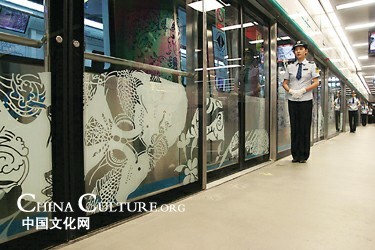
Beitucheng Subway Station
 |
|
|
 |
|
|
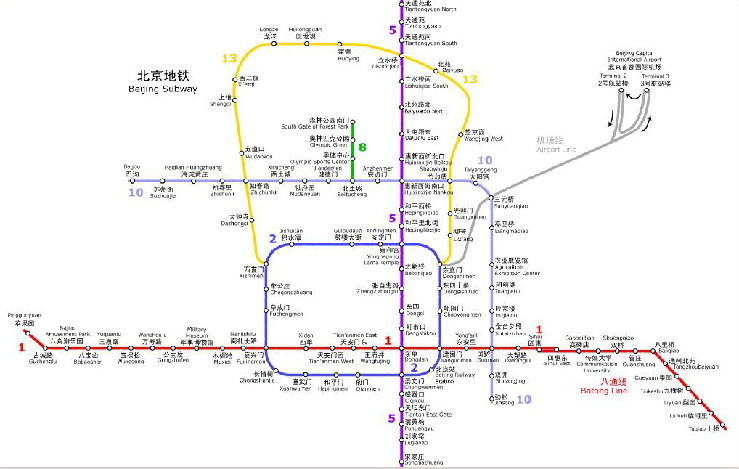
The name came from the site of the north rampart in the period of the Yuan Dynasty. 24 meters wide at the bottom, 8 meters on the top, with a height of 16 meters, the wall is just like an earth platform. So it is called tucheng, meaning city made out of earth. Like Jiandemen, the earth platform fell behind the time and disappeared too when the Ming Dynasty(1368-1644)came to power and rearranged the rampart. Beitucheng Subway Station is the originating station of subway line 8, the special Olympic line.
Shaoyaoju Subway Station
Shaoyaoju means Chinese Peony Palace. The sub district nearby is called Shaoyaoju Subdistrict. It used to be an anonymous village with no more than thirty households. It is said that every family here grew Chinese Peonies, which is special for imperial use. The emperor even titled the village shaoyaoju, meaning Chinese Peony palace and the name has passed down from generation to generation.
Taiyanggong Subway Station
Taiyanggong is Sun Palace in English. The station is named after a temple nearby. It is said that when Emperor Qianlong toured passed here, the sun was rising in the east. The village here was showered in a mild light. Amused by the view, Qianlong named the place taiyanggong, which means sun palace in English. The villagers felt grateful to the emperor and built a temple with the same name to show their respect to the emperor.
Liangmaqiao Subway Station
The title which means bright horses bridge originated from the Liangma Bridge outside Dongzhi Gate. It is said that in the early years groups of ancient businessmen often washed their horses in the stream under the bridge before they went into the city, then tied them to the willows along the river to have them dried. That’s why the river is called Drying horses River: Liangmahe. With time passing by, the pronunciation remains, but the meaning has changed into Bright Horses River. In the Qing Dynasty, a white marble bridge was built over the river and shared its name.
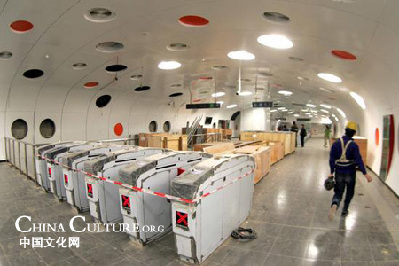
Jintaixizhao Subway Station
 |
|
|
People named the station after one of the Eight Scenic Locations of Beijing: The Golden Terrace in the Glow of the Setting Sun, Jintaixizhao in Chinese. The tale goes that there once was a golden terrace constructed by King Yan Zhao more than 2,500 years ago. The king built it with a purpose of attracting people with abilities from all over China by mountains of gold. But whether it’s true or not, remains a mystery. What is affirmative is that the terrace did exist and was listed in the Eight Sceneries of Beijing in Jin Dynasty(1115-1234)before it was destroyed in the Qing Dynasty.
Guomao Subway Station
Located in the CBD, the most bustling downtown area in Beijing, the station has a pretty simple and plain theme. This reflects the special purpose of the designer. With Chinese painting bamboo decorated along the hallway, the designer aims to create a Xanadu out of the high-paced metropolis. After a day of hard work, the white collar workers will soon be comforted by the quite and folksy atmosphere.
 |
|
Click to see the subway lines in Beijing |