Seen through small screen
 |
Not all Chinese towns have theaters or Internet cafes, but almost every family has a TV set. For most Chinese, TV may be the most accessible media to learn about the world.
China's first television station, Beijing TV, was set up in 1958. But TV did not begin to thrive as a popular format until the reform and opening up period began in 1978.
One can glimpse aspects of Chinese society from that year until the present by examining the most popular TV series.
1980-85: Starting stage
Representative works: 18 Years in the Enemy's Troops (Diying Shibanian), Huo Yuanjia, The Bund (Shanghaitan)
During the early years of Chinese TV, many writers drew inspiration from recent wars. For example, 18 Years in the Enemy's Troops, made in 1981, tells the story of a Communist hero planted in the ranks of Kuomintang troops.
It is remarkable to remember how shabby TV production was back then. The cast members had to make due with borrowed costumes, customized for individual actors. There were not enough suitable trousers for all the actors. For eight soldiers, there were only two pairs of pants, so the two with suitable trousers stood in front of the others all the time. The hats were too small to wear, so the actors could only carry them in their hands.
The show's storyline was disputed by many former undercover Communists, who complained that the main character's actions appeared too naive to enable him to live among enemies for 18 years.
Still, the show was very popular with audiences. In those days, the shabbiness of production could not stop people's curiosity, and TV was still a novel entertainment form.
Several Hong Kong-made series also caused a big stir on the Chinese mainland.
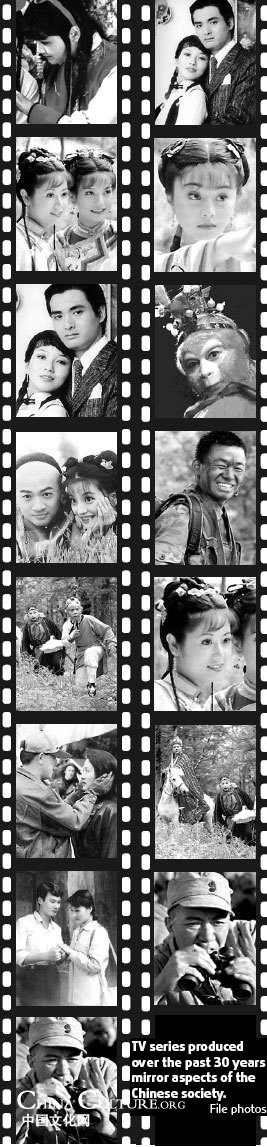 |
Huo Yuanjia, a 1983 show about a famous kungfu master's life, won over audiences with a more realistic setting and storyline.
Kungfu has long been a popular subject for drama in China. The show was also remade into TV series and movies many times. Among the most successful remakes was Jet Li's biopic Fearless, which was popular with audiences in both China and North America.
The Bund, starring Chow Yun-fat, was a hit throughout Asia, including on the Chinese mainland. The show followed the rise and fall of a gangster in 1930s Shanghai and made Chow a superstar. His signature outfit, including a white scarf and black trench coat, was widely copied by young fans.
1986-90: Exploration of the past and reflection of reality
Representative works: A Dream of the Red Mansion (Honglou Meng), Journey to the West (Xiyou Ji), New Star (Xinxing)
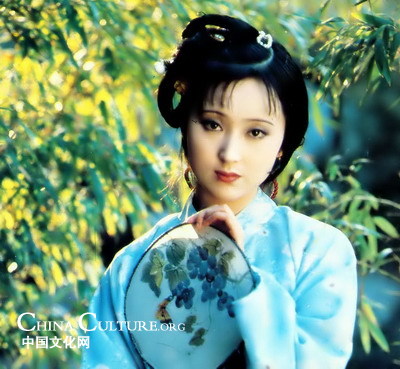
TV dramas of this period often adapted classic Chinese novels. For instance, it took three years to complete A Dream of the Red Mansion, which was released in 1987. Revolving around the ups and downs of four ancient wealthy families, the TV series was considered an instant classic.
Journey to the West, a dramatic story about a monk's turbulent trip with his three disciples, made Zhang Jinlai, an actor who played the Monkey King, a top star in the country. The show also introduced spectacular visual effects to Chinese viewers for the first time, although the effects would be considered crude by today's standards.
The two novels' storylines are familiar to almost every adult in China, and the TV versions attracted millions of viewers.
Ambitious businessmen, a rising group on the social ladder, also attracted curiosity in China. Many people wondered what their lives were like, while also admiring their courage and wit. New Star, a series about a vigorous entrepreneur, gained a sizable following. Actor Zhou Lijing reflected what people hoped a pioneering entrepreneur should be like: slim but strong, with a serious face; a man of few words but quick decisions.
1991-96: Peaceful life or tumultuous journey?
Representative works: Yearning (Kewang), Beijingers in New York (Beijingren Zai Niuyue)
If you wonder what Chinese people thought a "perfect woman" should be like in the 1990s, just tune into a popular TV series named Yearning. The beloved heroine, Liu Huifang, answers the question.
Liu is a common worker who marries an intellectual named Wang Husheng. Their different backgrounds, and the husband's selfishness, eventually result in the failure of their marriage. The heroine was good-looking, kind-hearted and hard-working. Overnight she became a national idol, for both men and women.