Delivering the fruit of romance
 |
|
|
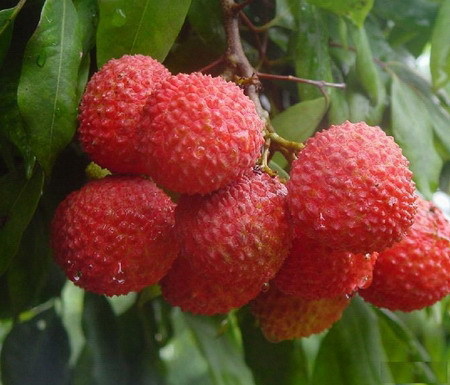
Lychees, with their reddish spiky skin around a delicious, jelly-like pulp are much favored fruit around the world, and China is no different.
They taste great but unfortunately get spoil really quickly. However, thanks to the modern transportation it’s not difficult to find cheap, ripe Lychees in Beijing, even though the northern capital is far away from the southern China where Lychees are grown.
?
 |
More than a thousand years ago, a woman who lived in Chang’an, today Xi’an, capital of Northwest China’s Shaanxi Province, was also fond of Lychees. She was Yang Yuhuan, the favorite concubine of Emperor Tang Xuanzong (685-762) and one of the most beautiful and fashionable women in Chinese history.
Due to slow modes of transportation, the Emperor set up a special courier service with teams of swift horses to deliver the fresh fruits hundreds of miles from south China to the Imperial court for his consort. It’s said that riders and horses were changed along the way and the fruit was rushed to the palace as quickly as possible before they were spoiled.
When the Lychees arrived, the concubine was very happy would give a beautiful smile. A poem by Du Mu, a poet of the Tang Dynasty (618-907), exposed and satirized this palace extravagance. It reads: "A horse gallops across the land at full speed, and the concubine laughs. Who else knows it is lychees coming." Ever since then lychees have been considered in China the finest of delicacies and a symbol of romance. One type of lychee is even named “Smiling Concubines.”
One might be amazed by the speed at which fresh lychees were carried to Chang’an. To understand it, it is worth learning more about the postal service in the Tang Dynasty.
The national postal service was created in the first Chinese empire, under the Qin Dynasty (221-207 BC), to enhance the imperial control throughout the huge country. About a thousand years later, the postal system was more developed and efficient in the Tang Dynasty.
The central government employed thousands of postal workers of various ranks and responsibilities to provide service for post offices and larger postal stations. Major postal stations were placed every 30 li (one li in Tang times = 450 m) along every major road in the country. According to historical records, during the reign of Emperor Tang Xuanzong, 1,639 postal stations were established nationwide, of which 260 were marine stations, 1,297 were land stations, and 86 served both functions. The speed of postal service was legally regulated. Depending on the urgency of the post the speed of postal riders ranged from 180 li, 300 li, and even up to 500 li, about 225 kilometers, a day. This full-fledged postal system helped to connect the heart of the empire with every corner of the country.
Knowing this, it’s not difficult to understand how the special lychee-delivery team was able to transport fresh lychees the many miles to Xian so efficiently.
Yet, no matter how swift the postal service was, it would still take days to deliver the spoilable fruit from South China to the northern city of Xi’an. It’s said that measures had been taken to maintain its freshness before embarking on a long and tough journey. Some agree trees with would-be ripe lychees atop were transferred along the way and the fruits would be picked down when the destination was drawing near. Some others maintain lychees connected with branches and leaves were put in containers and sealed with wax to ensure freshness.
 |
Ordinary fruit they might be in China today, lychees were capable of being, without exaggeration, crowned “the National Fruit” more than a millennium ago as they happened to be the favorite of the First Lady. What’s more, the love story of Emperor Tang Xuanzong and Lady Yang also justifies the lychees other name, “Fruit of Romance.”