LIFE> Travel

|
LIFE> Travel
|
|
Related
Tourists follow emperors to seek hoilday paradise
By Wang Qian (China Daily)
Updated: 2009-07-23 14:09
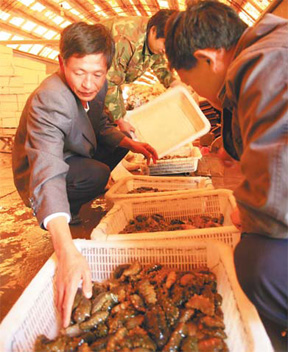
According to local legends, both the Emperor Shihuang of the Qin Dynasty (221 BC - 206) BC) and his successor, Emperor Wudi of the Western Han Dynasty (206 BC-AD 24), scoured the island paradise of Changdao in search of the fabled elixir of life. The fact that neither is still around perhaps testifies to their ultimate failure, however it is has not deterred millions from following in their sandal steps and setting out to explore this exotic locale for themselves. Today visitors to Changdao, the only island county in the eastern province of Shandong, are more likely to come in search of an ideal holiday destination rather than some mythical potion of potency. Lushly set between the twin peninsulas of Jiaodong and Liaodong, Changdao actually consists of 32 small islands, scattered like a string of pearls across Bohai Bay. Commenting on the islands' recent surge in popularity, Zhong Bo, director of the Changdao Tourism Administration, said: "Due to the opening-up of some of the islands, Changdao has enjoyed a dramatic increase in the number of visitors from Southeast Asia, Europe and Russia." High value fruits of the blue economy: tasty sea cucumbers. Ju Chuanjiang Keen to capitalize on this sudden influx of big spending out-of-towners, the local authorities have set out to establish the county as a premium holiday resort and have sought to maximize the appeal of its natural resources and cultural heritage. With a 56 percent green coverage and an attractive climate, the county is also home to one of China's foremost beach resorts. It has won a series of awards, including an acknowledgement as a leading national nature reserve, a national forest park and a State-level geo-park. Today the beauty of the islands, noted by many renowned ancient writers, including the Tang Dynasty (AD 618-907) poet Li Bai, retains its almost mythical quality. Dubbed a "wonderland in the sea" in the Shanhaijing, or the Book of the Mountains and Seas, a classic ancient Chinese book featuring geographical and cultural observations as well as a collection of pre-Qin Dynasty (221-206 BC) myths, Changdao is the source of countless legends. Changdao's history can even be traced back to the prehistoric period, evidenced by the 35, 000-year-old human cranium fossils unearthed in the area. Further proof of its long association with mankind came with the discovery of the remains of a large prehistoric village built around 6,500 years ago. Experts say the ancient ruins, found in Changdao's Daheishan village, have identical cultural features to the Banpo Site in Xi'an in northwest China, identified as dating back to the New Stone Age (9500 BC-3500 BC). These cultural similarities have earned the site and its long dead residents the title of "eastern Banpo culture". With fishing as the traditional means for making a living, Changdao people have long worshiped Matsu, the Chinese goddess of the sea. It is to her that many pray for the safety of their family members fishing far out at sea in times of bad weather. The Xianying Palace, built in Changdao nearly 900 years ago, is reportedly the oldest and largest Matsu temple in the northern region of China. Every April it hosts a grand ceremony of Matsu worship. To date, the Changdao temple has established friendly ties with more than 30 Matzu temples at home and abroad, some of which are based in Macao and the Chinese Taiwan province. Through this common cultural heritage, Changdao has developed a cultural exchange network across a wide number of regions. Resource-rich island Boasting rich marine resources, Changdao is home to at least 200 species of seaweed and 30 species of fish. It has been designated as one of China's key production centers for abalones, scallops and kelp. The Changdao islands are also a paradise for birds. Every year, in spring and autumn, more than 320 varieties of birds use the islands as a stopover point during their long, annual migratory flights. Among the islands, Gaoshan is particularly well known as a seagull habitat. Between April and July, tens of thousands of the birds fly to the island to give birth and raise their offspring. Changdao is also renowned for its transient seal population, with some 400 of them enjoying a summer vacation on its beaches. In addition to its flora and fauna resources, the county is also well-known for its unique landscape. As the only national island geo-park in China, Changdaso is rich in a number of singular geological features, including breathtaking cliffs, caves, reefs, boulders and distinctly-colored pebbles. Another factor that continues to attract tourists is the unique opportunity to share in the traditional lifestyle of the islands' fishermen. Since 1999, visitors have been able to live and eat with a typical fishing family. They also have the opportunity to sail with the fishermen and participate in the daily catch. Participants can also enjoy the delights of fish farming, yachting and simply listening to the locals regale them with anecdotes, folk stories and area's traditional working songs. The high uptake of the initiative led to Changdao was being listed as one of China's leading model agricultural tourism destinations in 2004. |
主站蜘蛛池模板: 共和县| 盖州市| 鹤壁市| 嘉定区| 南开区| 承德市| 内黄县| 北宁市| 磴口县| 凤冈县| 丹江口市| 福鼎市| 沁水县| 乐安县| 剑川县| 集贤县| 宜黄县| 商水县| 静安区| 盖州市| 四子王旗| 牡丹江市| 广德县| 博湖县| 商水县| 普洱| 额尔古纳市| 曲松县| 清丰县| 通山县| 台北市| 横峰县| 宝鸡市| 杭州市| 和顺县| 宁城县| 炎陵县| 香港 | 保亭| 临沂市| 潍坊市| 砚山县| 锦屏县| 宁阳县| 长阳| 灯塔市| 广汉市| 呼图壁县| 武义县| 新郑市| 额济纳旗| 永和县| 湖北省| 襄樊市| 南涧| 阳春市| 朝阳县| 永定县| 巨鹿县| 石屏县| 天镇县| 正宁县| 张家港市| 秦安县| 贡山| 遂昌县| 黄浦区| 五华县| 柳州市| 江永县| 依兰县| 洪洞县| 新巴尔虎左旗| 仁怀市| 浮梁县| 高陵县| 水城县| 阜宁县| 祁连县| 湾仔区| 酉阳| 方山县|