Lost in translation
Excellent translators are desperately needed if China wants to promote its culture abroad. Though we boast so many excellent writers, we have few good translators these days.
This idea was shared by many Chinese writers when they were discussing how to best share Chinese literature with the rest of the world at the 17th Beijing International Book Fair, held from August 30 to September 3.
 |
|
Qualified translators and interpreters are in demand in China. |
Grabbing a share for the Chinese writers in foreign mainstream markets is a top priority today. By one rough estimate, more than 1,000 contemporary literary works (mainly novels) have been translated into foreign languages and distributed overseas since the Reform-and-Opening-Up of 1979, allowing 230 Chinese writers to expand their readership on the world scene.
But this pales in comparison to the huge number of books published every year in total within China. This embarrassing fact has raised a red flag that demands our attention.
Liu Qingbang, author of Shenmu, a well-claimed book that has been adapted to the award-winning movie Blind Shaft, said that the masterpiece A Dream of Red Mansions, when translated into a foreign language, inevitably loses something of its Chinese flavor.
Professional translators appeared in China as early as 2,000 years ago, and literary translation had started by the time Buddhist literature was introduced to China in the Eastern Han Dynasty (25-220). Since China in ancient times was a powerful and prosperous country, many foreign countries rushed to learn its politics, culture and economic management. These foreigners, by accident or by design, began to take on the daunting job of translating and disseminating Chinese culture for other parts of the world.
 |
|
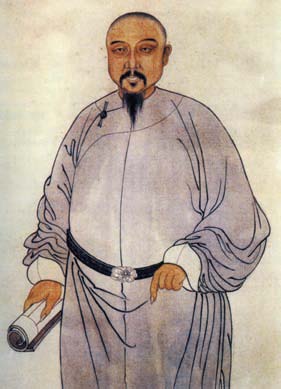
Lin Zexu, an official in Qing Dynasty, launched a campaign to learn from foreign countries in the 19th century. |
Then, in the 19th and early 20th centuries, the country was beset by foreign occupation. In the face of serious domestic problems and foreign invasions, the community began to take a new look at the world. They brought in and translated a large number of foreign books that were both educative and enlightening to the public, in a bid to build China up into a strong country, economically and militarily. Unfortunately, their efforts failed due to the magnitude of the social disturbances and the complications of international circumstances.
But things changed in China’s drive to reform and open up. This time, efforts to learn from foreign cultures succeeded in helping China become an economically and militarily stronger country. Amid the increasing efforts to learn from others, however, attention on foreign things grew and the exchange somehow became one-way, bringing in huge amounts of foreign culture to China but failing to share Chinese culture overseas.
Academically, it is a daunting task to give a faithful translation of any source language. Translation, by nature, is the communication of the meaning of a source-language text by means of an equivalent target-language text. Traditionally, the common standards for good translation are fidelity and elegance, smoothness and equivalence.
Since the Chinese language, a branch of the Sino-Tibetan family, differs greatly from the Indo-European languages led by English, the Esperanto of our time in grammar and logic, problems may occur if the translator only has a passing acquaintance with both languages.
Therefore, one has to plumb the depths of the source language and target language before he or she can enter the world of translation. Any breakdown in the communication is disastrous. Truth may be distorted; information may get lost or misunderstood, thus limiting the prospects of those well-acclaimed Chinese books.
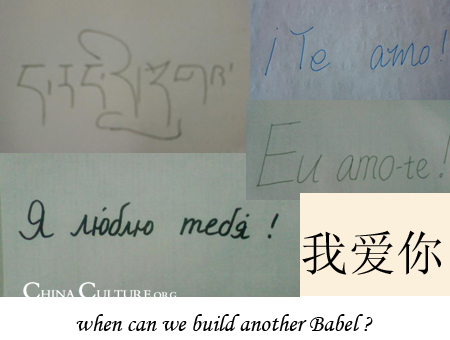 |
|
|
Nowadays, translation theories of all descriptions run riot, but they are just talking in the abstract, though from different perspectives. The pressing task is to return to the basics and see more action on the ground.
Translation also cannot be done when isolated from the social context. This is the right case with literary translation. Apart from the language barriers, literary works (novels, poems, plays) concern themselves a great deal about social life, the local culture and economy in which they are set.
As China’s economy continues to dazzle the world, floods of new words continue to appear as a result of social changes. Those words, born on the Chinese soil, are rich in local character.
Fangnu, for example, is a word to describe the younger generation who have to pay a majority of their incomes every month for the mortgage. As housing prices show no sign of decreasing, they gradually become Mortgage Slaves, a word that must be given enough time to be understood by foreigners.
Since many commercially successful Chinese books reflect the changing scene of Chinese life, it becomes an even more difficult job to render them faithfully. Even worse is the fact that so many difficult dialects exist in China. Folk literary works usually capture the shouts and cries of the local community, and something is bound to get lost in the translation process due to the inimitably unique characteristics of those dialects.