Taking the fizz out of energy drinks
(China Daily)
Updated: 2010-11-17 09:41
 |
Large Medium Small |
 |
|
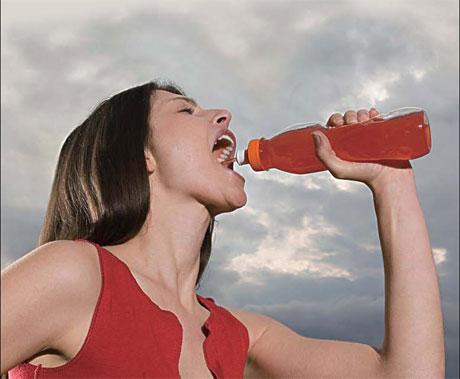
People with high blood pressure and heart disease should be careful when drinking energy drinks. Provided to China Daily |
While many people are aware of their caffeine content, few know of their hidden ingredients that, when combined with alcohol, can have serious consequences.
Even though energy drinks are hugely popular and can be bought just about anywhere - from corner markets and big-box stores to gyms, researchers writing in November's Mayo Clinic Proceedings urge caution in using them. "What we know is that a typical energy drink can have as much as a quarter cup of sugar, and more caffeine than a strong cup of coffee," says the lead researcher, Dr John Higgins of The University of Texas Medical School at Houston.
Caffeine content ranges from 70 milligrams (mg) to 200 mg per 16-oz (473 ml) serving. In comparison, an 8 oz cup of coffee can contain between 40 mg and 150 mg depending on how it is brewed.
The problem, Higgins says, is what is not known.
Quantities of other ingredients, such as the herbal stimulant guarana, the amino acid taurine, and other herbs, minerals and vitamins that may make up proprietary energy blends are rarely listed, he says.
The concern is how these ingredients combine with caffeine to affect heart rate, blood pressure, and even mental states - particularly when consumed in large amounts, with alcohol, or by athletes engaging in heavy exertion.
Higgins and colleagues reviewed the medical literature between January 1976 through May 2010 for studies involving energy drinks or their ingredients so they could present "real-world recommendations to both the athletic community and the general population".
They found there has been little research into the health effects of energy drinks. The small studies conducted, usually in physically active healthy young adults, have shown the drinks can increase blood pressure and heart rate.
Evidence of more serious effects such as seizures, heart attack and death are anecdotal, the authors write.
Based on the way caffeine and some other ingredients normally affect the body, though, they warn the energy drinks can seriously dehydrate a user, particularly "weekend warriors" or athletes working out vigorously.
Norway, Denmark and France banned one of the brands, Red Bull, after a study showed "rats that were fed taurine exhibited bizarre behavior, including anxiety and self-mutilation".
"We're not rats," Higgins admits, but "consumption has been shown to be positively associated with high-risk behavior," he and his colleagues write.
Of particular concern to Higgins is the sale of energy drinks with alcohol.
"You go into any bar in Houston and order a Red Bull and vodka. It charges people up and might give them a sense that they are more capable than they are," he says.
Regulation of the drinks could go a long way to solving these problems, Higgins says. The energy drink market was valued at some $5 billion worldwide.
Given the knowns and the greater number of unknowns, however, the authors recommend the drinks be consumed with caution.
Non-athletes should drink no more than one a day, never mix them with alcohol, drink lots of water after exercising, and tell their doctor if they experience any ill effect. People with high blood pressure should not drink them at all and people with other health conditions such as heart disease should consult their doctor before using the drinks.
Energy drinks are often promoted to and used by athletes looking for that "extra push". The researchers recommend against it, however. Even though the drinks "appear safe", the possibility of dehydration and increased blood pressure make water or lower-octane sports drinks, which contain electrolytes, some minerals and carbohydrates, a better choice.
"My rule of thumb is, don't drink them," the researcher says.
"What we need to remember is the importance of consuming all foods and beverages in moderation," the American Beverage Association says in a statement in response to the study. "Most mainstream energy drinks actually contain about half the caffeine of a similar size cup of coffeehouse coffee," the group states.
Concerning the other ingredients the statement adds: "There is nothing unique about the ingredients found in energy drinks."
Higgins maintains the problem is no one can know for sure what is in the drinks.
"Manufacturers can put whatever in them, advertise however and people consume however. Whenever you have a situation like this, you are going to run into problems," Higgins says.
Reuters