Dos and don'ts for Chinese Lunar New Year
|
 |
Firework and red couplets. Dumplings in China's north and glutinous rice cakes in the south. Red wrappings with cash for children. No haircut until the start of the second lunar month.
These are some of the dos and don'ts for the Chinese Lunar New Year, or Spring Festival, the most important Chinese holiday that falls on Feb. 3 this year.
While the older generation of Chinese have strictly kept to these customs for decades, the young are also increasingly observant of the dos and don'ts amid a revival of traditional culture.
All in all, people hope the new year will bring them good luck, which is exactly what all these rules imply.
WHY FIREWORK, LANTERNS AND COUPLETS?
Most people stay up late on the eve of the Chinese New Year, watching TV, enjoying snacks and chatting with their family. Even if they don't, they are woken up by the loud bangs of firework at midnight -- if the sporadic firework sessions before 12 a.m. are not loud enough to stir the sound sleepers.
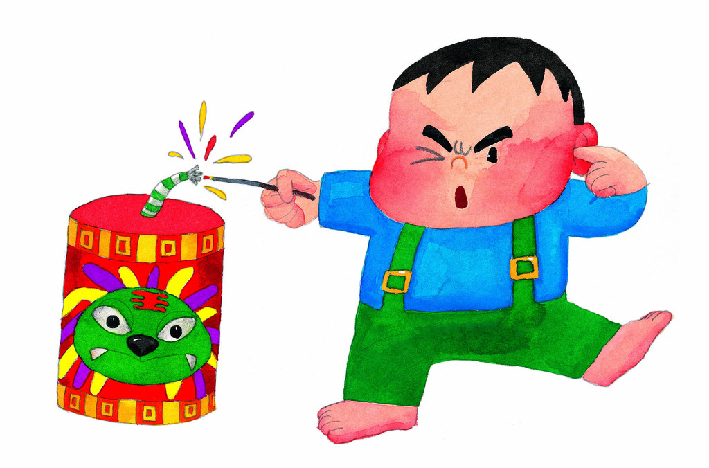
As a legend goes, Chinese ancestors were haunted by a monster named "nian" (meaning year) that left its mountain dwelling for human communities amid food shortages in winter to prey on men and cattle.
In the long run, people found out the monster was afraid of flames, bangs and red color. So they worked out firecrackers and lanterns to scare it away.
No one in China still believes such a monster actually existed, but the legend and customs have survived.
Today, Chinese families still hang up red lanterns and put up red couplets with rhymed phrases at their door, light fireworks and stay up late to watch the old year out.
NEW YEAR'S FOOD
In northern China, dumpling is an indispensable dish on the New Year dinner table.
Experts say the snack was already popular in the Three Kingdoms period (220 - 280). Many Chinese believe that to eat dumplings at the turn of the year will bring good luck, because the food resembles "yuan bao", a boat-shaped gold ingot that served for many years in history as China's currency.
Vegetables, meat, fish and shrimps can all make dumpling fillings. But some families put something special -- from nuts and dates to coins -- in just one of the dumplings. He who happens to eat this special dumpling is considered the luckiest person in the new year.
In southern China, where people prefer rice to wheat, families eat glutinous rice cakes instead of dumplings for the new year. These cakes, whose Chinese name "nian gao" (higher year-on-year), are also symbols of a prosperous new year.
Leek, whose Chinese name sounds like "a permanent vegetable", and fish, which sounds like "surplus" or "abundance", are also among the most common dishes on the new year dinner table.
RED WRAPPINGS
Children enjoy the holiday more than anyone else, largely because they get red wrappings of pocket money from their parents, grandparents and other relatives.
Experts say the custom, at least 1,800 years old, conveys new year greetings and aims to protect youngsters from ill luck.
In Chinese cities, the sum in each wrapping can range from 100 up to several thousand, but has to be an even number.
It can be given in exchange of a child's new year greetings, or be stuck under the child's pillow later during the night.
NO HAIRCUT
Many Chinese has the superstitious belief that if a person has a haircut during the first month of the lunar year, his maternal uncle will die.
As a result, barbershops open almost 18 hours a day in the pre-holiday rush for haircuts that lasts for at least two weeks until the New Year's eve.
While women like to spruce up for the holiday, even men with short hair like to take an extra haircut before the new year lest their hair will grow too long before their next haircut, scheduled on the second day of the second lunar month.
A Chinese legend goes that a poor barber loved his uncle dearly but could not afford a decent new year gift for him. So he gave his uncle a nice haircut that made the old man look many years younger. His uncle said it was the best gift he had ever had and wished to get a haircut every year.
After his uncle died, the barber missed him very much and cried every new year. Over the years, his "thinking of his uncle" (si jiu) was interpreted as "death of uncle" because in Chinese, their pronunciations are almost the same.