Time travel fantasies please fed-up youth
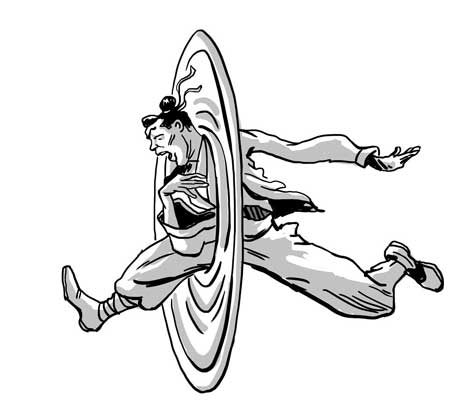
In early April, Li Jingsheng, an official from the State Administration of Radio, Film and Television, criticized China's TV productions.
He urged that "calm review and discussion" are needed at the moment for current telenovelas focused on chuanyue, or time travel, where usually the protagonist is transported to somewhere in the ancient times or in the future. He believed that such works did not properly reflect history and culture and shouldn't be promoted.
I am against the administrative interference in the production of TV series, but as an audience member I have to totally agree with Li's criticisms as I cannot stand another time travel plot.
In recent years, plenty of time travel-themed telenovelas have become hot hits on various TV channels, such as The Myth and Palace. The popularity reminds me of the so-called Qing Dynasty (1636-1911) dramas, which once dominated the prime time of almost every satellite and local network, with all kinds of palace intrigue and other silly plots repeating over and over again.
The theme of time travel is not new at all. There are many foreign productions based on it, for instance, Somewhere in Time (1980), Back to the Future (1985), and The Butterfly Effect (2004). They're often thoughtful works, but the chuanyue works that prevail in China are mostly pure wish-fulfillment.
This is most visible in the works published online. For example, a popular book tells a story about some guy who travels back a decade ago and cheats Mark Zuckerberg out of half of his shares of the social networking website Facebook. Another work features the protagonist profiting hundreds-of-millions dollars during the Southeast Asian financial crisis in 1997.
The historical fantasies are more revealing, usually with the hero saving China from crisis. For example, one popular book has the hero travel back to the late Han Dynasty (AD 25-220) where he is adopted by a famous official, and then reunites the whole country. Some other popular writers fantasize about foreign histories, like some random Chinese man becoming the successor of German Kaiser Wilhelm II, winning World War I and unifying the world.
The "vulgarity" of so many chuanyue novels is inevitable, given the lack of editing or gatekeeping online. Online fiction websites pay their writers purely through the number of clicks, votes and subscriptions to their stories. It has both pros and cons – it can stimulate writers to publish more stories, but it also forces writers to run after readers' preferences.
Some writers deliberately add pornographic descriptions in their works, but such moves are risky because of online censorship. Time travel fantasies are an easier way to please readers.
Unpleasant realities are exposed by these fantasies. Take those novels that feature rebirth and officialdom. The hero is usually part of the second generation of high-ranking officials, who have complicated affairs with different lovers, as well as leading a life of luxury. Internet users are crazy for such content but are mad about real-life officials flaunting their wealth. Perhaps they're only angry about corruption because they can't be a part of it.
Why do young Chinese Internet users prefer to "travel back" to anesthetize themselves? A major reason is that the realities of the present can't match the fantasies of the past.
In recent years, China's economy has been growing conspicuously.
But national happiness, at least for the youngsters, hasn't increased at the same time. There's fiercer competition, tougher work, a more unfair social environment, and difficulties in having babies, education, employment, home-purchasing, and healthcare. All of them lead the younger generation to feel frustrated and insecure, leading to these kinds of fantasies.
There is a popular online story called "Ten Periods I Would Like to Live in." In the article, the author listed several past periods.But if he could travel in time, he said he wouldn't even have to chose "today."
How many among the younger Chinese generation feel proud to be born at the current time?