Comments()
  Print
Print  Mail
Mail  Large Medium Small
 |
|
Yan Keqin's paintings inherit the traditional values of Chinese ink-and-water art. Provided to China Daily |
Painter Yan Keqin uses black ink to portray a world of colors. His genre of art is called 'literati painting' in China. Han Bingbin takes a closer look.
Related: Museum leaders find plenty to like in China
His brush gives life to the orchids. His brush brings out the soul of spring. Where his brush fondles, a lotus flower appears to kiss the rain.
Painter Yan Keqin reveals a rhythmic and twinkling world of mountains and flowers with a flexible and mythical mixture of only ink and water.
"It's very difficult to paint all in ink. Nowadays many people don't even dare to try. In the pursuit of the highest realm of ink painting, he has bravely used black ink to portray a world of colors," comments Xing Shaochen, chief researcher with the China National Academy of Painting.
Based in Wuxi of Jiangsu province, home to a panel of master artists who've created a tower of strength for Chinese art, Yan Keqin is continuously inspired by the city's cultural heritage and charming scenery. He has never tired of rendering his reflections on paper over the decades.
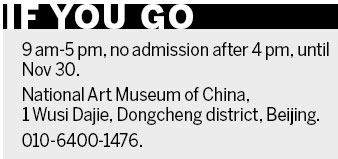
But, surprisingly, Yan has barely received professional training in painting. The head of Wuxi Broadcasting Corp's recent ink painting exhibition at the National Art Museum of China wows critics, who say he has outstripped the professional level. More importantly, many agree that he has manifested the spirit of Chinese "literati painting".
This painting style originated in the middle of the Tang Dynasty (AD 618-907) and reached its climax in the Yuan (1271-1368), Ming (1368-1644) and Qing (1644-1911) dynasties.
It used to refer to artworks created by literati or scholar-bureaucrats. That's how it got its name. But the definition has expanded as it became a more established genre. Literati painting, according to Peking University's professor of aesthetics Zhu Liangzhi, is now a reference to artworks that convey a "unique literary mood".
The subjects of literati painting are often natural images, such as orchids, bamboos and mountains, from which Chinese poets of all times traditionally find a spiritual resonance. Unlike professionally trained artisan-painters, who paint for the market, literati paint solely to express their philosophical reflections about life. Led by spontaneous inspirations rather than skills, they care more about how their paintings feel than how they look.
Therefore, their creations often appear as freehand brush stokes without necessarily looking exactly like the original objects they attempt to portray. Just like in Chinese calligraphy, the painter's mood, temperament and personality are reflected through the rhythm of the strokes that vary in strength, thickness and density.
This Impressionistic and liberal style - or xieyi in Chinese - has been one of Chinese art's most important aesthetics traditions. But since the early 20th century, Chinese artists have been noticeably divided as to whether it's necessary to incorporate or even fully apply Western Realistic painting skills during art education and creation.
The introduction of new materials, techniques and ideas has enriched Chinese painting, says China Artists Association's chairman Liu Dawei. He says he is disappointed that xieyi is losing its charm and position. But he respects Yan, who has given xieyi a glimmer of hope as he persists in continuing the traditional values of Chinese ink-brush painting.
Yan says simplicity is the core value of xieyi as it lies in the spiritually ethereal world of ancient literati, who believed the whole world could be reflected in a single flower. He says nature is traditionally a source of inspiration for literati painters and, thus, close contact with the natural world is essential.?
But Peking University's professor Zhu sees more in Yan's art creations.
"Yan's understanding of ancient Chinese philosophy and art is definitely one of the best among contemporary painters," Zhu says. "He often impresses me with his knowledge of ancient arts like calligraphy and gardening. This has surely contributed to his achievement in painting."
Contact the writer at hanbingbin@chinadaily.com.cn.


Copyright 1995 - 2010 . All rights reserved. The content (including but not limited to text, photo, multimedia information, etc) published in this site belongs to China Daily Information Co (CDIC). Without written authorization from CDIC, such content shall not be republished or used in any form. Note: Browsers with 1024*768 or higher resolution are suggested for this site.
License for publishing multimedia online 0108263 Registration Number: 20100000002731