Comments
  Print
Print  Mail
Mail  Large Medium Small
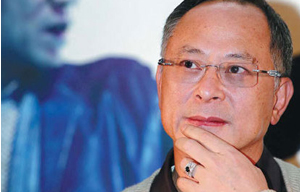
His company, J.A.O. Design International, surveys residents with questionnaires before projects. It also posts public displays of the plans for comments.
"Public participation will come when people are confident and really want to do something good for their city," Jao says. "Chinese don't like to speak up. They're afraid of being persecuted for what they say."
They must overcome this anxiety to improve their lives, he believes.
"Happiness is one of urban development's major indicators," Jao says.
"The biggest job for urban planners is to give residents hope and happiness."
But that requires citizens' feedback, he says.
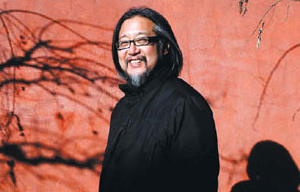
J.A.O. Design has won more than 100 awards for the 300,000 hectares - the equivalent of 50 Manhattans - of China it has planned. Jao has also trained more than 100,000 Chinese officials. Outside China, he advises US President Barack Obama and is a UN Habitat member.
Jao was born in Taiwan in 1957, moved to the United States with his family in '71 and became a US citizen eight years later. He learned English by "hawking cheap Christmas gifts to help make family ends meet". One of his first sentences was: "One dollar."
At 32, he became the first Asian-American and youngest-ever New York City planning commissioner. New York City has officially celebrated James Jao Day on Dec 7 since 1993.
He first came to Chinese mainland in the '90s at the Ministry of Foreign Affairs' invitation and was asked by then-vice-premier Zhu Rongji to "introduce new land-use practices and urban planning ideas to a nation isolated for decades", he writes.
Jao moved to Hong Kong in 1996 and the mainland in 2001 to establish a mainland branch of his firm, which he founded in New York in 1984.
"Hundreds of foreign design firms are here, yet very few have been able to make it," Qiu, vice-minister of housing and urban-rural development, writes in the foreword of Straight Talk.
"Jao is probably the only one who has acceded to the inner circles of Chinese real estate."
The reason, says Xinhua Publishing House's deputy editor Liu Fei, who published Straight Talk, is: "He understands Western philosophy and also respects traditional Chinese culture."
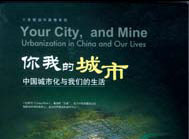
Economic Publishing Co editor Qiang Jing, who published his earlier book, Your City, and Mine, says: "This book comes at the right moment, as China's urbanization rate just surpassed 50 percent."
It was 18 percent when the People's Republic was founded in 1949.
Jao points out in the book that McKinsey Global Institute estimates about 1 billion - roughly 70 percent - of the country's 1.45 billion people will live in 929 cities by 2020. And Nobel laureate Joseph Stiglitz names Chinese urbanization and American technology as the two primary forces that will shape this century.
Despite the importance of China's city planning, much of it is conducted by under-qualified local officials.
He advises them to not ride in motorcades for which the roads have been cleared so they experience traffic realities. He reminds officials that most will become ordinary citizens, who have to live in the cities they plan, after their terms.
Jao uses parables, such as that of Buddha and the Mouse, to explain such points. In this fable, a mouse, who lives atop the head of a Buddha statue, tells a cat that the feline can't eat him because he's god. When the cat asks why the mouse believes so, the rodent retorts that people place offerings in front of him every day.
The cat responds by devouring him.
This is his warning to officials against hubris and reminds them that their power comes from others.
Jao also compares the city to the human body.
In this analogy, the circulatory system is like the transit system, with blood cells coursing through the body like automobiles. Muscle growth is a metaphor for regional development, and acupuncture points are like activity hubs, such as malls.
The government has adopted most of Jao's proposals, aside from nixing the household registration (hukou) system, he says.
These include calls for more low-income housing, greener construction, and a dual system of subsidized and free-market housing.
However, Jao offers no solutions for urbanites' primary concern - soaring housing prices - because he believes land values' perpetual rise is inevitable.
"There are three major expenses that contribute to housing prices - land, labor and materials - and none of these costs are going down," he explains.
But the quality of life will rise in pace with housing costs - that is, if China's urbanization is well devised and involves public input, Jao says.
"City dwelling is inevitable as long as people seek a better quality of life," Jao says.
"China has the potential to redefine the notion of what a city is and to become a world leader in sustainable development," he writes.
"Cities will be the measure of China's success or failure on the way to becoming a modern nation."
Contact the writer at erik_nilsson@chinadaily.com.cn.
 |
|

Copyright 1995 - 2010 . All rights reserved. The content (including but not limited to text, photo, multimedia information, etc) published in this site belongs to China Daily Information Co (CDIC). Without written authorization from CDIC, such content shall not be republished or used in any form. Note: Browsers with 1024*768 or higher resolution are suggested for this site.
License for publishing multimedia online 0108263 Registration Number: 20100000002731