Messing with a legend
 |
|
[Wang Xiaoying/China Daily] |
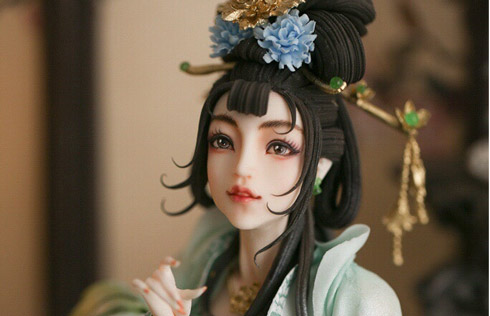
The tale of Mulan is familiar to every Chinese schoolchild and, through Disney's 1998 animated feature, became known to a significant part of the world.
The young woman who passes as a man and takes the place of her ailing father in military service has been an inspiration for generations of Chinese down through the centuries.
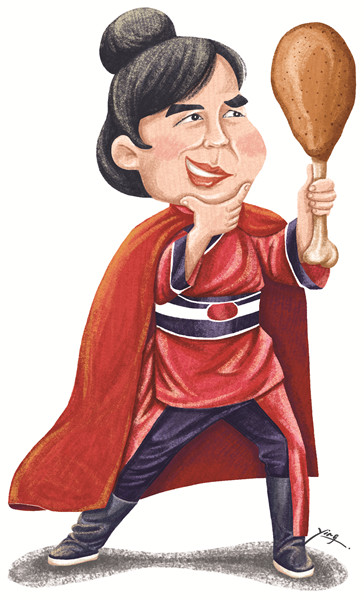
A recent television parody thrust the fictional character back into the spotlight or, more accurately, it put a comedienne who gave a subversive twist on the beloved cross-dresser into the center of a storm. On June 27, Shanghai Oriental TV aired a comedy show that included Jia Ling, a plump performer. Not only does she physically look a world apart from the usual Mulan, who tends to be the Angelina Jolie type, but she made her into someone lazy, unloving, cowardly and lacking ambition, essentially everything that is the opposite of Mulan as we know her.
The spoof made many uncomfortable. Ten days later, an organization named China Mulan Culture Research Center issued an open letter, demanding an apology from the broadcaster and the creative team behind the skit. On July 18, Jia published a formal apology, saying this work of hers ran counter of public acceptance and was unfit for our time. The TV station suspended the show for a week as a gesture of taking blame.
Meanwhile, the tide of public opinion seemed to turn. More voices have come forward to criticize the critic, i.e. the Mulan organization. Mulan is a fictional character that was passed down in folklore and, as the argument goes, no one should claim the exclusive right to her interpretation or adaptation. You can certainly find fault with Jia's portrayal and lambaste it for what it is, but you cannot deprive her of her right as a performer to offer her take no matter how unconventional it is.
The rush to claim fictional characters in China is a farce in itself. I have been to several places in disparate provinces that, through often dubious studies, assert to be the birthplace or hometown of Liang Shanbo or Zhu Yingtai, the Chinese equivalent of Romeo and Juliet. How lucky is Verona-so clearly identified in the Bard's play that no other city would even think of tinkering with the setting for the star-crossed lovers.
Then there are the historical figures or quasi-historical ones whose portrayals would occasionally incur the wrath of certain people with vested interests. For example, nobody knows what Confucius looked like and literary descriptions from his time were not reliable, yet some organization once claimed only they had the authority for endorsing his likeliness-as if their members had hour-long sittings with the Great Sage.
Huo Yuanjia (1868-1910) was a real person, but many of his heroic deeds elaborated in countless film and television adaptations are dramatizations that are the result of flights of artistic fancy. His descendents did not utter a word until one movie included a subplot in which he took a younger second wife, something that in Huo's time was nothing unusual.
There were even protests when the hairdo for a new television drama made from a literary classic was different from the one the public had got accustomed to.
When it comes to literary or artistic creations or historical personalities or events, there is a prolonged tug of war between the loyalists and-ahem-other loyalists. On one hand, writers and artists cling to the old chestnuts, recounting the familiar tales rather than embarking on the adventurous road of inventing something original. On the other hand, the public at large tends to be shaped by one work or one style and then refuse to accept more and different interpretations. Zhuge Liang (181-234 AD), the prime minister of the Kingdom of Shu, was a young man when the Battle of Red Cliff (208 AD) took place, but the image of a wise old man with flowing beard a la Gandalf has persisted through countless operas. Anyone who presents him as a 27-year-old would be laughed off the stage, so to speak.
Parody is a whole new ballgame whose rules many Chinese have not figured out. In a culture that emphasizes the respect for authority, anything subversive is frowned upon. Living persons are naturally off-limits as any imitation other than glowing would be conceived as slanderous. Historical figures often have accepted portrayals that allow little latitude for representation. That leaves the fictional ones.
As evidenced by the Mulan controversy, the risk does not fade away. Even though there is no record she existed and even though the narrative poem which is the written source of her legend is extremely sketchy in details, the image has cemented layers of public expectation. The Disney version, while not really endearing Chinese viewers, made two subtle changes: It replaced (1) filial piety with love between a father and a daughter and (2) subjugation to the emperor with patriotism-all the while retaining Mulan's valor and feminine beauty. Had it been a Saturday Night Live-style version, it might have caused a diplomatic furor.
A true classic would stand all kinds of reinterpretations, including caricatures. Whether it's Disney's more global take or Jia Ling's sendup, it will only add to the legacy that is Mulan. It wouldn't be a classic if it cannot take a comedic jab.