Tea is so much more than just a hot drink
Updated: 2010-12-06 07:44
(China Daily)
|
|||||||||


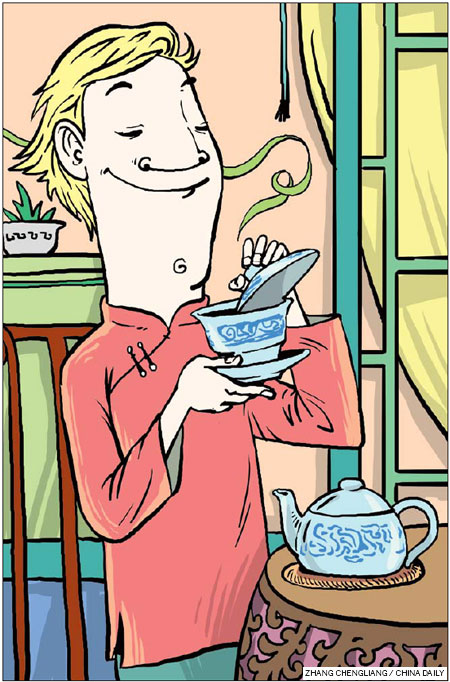

Tea bag art - creative recycling at its best - has become increasingly fashionable.
Tea bag artists, such as Mari Omori, take used tea bags and fashion them into bizarrely intriguing sculptures and installations. Some artists even use tea to paint with.
Omori, who is based in Texas, says credit for her success lies with her Asian heritage and subsequent love of a good cup of tea. A lot of the used tea bags in her work come from cups of tea she has drunk and the etiquette that often accompanies sharing tea with guests in Asian cultures informs her work.
The idea that tea is more than simply a drink is one familiar to many Beijingers. Indeed, while tea bag artists may be wowing well-heeled collectors and filling galleries with their high-end work, Beijingers have perfected the simpler, but much broader ranging, art of enjoying tea.
The association of artistry and drinking tea is perhaps best exemplified in the Chinese tea ceremony, in which there is an obvious intricacy and creativity in preparing, serving and tasting the tea. Many newcomers to Beijing may imagine tea ceremonies to be extraordinarily complex affairs, but they can be quite simple. Just stop by any tea shop in Beijing and sit down with the proprietor for a cup - it's graceful but not extravagant. There is an undeniable elegance to the way the shop owner selects, washes and pours the tea. And there is certainly a lot of artistry in the teapots and tea cups in most Chinese tea shops.
But you don't need a tea ceremony to appreciate tea. The familiar bitter taste of Chinese green tea is also warm and welcoming when sipped from a taxi driver's tea flask, from the thermoses in a guesthouse in rural Beijing on a cold night or from your favorite mug in your apartment after a long day out.
Tea is something of a liquid equalizer for Beijingers. Everybody drinks it - locals, newcomers, migrant workers, office workers and even the top authorities.
A cup of tea is as common in any of Beijing's glitzy new high-rise apartment complexes as it is in old courtyard homes on winding hutong. In the winter chill, many companies in Beijing provide thermoses of hot water so employees can keep pouring it over the tea leaves in their mugs. Some companies do it year-round.
In the summer heat, Beijing vendors beckon with bottles of sweetened green tea drinks from their freezers. Beijingers drink tea with meals and they drink it on its own. They drink it by themselves and they drink as an excuse to socialize.
And although tea is a commonality for Beijingers, it also highlights how dissimilar they can be, because every Beijinger likes to take his or her cup a little differently.
Tea in China is like wine in France - every region, with its different climate and different soil, produces a different type of tea. Different preparation methods also result in different teas. Many Beijingers seem to like classic green teas, such as longjing tea from Hangzhou. But many others prefer the gentler taste of jasmine tea or chrysanthemum tea. Some really like oolong tea from Fujian province (reputedly one of the best places in China to grow tea), which tastes something between black tea and green tea. A few swear by the earthy, smoky flavor of puer tea, but it often takes awhile for newcomers to get used to it. A tiny minority even prefer fancy whip-cream laden tea latte drinks from international coffee shop chains.
Even if a group of Beijingers are all drinking the same pot of tea, there are sometimes differing opinions on how long to let it steep. Some like it strong enough to knock your socks off, others prefer it lighter and more soothing.
One thing is certain - nothing is more quintessentially Beijing than a cup of tea, whatever type it is and however strong it may be.
(China Daily 12/06/2010)