We have launched E-mail Alert service,subscribers can receive the latest catalogues free of charge

Social System Engineering Methodology
2016-05-16


By Wang Huijiong, DRC
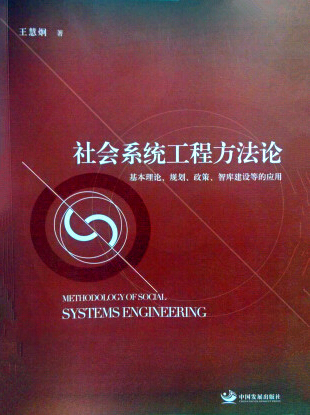
Social system engineering could be used in various aspects like state and large-scale enterprise planning, system reform, policy adjustment and management. Nowadays, academic research on social system engineering in China is still in the initial stage. Based on his research experience in policy advisory and consultation work over the past 30-odd years, Mr. Wang Huijiong wrote the book Social System Engineering Methodology. This book gives a systematic analysis of social system engineering, sheds light on the application of social system engineering in relevant organizations and enterprises and enables people to make further research and study in social system engineering in China.
This book has two parts: Part One and Part Two. Part One has three sections. Section One elucidates, from the perspective of natural science’s historical development, different natural science development stages since the scientific revolution, including mechanical determinism in Newton era, the relativity theory and uncertainty theory in Einstein and quantum mechanics era, and systematic perspective on object-changes and system theory in the system theory era. Moreover, this section also illustrates a number of major points from general system theory. Section Two gives an analysis of the development history of social sciences. Since the existence of human society, there were materials for social sciences. Ancient civilizations in history like China, India, Egypt, Greece and Rome, all possess abundant social science materials. But modern social sciences mainly came from the European continent after the Renaissance and the afterward dissemination. Psychology, one of social system’s basic theories which affects human behavior, was also born in Europe and then spread to the United States. Section Three expounds the formation of social system engineering and explains the characteristics of social system design. It gives an introduction to the academic development process of social system engineering and the present development of the higher education in the United States and Japan. It also illustrates two social system engineering cases of the United States and China and the author’s study on the generalized definition and narrow definition of social system engineering.
Part Two focuses on the elucidation of social system engineering’s methodology and its five compositive sub-systems such as planning, culture, analysis, adjustment and think-tank. The Planning System Section introduces the development and evolvement of planning, planning experience of various countries like France, Japan and India and the experience of China’s planning work and the planning experience of the United States which enjoys a sea of research results on planning theory and technology. This section takes 2030 Global Trends written by the National Intelligence Council of the United States as an example to explain the scenario analysis method which is commonly used in current international planning activities. The Culture System Section introduces the relationship between culture and development, the World Decade for Cultural Development (1988-1997) Action Plan launched by UNESCO (United Nations Educational Scientific and Cultural Organization) and the experience from developed countries like Australia and the Netherlands on how they bring culture system into national and regional development planning. This section also elucidates the history of culture system development in China. Analysis System Section includes two parts: qualitative analysis and quantitative analysis. In the qualitative analysis part, this book elucidates the importance of logical thinking and analytical application which is related to comprehensiveness, analysis, causes, results, contingency and inevitability. In the quantitative analysis part, this book gives a generalized elucidation on models and the application of mathematic models. It then introduces two models that are relevant to social system engineering: system dynamics model and interpretive structural model. Based on the current situations both at home and abroad, this book states that we must develop the application of mathematic model in social system engineering, but we must not regard mathematics as the only way. This section also elucidates the application and development of indicator system and introduces OECD’s “better life” eleven-indicator framework which was developed to overcome the misconception of “only GDP matters”. In Adjustment System Section, the author states that social system engineering should not only pay attention to economy, social affairs, scientific technology and their interactions with environment and the interaction between the system’s sub-systems, but also focus on studying the effects and adjustments of human group-behavior system. At national and enterprise level, law and policy system are needed to adjust group behavior.
This book covers both domestic and foreign experience and elements and gives a systematic analysis on social system engineering and its methodology. It offers enlightenments for nation and enterprise planning, system reform and policy design, with both major academic value and practical significance. Due to limited knowledge and festinate time, some mistakes and errors in the book are unavoidable. All criticisms and comments are sincerely welcome.