We have launched E-mail Alert service,subscribers can receive the latest catalogues free of charge

Research Report on China’s Livelihood Index
2018-07-26


Research Team of DRC
2015-11-30
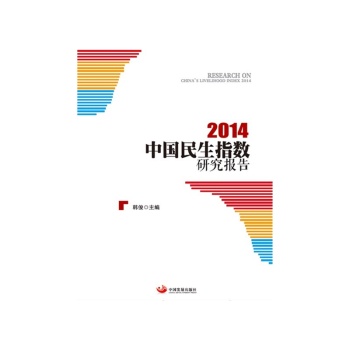
The government must follow people’s wishes which are at the center of governance. In modern society, people's livelihood is the core of all issues. It is not only the goal of development and the symbol of social progress, but also the major goal of policies of a modern and culturally advanced government. At present, China's economic development has entered a new normal and it is especially important to continue to improve people's livelihood. First, people's livelihood is directly related to social harmony and stability. Second, only when people's livelihood is generally improved can we maintain a sustained economic growth. Third, ensuring and improving people's livelihood can also create new economic growth drivers. China's livelihood index, which aims to comprehensively and objectively reflect people's livelihood across the country, is, based on relevant studies, released by “China’s livelihood index” research group of DRC. The index consists of the objective index of people's livelihood and the subjective (degree of satisfaction) index of people's livelihood. The objective index is based on the results of telephone surveys and household surveys and it is one of the characteristics of the research group of “China’s Livelihood Index” of DRC. The compilation and release of “China's livelihood index” can fully reflect the improvement of people's livelihood across the country, systematically summarize the successful experience and weak links in the development process of people's livelihood, and put forward major tasks at different stages and countermeasures to ensure and improve people's livelihood. It is also of great significance for “improving the evaluation system of development achievements and changing the tendency of evaluating achievements solely based on the economic growth”, a task set out at the Third Plenary Session of the 18th CPC Central Committee, and for promoting the implementation of the policies made by the central government as well as guiding the local governments’ work and reflecting the public opinions.
The research group conducted such a study in 2011, 2012 and 2013 respectively. This book is mainly based on the research findings of 2013. The initial results of “China's livelihood index of 2014” show that the livelihood of most provinces has been improved, but there are wide differences between various provinces and in some places these differences are becoming widened. Telephone surveys and household surveys show that more than half of urban and rural residents are “very satisfied” or “satisfied” with their current life, and more than 70 % are “very confident” or “confident” of their future life. From the perspective of different fields, urban and rural residents have a higher degree of satisfaction with social security, social insurance and education, but a lower degree of satisfaction with employment, income, and food safety. Most residents believe that the government has made efforts to combat corruption in the past year. The survey results also reveal that about 10% of the residents are dissatisfied with their life, most of them are residents with a low school degree, low-income families, informal workers, households without their own houses and some other social groups. They have a strong wish to improve living conditions, the quality of employment and social insurance. Based on the comprehensive analysis of research results in the past 3 years, the level of economic development in a region is highly and positively correlated with the level of people's livelihood, and the level of household income is highly and positively correlated with the level of people's satisfaction with their livelihood. Governments at all levels need to strengthen the direction and guidance of public opinions while improving people's livelihood, and appropriately guide the expectations of the public, so that the public can know about the efforts and achievements made by the government in improving people's livelihood and enhance their confidence for future development.
The book has 6 parts divided into 34 chapters. Part 1. A comprehensive report which includes a comprehensive research report of “China's livelihood index”; an analysis report on the measurement of the objective index of China's people's livelihood; a study on the degree of satisfaction of urban and rural residents with their life and their evaluation on the work of people's livelihood; an analysis report on 8,000 household surveys in eight provinces and cities. Part 2. Reports on special topics: an estimation of Gini coefficient in China; the progress of medical and health reform based on household surveys: analysis of living condition and policy options based on household surveys in 8 provinces and cities; people’s concerns for compulsory education in urban and rural areas and policy options; urban and rural residents’ satisfaction degree on employment and relevant suggestions; a comparative study of the public's concern of environmental protection work and environmental quality in light of the actual situation; a scientific control of food quality and safety risks related to environmental pollution; the performance budget reform and the optimization of resource allocation. Part 3. Report on the provincial people's livelihood development: people's livelihood development report of Shanghai, Zhejiang province, Gansu province, Guangdong province, Anhui province, Yunnan province, Jiangxi province and Liaoning province. Part 4. A survey report on the livelihood of major grain-producing counties: a study on the financial situation and livelihood of major grain-producing counties in Henan province, Heilongjiang province and Jilin province. Part 5. A report on policy background: basic livelihood situation and background in fields of income distribution, education, civil affairs, human resources and social security, environmental protection, housing security, transportation, culture, health, quality inspection and safety production. Part 6. An appendix.