Arts and traditions
Shadow play (ICH)
Updated: 2013-10-29( chinaculture.org )
 |
|
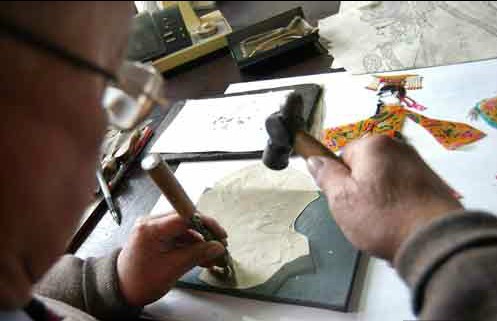
Shadow play, also known as shadow puppetry, is an ancient form of storytelling and entertainment that uses flat articulated figures (shadow puppets) to create the impression of moving humans and other three-dimensional objects. |
 |
|
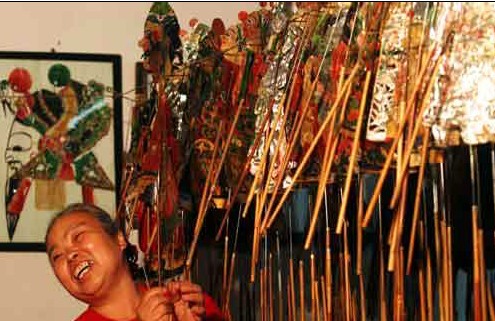
Shadow play, also known as shadow puppetry, is an ancient form of storytelling and entertainment that uses flat articulated figures (shadow puppets) to create the impression of moving humans and other three-dimensional objects. |
1. Origin
Legend has it that more than 2,000 years ago, Emperor Wudi (156-87 BC) of theWestern Han Dynastywas very depressed over the death of his favorite concubine. To help him get over his sadness, a minister made a puppet out of cotton and silk in the likeness of the concubine and projected its shadow on a curtain for the emperor to see. The show brought the emperor some consolation. He somehow believed the shadow was his lover's spirit. This is thought to be the beginning of the shadow play puppetry.
The shadow plays became quite popular as early as the Song Dynasty (960-1279) when holidays were marked by the presentation of many shadow plays. During the Ming Dynasty(1368-1644), there were 40 to 50 shadow play troupes in the city ofBeijingalone.
In the 13th century, shadow plays became a regular form of recreation in the barracks of Mongolian troops. They were spread by the conquering Mongols to distant lands like Persia, Arabia and Turkey. Later, the art was introduced to Southeast Asian countries, too.
Shadow puppets began to spread to Europe in the mid-18th century, when French missionaries to China took them back to France in 1767 and put on performances in Paris and Marseilles, causing quite a stir. As present, more than 20 countries are known to have shadow play troupes.
2. Artistic Characteristics of Performance
Illuminated puppet figures manipulated by three to five artists using a transparent white cloth screen have now formed an artistic combination of opera, music, fine art and special craftsmanship.
During performances, "actors" are held close to a white curtain with their colored shadows cast on it by a strong light from behind. Moved by guiding sticks, the puppets play roles with musical accompaniment. Parts are played and sung by the puppet masters. The plays can be quite dramatic and, when it comes to fairy tales orkungfustories, the "actors" may be made to ride on clouds or perform unusual feats, to the great enjoyment of the audience, especially children.
A puppet figure requires five bamboo-sticks to operate. So the operator is usually highly sought-after, since he or she must not only have the ability to operate a puppet and sing and talk, but also be able to play a percussive instrument with his/her foot at the same time.
The popularity of shadow play is in some way attributable to the equipment being light and easy to carry, the small number of people needed for a performance, and the flexible requirements for performance venues. Shadow plays are mostly based on legends, folk tales and fables, although some are original. The shadow play is particularly adored by children for being so much more evocative of magic and mystery than folk opera ever could be, performed as it is by merely mortal players.
News