Big domestic companies, banks and multinationals are rarely tempted to take a plunge into China's southwestern hinterland because of a lack of modern infrastructure, human resources and services.
But the mountainous province of Guizhou in Southwest China, one of the poorest regions in the country, is trying to change that.
It is pressing ahead with more opening-up policies and an improved investment environment to drive economic growth while emphasizing environmental protection.
The province's foreign trade rose to a record $6.63 billion (4.9 billion euros) last year, the government says, 35.7 percent higher than in 2011, "a clear sign that Guizhou is opening up even faster than ever", local experts say.
Planners say they will speed up infrastructure construction, improve education, healthcare, logistics and transport, and build a sound and fair business environment to pave the way for foreign investment.
Though Guizhou is limited by its geography and topography - 90 percent of it is hills and mountains - and millions of its people live in poverty, the province sees great opportunities to attract more investment, particularly as its transport improves, says Zhao Kezhi, Party chief of the province.
Since the start of the national 11th Five-Year Plan in 2006, Guizhou has boosted infrastructure construction, especially transport links, and a comprehensive network has taken shape encompassing highways and waterways.
Guizhou's road network now makes it possible for the province's relatively small economy to integrate better with other parts of China and gain access to greater development opportunities.
By the end of last year, Guizhou had a road network of 164,500 kilometers, 152,000 km of which covered rural areas. The total expressway length reached 2,630 km, with access expanded to 60 districts and counties.
In the first quarter of this year, the provincial authorities invested 16.03 billion yuan ($2.6 billion; 2 billion euros) in building roads, up 38.4 percent year-on-year.
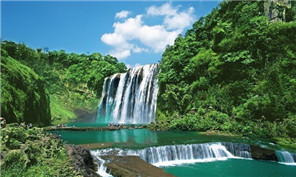
Guizhou's growth should be closely related to its advantages in environmental tourism, Zhao says.
"Promoting economic transformation is not only the requirement of the central government, but also an urgent task for Guizhou's own development."
To achieve that transformation, Guizhou must rely on its natural traits and a green development path, Zhao says.
Links with Zhongguancun, the high-tech hub in Beijing, have brought companies to the provincial capital, Guiyang.
Contracts for 106 projects worth a total of 46.5 billion yuan were signed with international and domestic large enterprises at the opening ceremony of a Zhongguancun industrial park in Guiyang recently.
"Cooperation with Zhongguancun does not just mean industrial transfer," says Chen Gang, Party chief of Guiyang. "It also means complementing each other and obtaining results beneficial to both."
The way resources are used needs to be changed, Chen says.
"We must keep in mind the idea of developing a recycling economy throughout the entire process of production, business operation and management to optimize the allocation of resources and turn waste into treasure."
His remarks coincide with the country's recent policies to drive growth through innovation and to promote progress in underdeveloped parts of China.
Last year the State Council issued a guideline to accelerate the development of Guizhou, including construction projects, increased government investment and tax breaks.
Liu Qinghe, a researcher with the Guizhou Academy of Social Sciences, says: "The benefit of Guizhou's opening-up strategies is obvious. Investment from both home and abroad has already greatly boosted the local economy and employment."
Last year investment in the province rose 35 percent and bank savings rose 23 percent, the highest growth in the country.
Companies in information technology, automobiles, heavy machinery and aviation now have a strong presence in Guiyang.
"But with limited resources, Guizhou still lags behind many regions in China," Liu says. "If it wants to bridge the gap with other provinces, the key is to rely on technological innovation to develop its main industrial sectors."
Guiyang's decision-makers have also placed a premium on protecting the environment.
"While we are now running on a fast track, we need to be conscious of choosing an appropriate way in pursuit of growth," Chen says.
"Guiyang has advantages in its environment. While we are trying to catch up with more developed regions, we will reject anything that could damage the environment."
The province will focus on eco-friendly industries such as high-tech and modern manufacturing, he says.
Li Zaiyong, mayor of the provincial capital, says Guiyang needs more international companies with great influence in their fields.
"We will make sure this city provides what they need for expansion."
Contact the writers through
lvchang@chinadaily.com.cn
Zhao Kai contributed to the story.