Guizhou authorities target investment in key areas to ensure local ways of life and economies thrive
The Huangguoshu Waterfall Scenic Area has made sustained efforts to improve its ecology and protect local culture over the last three decades, said a senior local official.
Wang Hongyong, who last month was appointed secretary-general of the Anshun city government was the former chief of the administrative committee of the scenic area, he pointed to Huangguoshu's recognition as a Global Low-Carbon Ecological Scenic Spot as evidence of the progress made by the area. He made his comments during the 10th Global Forum on Human Settlements held at the UN headquarters in New York on Oct 30, 2015.
"The award is confirmation of our endeavor to promote low-carbon and eco-friendly development, and encourages us to stick to sustainable growth in the future," Wang said.
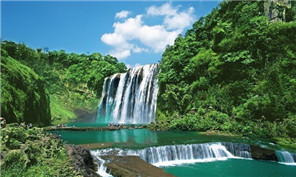
Located in the city of Anshun, Guizhou province, the scenic area is home to a waterfall, which at 77.8 meters high and 101 meters wide is thought to be the largest in Asia.
The Huangguoshu Waterfall Scenic Area was established in 1977 and it is the top tourist destination in Guizhou province.
Since its establishment, the local authorities have worked to strike a balance between development and ecological improvement, according to Wang.
While efforts to improve facilities and services are ongoing, the local government has also invested heavily in a number of greening projects, Wang said.
Local statistics show that the scenic area's forest coverage increased from 30.35 percent in 1999 to 53 percent in 2015, and the coverage rate at the scenic spot's core area is currently in excess of 70 percent.
Wang said that since 1999, when the Huangguoshu administrative committee was founded, the scenic area has invested a total of 4 billion yuan ($608 million) in improving the local environment. Roughly 300 million yuan of this investment has been used for greening, adding more than 5,000 hectares of forest to the 16,300-hectare scenic area.
More forested areas have resulted in better air and water quality, with both local indices currently topping national statistics, Wang said, adding that the scenic area has kept its air quality index at excellent or good levels almost daily over the past year.
Measures to improve the environment, such as building infrastructure facilities and returning farmland to forest, has involved the relocation of some local residents.
"To ensure quality of life for local residents, the scenic area has offered good compensation packages for those who were relocated and created more jobs for local farmers," Wang said.
He added that the scenic area has also worked to help local villages develop countryside tours to boost the revenue from tourism.
Thanks to such assistance from the scenic area, as well as inputs from numerous Chinese institutions, local villages such as Huashishao and Shitouzhai - which are mostly inhabited by the ethnic Buyi people - have been recognized as among the "most beautiful villages" in China. "The honor means not only a substantial improvement in local living conditions, but also a steady increase of incoming tourists and resulting revenues," Wang said.
In mentioning Shitouzhai, Wang paid tribute to Tsinghua University professor Wu Liangyong, China's top architect and planner, who is currently leading a team to help the village develop into a model environment for residents of rural areas.
Protecting culture
Huangguoshu is inhabited by a variety of ethnic peoples, resulting in rich cultural diversity, Wang noted, adding that highlighting and protecting such cultural diversity has been at the forefront of the scenic area's development plans.
"We noticed that in Huangguoshu, as well as other regions of the country, traditional, ethnic cultures have been challenged by the rapid pace of modernization," Wang said.
He believes an effective way to protect ethnic cultures is to promote them globally in order to attract tourists, thereby stimulating local economies.
"Once the cultures are better recognized and more tourists come and spend money locally, the locals will be motivated to protect and preserve their cultures," Wang explained.
He said the scenic area is promoting its indigenous cultures through exhibitions, festivals and folk arts contests and local people are becoming increasingly keen to promote the local ethnic cultures.
There are also numerous folk arts associations in the area that publicize the local ethnic cultures through various channels, especially social media, Wang said, adding that tourists can also experience these different cultures by visiting the villages and local museums.
Growing fame
Over more than three decades of development, Huangguoshu Waterfall Scenic Area has seen its fame grow, both at home and abroad.
It was among the nation's first 5-A - the highest-level - scenic spots. Its honors include "the favorite tourist destination in China" and one of the "top 10 destinations favored by European tourists".
To sustain its popularity among tourists, Wang said the scenic area is implementing a "green Huangguoshu action plan".
According to the plan, in the seven years from 2014-20, the scenic area will gain 1,800 hectares of new forests, increasing its forest coverage to more than 65 percent.
Investment will also be made to improve infrastructure, including a circular road, a light rail system and sightseeing trails.
In addition to sightseeing, Wang said the scenic area will offer a more diverse range of events in future, including international sports events, food galas, cultural tours, rural tours and science research trips.
The scenic area received more than 20 million visitors in 2015, an increase of 35.98 percent from 2014. Tourism revenue was 14.5 billion yuan, up 35.46 percent.
Huangguoshu Waterfall
Huangguoshu Waterfall is located in the lower reaches of Baishui River in Anshun, Guizhou province, about 130 kilometers from Guiyang, the provincial capital.
The 77.8-meter-high and 101-meter-wide waterfall is said to be the largest in Asia.
It came to prominence as a result of a travelogue written by Xu Xiake, China's top geographer in the late Ming Dynasty (1368-1644). The widely read travelogue featured detailed descriptions of the waterfall and attracted numerous tourists to the site over the following centuries.
The area features a karst landform, and the waterfall itself is the result of drastic water erosion of the limestone valley.
The waterfall is at its most spectacular during the rainy season, from May to July, with a water volume about 15 times that of the driest month of December.
zhaoshijun@chinadaily.com.cn
|
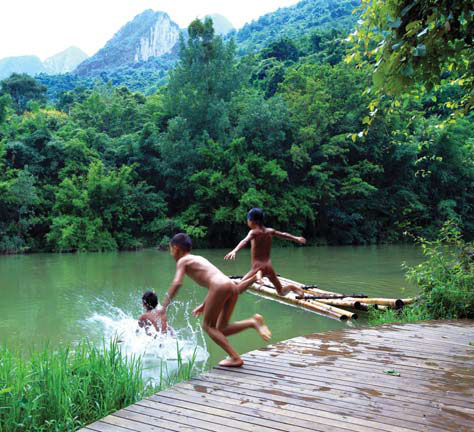
To create a better environment for locals and tourists, Huangguoshu is putting ecology at the core of its development, with forest coverage reaching 53 percent in 2015. Gu Shangtai / For China Daily |
(China Daily 07/06/2016 page18)