If you talk to many people in China, especially foreigners, about baijiu, the country's powerful, pungent white liquor, the response you often get is a violent grimace akin to that which tends to accompany a stubbed toe. This is often swiftly followed by "Don't do it. You'll go blind. And deaf. And that's just the beginning."
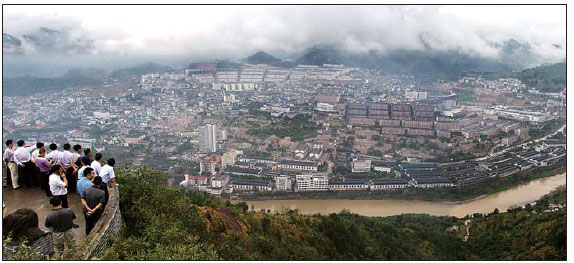
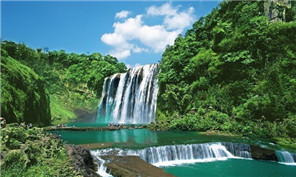
This changes, however, the closer you get to Guizhou province, and more specifically to the lovely town of Maotai itself, the physical and spiritual home of China's revered spirit.
Moutai, you are told, is different. Everything about it, from the pristine location where its ingredients are nurtured to the care with which the drink is blended, ensures an enjoyable and clean experience, no matter how much of the liquor you consume (more about that later).
Much is made of the ingredients the Kweichow Moutai Group uses to produce its unique and strictly controlled product.
Apart from the organic sorghum grown in Guizhou's verdant valleys, there is the unsullied water of the Chishui River, which is protected by the Chinese government. No chemical factories are allowed to open anywhere nearby to ensure that the "Fine Liquor River" remains uncontaminated.
The wheat from which Moutai is produced is made into yeast via fermentation on the Dragon Boat Festival, which falls on the fifth day of May on the Chinese Lunar calendar. It is then put in sorghum for the first time on the Double Ninth Festival, which is on the ninth day of the ninth month. This date is synonymous with longevity in Chinese culture.
There is also a strong human element behind it all; from the dedicated factory workers who pack the 500-gram Moutai bottles by hand in six-hour shifts, working at such incredible speed that, individually, they often manage to pack as many as six bottles in a minute, averaging 330,000 per day in total for the whole factory; to the bottle testers, who gently bang bottles together and, from the sound made, judge whether or not the bottles are fit to be used for Moutai; then to Kweichow Moutai's team of professional tasters, who receive ongoing training to ensure that their sensitive faculties continue to discern only the finest quality liquor.
One of Moutai's tasters and judges, Peng Jing, deputy director of liquor storage, underscored the importance of maintaining a sensitive palate. "You need to maintain a regular lifestyle to keep your senses intact," she said. "This means we have to be very careful not to drink too much alcohol outside of work and watch what we eat."
Professional tasters must have three years' experience before they can take the test to become a Moutai taster, and they are crucial to the process of ensuring Moutai's quality. The tasters are integral to the blending and storing process, which as Peng Jing explained, is what really gives the liquor its value.
Moutai goes through nine steaming and boiling sessions, eight fermentation sessions and seven distillation sessions, as well as numerous blendings. The whole process takes five years, and according to Peng Jing, roughly 5 percent of the wine fails testing.
So, what of the taste and effect of Moutai? I was advised to brace myself for the first sip, but I found it mildly pleasant, if strong. After about an hour of imbibing the shot-sized glasses at semi-regular intervals, I felt a lovely warm feeling spread throughout my body, but without any of the mental agitation that tends to assail me when I drink other spirits.
Astonishingly, despite the amount I must have consumed, I only felt pleasantly tired the next day and had none of the traditional hangover symptoms I was certainly expecting after drinking so much of a strong spirit.
I, however, was not the ultimate proof of the "no hangover" claim that contributes to the Moutai myth. One of our members, not content with mere shot glasses, proceeded to quaff from the decanters, toasting all and sundry in the true spirit of his hosts.
Despite drinking himself to a genuine standstill, he emerged the next day showing very little evidence of his epic Moutai moment. Moutai truly is a unique spirit that leaves no trace, even if you overindulge. It does, though, along with the town and region in which it is produced, leave an indelible memory.
The author is a copy editor with China Daily.
simon@chinadaily.com.cn
|
Visitors enjoy a panoramic view of Maotai town, with the Chishui River fl owing through it. The river's water, which is used to make Moutai, is protected by the government. Qiu Guoyu / For China Daily |
(China Daily 07/28/2016 page12)