 |
|
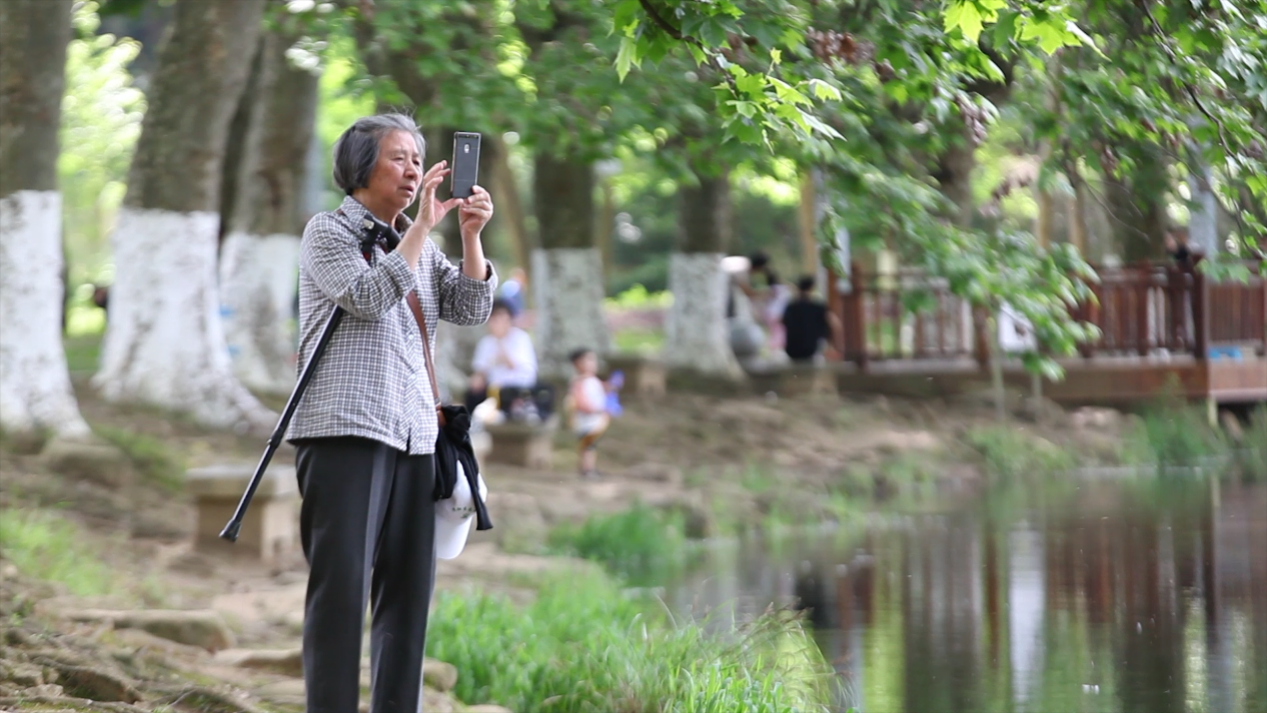
Lei Yueqin has worked as a volunteer patrolling the Nanming River since she retired in 1984. [Photo by Liao Wei/provided to chinadaily.com.cn] |
 |
|
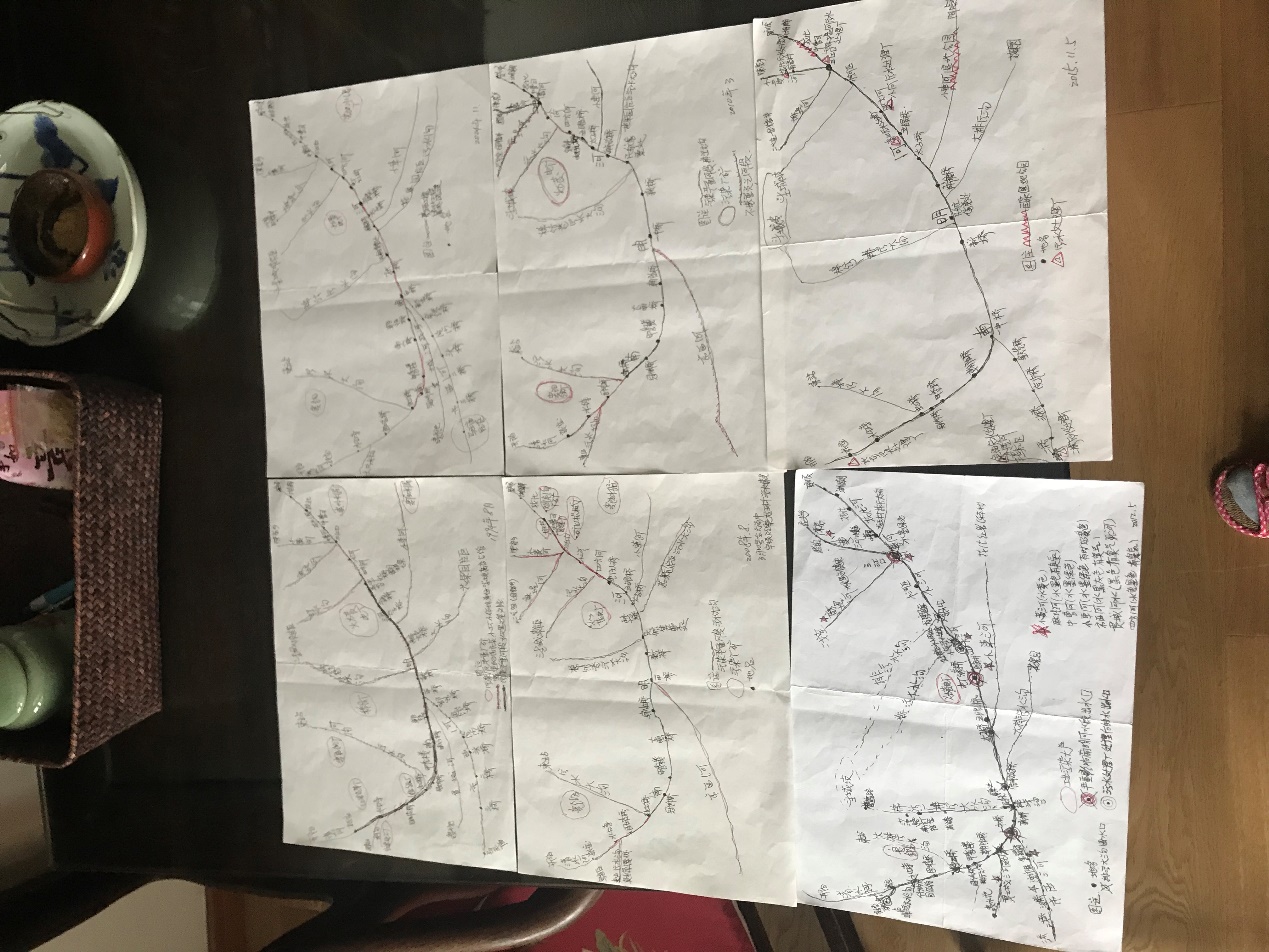
Lei Yueqin has drawn six maps by hand, recording the color, odor and pollution sources of Nanming River. [Photo by Li Hanyi/provided to chinadaily.com.cn] |
The Nanming River is a tributary of the Yangtze River. As it flows across Guiyang, it is regarded as mother river of the city.
"When I was young in the early 1950s, the river used to be crystalline. People could fetch water from the river for drinking and residential use. Kids always swam and caught fish," says Lei Yueqin, an 81-year old volunteer.
However, the river got severely polluted by untreated household sewage and waste from the factory from about 1970 onwards. By the end of the last century, the lake was dirty and black. No more fish could live in those conditions and people were disgusted by the rotting smell.
Since Lei Yueqin retired in 1984, she has voluntarily patrolled along the Nanming River. She separates the river into segments on a map and checks a different part of the river on each trip.
"In the early years, I could walk along the river as far as 15 kilometers a day. But now I can only walk three to four kilometers at a time."
During her walks, Lei was able to note the change in the river quality, find the origin of polluting substances and dissuade people from throwing rubbish into the river.
She has drawn six maps by hand, recording information about pollution sources.
"As you can see on the map, there were eight factories established along the river, including a paper mill, coal-fired power generators and a tannery," Lei explains as she points at the earliest map she drew in 1994.
"Although the factories were gradually moved away from the river in the following decade, the pollution remained. The accumulated problems can be seen in the 2012 map. Five big pollution sewers remain, left by the previous factories. The ecology of the Nanming River and its tributaries are damaged."
"However, also in 2012, Guiyang launched a full-scale program to rescue the river ecosystem. You can see its effects in the 2016 map, where the river pollution is reduced. It is not smelly and the water is much clearer than before. Three waste water disposal plants and two wetland parks were also established."
The program Lei Yueqin mentioned is a full-scale recovery program launched by Guiyang municipal government in November 2012. According to the Guiyang water affairs bureau, the program was split into three phases. The first phase (2012-2013), with a 1.1billion yuan investment, managed to reduce the smell of the river and make it cleaner though creating decontamination system in tributaries, desilting and rebuilding the shutter dam.
The second phase (2014-2016) aimed to increase the quality of the water through establishing waste water disposal plants.
The third phase (2016-2025) aims to develop a regulation system to divide rain and waste water, curbing raw agriculture waste water from flowing into the river and establishing a sustainable pollution prevention mechanism.
Since 2012, Guiyang has spent 3.8 billion yuan to try to improve water quality in Nanming River. Seventy percent of the river water reached either level III in 2017, which means it is suitable for swimming and use in aquaculture, or level IV, suitable for industrial use and other pursuits where the water does not come into contact with skin.
Additionally, the third phase is included in a city environment improvement program started in 2016, "One River, a Hundred Mountains and a Thousand City Parks", organized by Guiyang municipal committee and municipal government. The program aims to restore the ecosystem of the Nanming River, to increase vegetation covering more than one hundred mountains and to build over a thousand parks in the city.
Li Hanyi contributed to this story.