 |
||||
|
||||

|
Workers are loading imported soybean at Nantong port, Jiangsu province. Despite plentiful harvests, China is still challenged by over-demand for grains, with imports set to continue to grow in the second half of the year. Xu Congjun / for China Daily |

Animal feed, ethyl alcohol and starch are partly behind demand
China's grain imports will rise in the second half of this year, as the population continues to gain access to higher-protein food and industrial use of grain crops expands, industry experts said.
Ding Shengjun, senior researcher at the Academy of the State Administration of Grain, said China's industrial and customer demand for crops such as corn, wheat and rice has grown quickly since 2012.
Even though China's summer grain harvest rose 1.5 percent this year to 131.89 million tons, the nation still faces the challenge of balancing supply and demand.
First-half grain imports from such nations as the United States, Canada and Australia stood at 5.48 million tons, with a total value of $2.03 billion, according to the General Administration of Customs.
"Industrial consumption now far exceeds food demand" for grain, Ding said. "More than 72 percent of corn is consumed in the intensive-processing industries of animal feed, ethyl alcohol and starch."
The China National Grain and Oils Information Center reported that more than 120 million tons of corn and 7.5 million tons of wheat were used by the livestock industry in 2012. Biochemical producers used 61 million tons of corn last year, up 9 percent from 2011.
Not all of the processed grain is sold domestically. China produced 190 million tons of animal feed for export last year, up 5.5 percent year-on-year. The feed was sold to a number of countries, including Mongolia, Ukraine, Australia and New Zealand, according to the Center of China Agriculture for Trade and Economy of the Ministry of Agriculture.
Domestic grain output reached 590 million tons in 2012, while imports of wheat, rice and corn set a record of 71 million tons. Including such minor products as sesame, total grain imports hit 80.25 million tons.
The nation's growing demand for imported grain is causing some concern.
The weak global economy has meant that world food prices "have dropped to a lower price range since 2012, especially for grains", said Wang Kai, a professor at Nanjing Agricultural University in Jiangsu province.
Wang said this has caused a price gap between Chinese and foreign grain and stimulated imports.
According to the US Department of Agriculture, the average US wheat price was $305.70 (1,873 yuan) per ton on Monday. But, as of Tuesday, the price traded on China's Zhengzhou Commodity Exchange was 2,580 yuan per ton.
With difficult conditions in many world markets, "inelastic demand for agricultural products has produced a safe house for investment", said Ding Lixin, a researcher at the Chinese Academy of Agricultural Sciences in Beijing.
"Thus, China is keen to buy more grain on the world market to boost its grain reserves."
As a major grain importer, China has a huge influence on global grain prices. Major purchases made by Chinese grain importers, usually giant State-owned enterprises such as the COFCO Group and the China Grain Reserves Corp, are quite possibly pushing prices higher at the Chicago Board of Trade.
Frost and then wet conditions during the harvesting season in Henan, Anhui, Jiangsu and Shaanxi provinces cut China's wheat output in the first half.
In Henan, for example, about 113,333 hectares of planted area for wheat was damaged by adverse weather.
The USDA has raised its forecast for Chinese wheat imports by 5 million tons to 8.5 million tons in the 2013-14 crop year.
The Food and Agriculture Organization of the United Nations has forecast that China's wheat imports for 2013-14 will reach 5 million tons. The FAO forecast is based on June and July trade figures, which were 2 million tons above the levels of 2012-13 and the highest since 2004-05, when China imported 7.3 million tons of wheat.
Abdolreza Abbassian, a senior economist at the FAO, said the weather also affected this year's wheat quality, another reason for higher imports.
"Another reason for larger purchases of wheat could be associated with stocks, which may be relatively low. Thus China may be importing more also to build depleted inventories," Abbassian said. "The FAO doesn't expect China's wheat production, including already harvested amounts before mid-June this year, to decline by 20 million tons.
"Wheat production in China this year is likely to be close to last year's record level of about 120.5 million tons," said Abbassian.
"The stable growth of China's agricultural output and increasing national incomes have meant better access to food," said Yu Bin, director of the Department of Macroeconomic Research at the State Council Development Research Center.
"The most obvious (impact) is the modernization of the livestock and food supply chains. That is a big area and there are lots of investments going on there."
Yu said China's ongoing urbanization is transforming 17 million people from farmers to urban residents every year, which means their diet will change from grain to more protein-rich foods such as meat, eggs, milk and yogurt.
These foods are ultimately based on a huge amount of grain consumption, so they indirectly lead to growing imports.
zhongnan@chinadaily.com.cn
(China Daily 07/26/2013 page17)

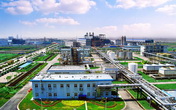
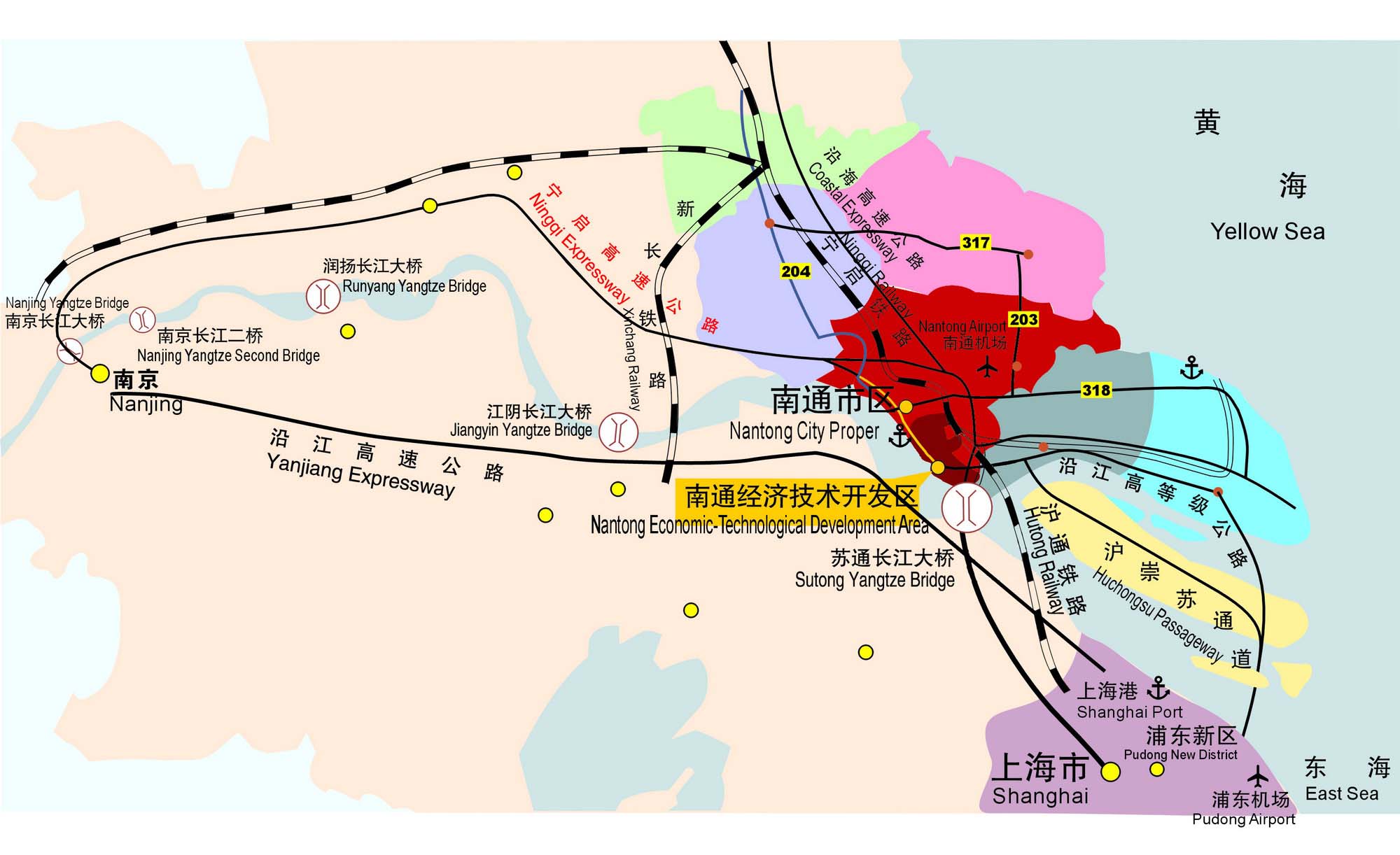
The NETDA Free Trade Zone got the original go-ahead, on Jan 3, 2013, from the State Council, for a 5.29-sq-km area, in two parts.
Suzhou-Nantong science & technology industrial park
Equipment manufacturing industrial park
Urban-rural commercial zone
Nengda central business district
New materials industrial park
Medical treatment & health industrial park
Sci-tech industrial park
Precision machinery industrial park


Nantong museum designs blue calico sheep mascots

Intangible cultural heritage show opens in Nantong City

Nantong: major producer of indigo print fabric

World's largest pier caisson floated successfully in Nantong

Lotus blossoms in Nengda Central Park