Bringing Jilin's wetlands back to life
By Hao Nan and Liu Mingtai
( China Daily )
2015-08-14
Water project helps restore once thriving ecosystems, Hao Nan and Liu Mingtai report.
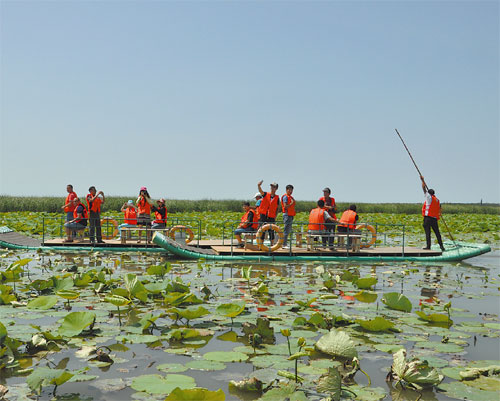
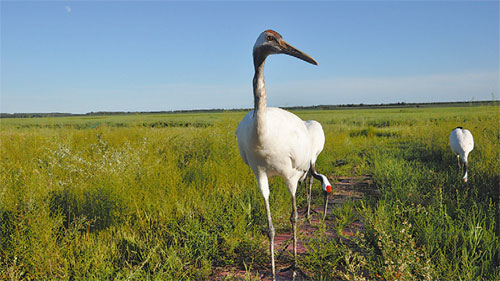
Animal lovers visiting the Momoge and Xianghai wetlands will not be disappointed this summer, as thousands of white cranes, swans, wild geese, ducks and other waterfowl are living and breeding in the nature reserves.
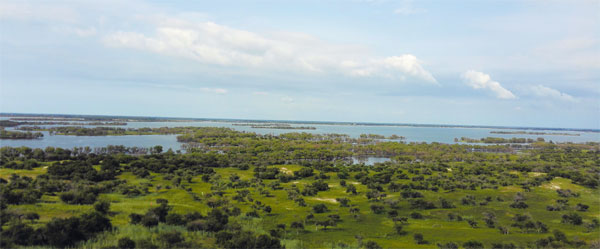
Momoge is the largest wetland reserve in Northeast China's Jilin province and sits on the bird migration path in East Asia.
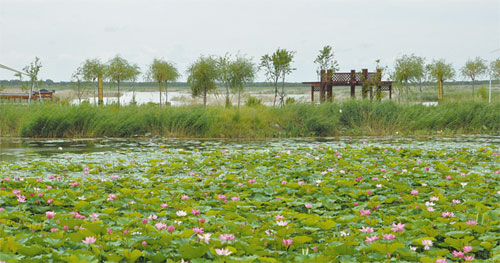
Playing vital roles in local environment, climate and ecology, the two wetlands have been nicknamed the "kidneys of west Jilin".
A few years ago, however, they were on the verge of drying up.
"Baicheng, home of the two wetlands, experienced years of drought after the flood in 1998. Most of the 22 lakes and bogs in Xianghai dried up, and the wetland shrank by over 90 percent in area, reducing from 36,000 hectares to 3,000 hectares," said Zhang Bailiang, deputy director of the city's water resources bureau.
The Momoge wetland also shrank by about 70 percent and the number of its waterfowl species fell by half, Zhang added.
At the same time, Baicheng, which had more than 700 rivers, lakes and bogs, as well as 25 water reservoirs, mostly dried up.
The western part of Jilin used to be an important ecological barrier in the province, but now, because of drought, it has become one of the local areas with the most fragile ecosystems.
Zhang said annual runoff of the floods flowing past the city could reach 20 billion cubic meters, which was a considerable resource to help solve the problem.
In June 2013, the provincial government decided to launch a water management project to connect rivers and lakes and major water conservancy works by building, reconstructing and expanding their channels and storing surplus flood resources and irrigation water in wetlands, rivers and lakes.
The project covers 10 cities and counties including Baicheng, Songyuan and Changchun.
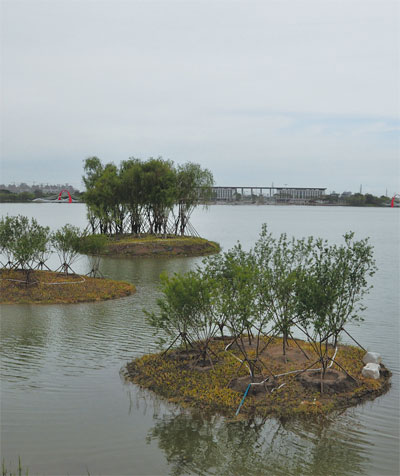
Baicheng started several pilot programs in 2013, linking 45 bogs with rivers and lakes.
In April 2014, the project was listed as a national major water project during the 13th Five-Year Plan (2016-20).
Four major constructions of the project are now almost finished and 14 pilot programs across the province have been started.
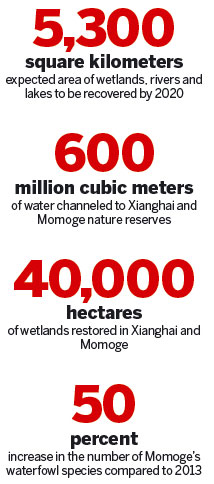
The project is expected to be complete in 2020, when the area of wetlands, rivers and lakes will recover to 5,300 square kilometers, more than 70 percent of the regional area in the 1950s.
Baicheng has channeled more than 600 million cubic meters of water to Xianghai and Momoge nature reserves and restored nearly 40,000 hectares of wetlands.
Yin Gui, deputy head of the Momoge nature reserve management bureau, said the quality of a wetland depends on the number of waterfowl species.
The number of Momoge's waterfowl species increased by 50 percent compared to the 2013 figures, and the number of white cranes also increased to more than 3,800 from about 500 in 2000.
Some rare bird species, like oriental white storks and hooded cranes, have also returned to live in the Xianghai wetland.
Residents in Baicheng have also benefited from the project.
Cui Benjun, a villager in Tongyu county, feeds about 80,000 wild geese near the Xianghai wetland and said each wild goose can earn him a net profit of about 200 yuan ($31.60).
"The project guarantees the use of irrigation water, so although the drought still happened last year, the harvest was better than before," said Yu Hongxiang, a senior researcher at the Baicheng agricultural committee.
With the largest potential to increase grain output in Jilin, the western part of the province, under the help of the water project, is expected to become a new grain production center in China, according to the provincial government.
Contact the writers through haonan@chinadaily.com.cn
|
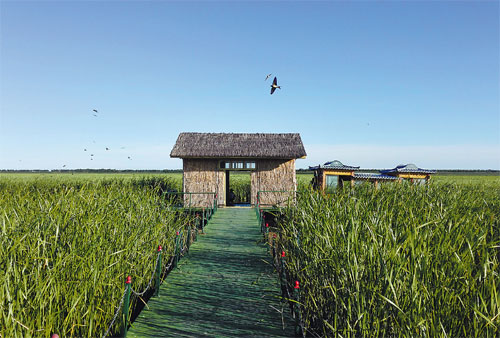
Xianghai National Nature Reserve, an inland wetland and water ecosystem, is among the largest of China's seven major wetlands. Photos by Ding Luyang / China Daily |
|
Baicheng started several pilot programs in 2013, linking 45 bogs with rivers and lakes. |
|
Momoge Nature Reserve, in western Jilin, is now home to many bird species, such as the red-crowned crane. |
|
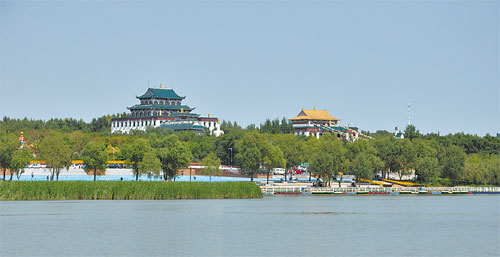
Chagan Lake is also a wetland home to wild animals and birds and was named a provincial nature reserve in 1992. |
|
The Xianghai and Momoge wetlands have been nicknamed the "kidneys of west Jilin", because they play vital roles in the local environment, climate and ecology. |
|
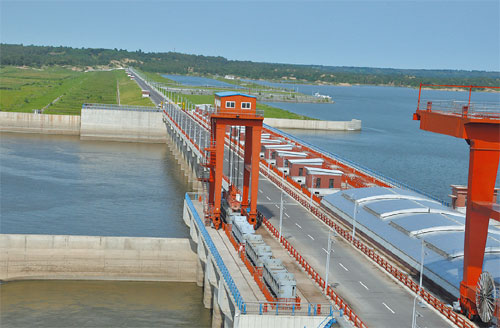
The Hadashan Water Control Project, said to be the largest and most ambitious water control project in the region in the past 50 years, aims to tackle the long-standing problem of water shortages in western parts of Jilin province. |
|
Momoge is the largest wetland reserve in Northeast China's Jilin province and sits on the bird migration path in East Asia. |
|
Chagan Lake, a major tourism spot, attracts visitors from home and abroad. |