Resilience and dynamism








Global Governance Initiative provides a meaningful theoretical framework and implementation strategy for building an APEC community with a shared future
The global economy is currently navigating a complex adjustment process under the influence of multiple overlapping pressures, which manifest primarily in four dimensions.
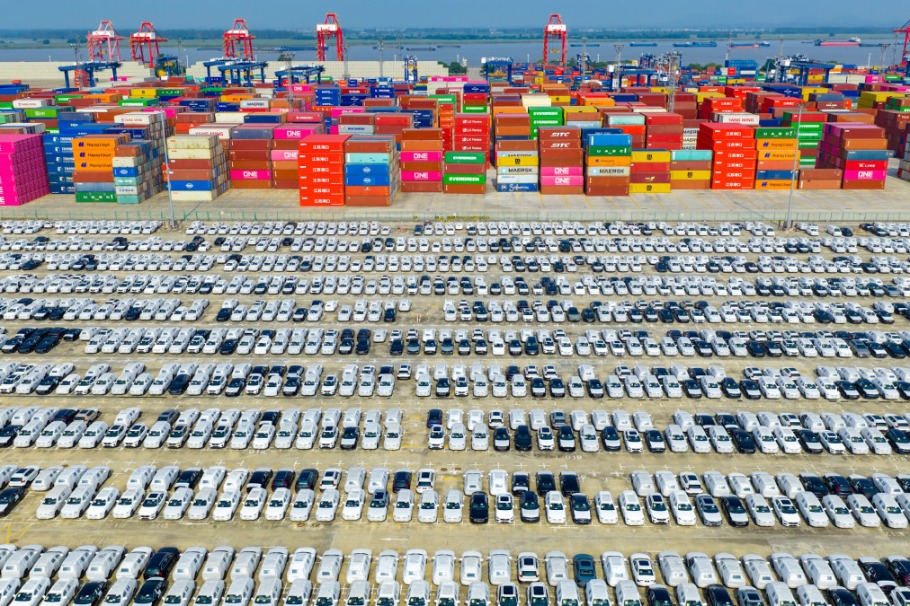
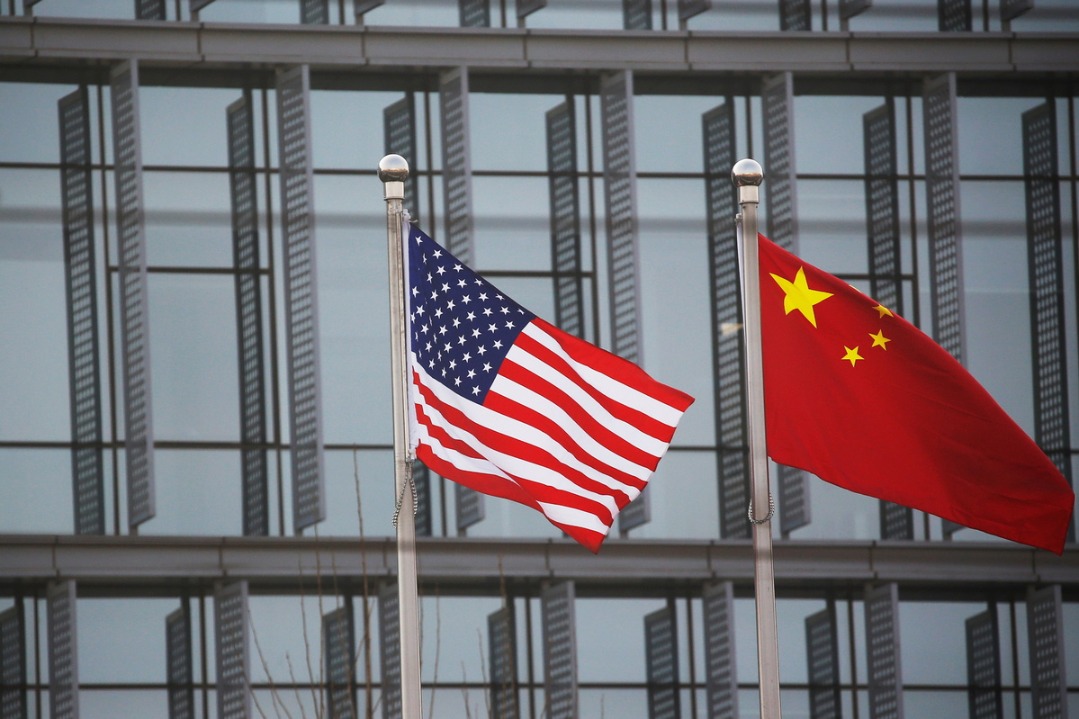
First, the United States' pursuit of its "America First" policy, implemented through so-called reciprocal tariffs, has eroded the multilateral trading system overseen by the World Trade Organization. The uncertainty created has dampened investment confidence, elevated trade costs, suppressed consumer demand and exacerbated public debt burdens. In several countries, wage growth continues to lag behind inflation, accompanied by rising youth unemployment.
Second, recurring geopolitical conflicts are significantly distorting global supply chains and challenging the rules-based international order. These tensions are amplifying systemic risks, deepening regional disparities, and making global economic cooperation more complex.
Third, climate change and the green transition pose twin challenges. Increasingly frequent extreme weather disrupts vital sectors from agriculture to energy. Meanwhile, the green transition in some Global South countries confronts dual constraints: lack of related innovative technologies and constrained fiscal capacity.
Fourth, pressures are mounting in global policy coordination and technological innovation. Misaligned regional economic policies and sluggish industrial upgrading in some countries have hindered cohesive progress. Moreover, on the one hand, most nations see digital transformation as a pivotal opportunity. On the other hand, small and medium-sized enterprises are still left behind by the technological divide.
Amid the ongoing global economic fluctuations, the Asia-Pacific region is experiencing notable transformations in its economic security and developmental context, facing new challenges for regional cooperation. In September, the Asian Development Bank cut this year's growth projections across emerging Asia-Pacific economies by 0.1 percentage points to 4.8 percent, with a further moderation to 4.5 percent anticipated in 2026. Despite this, the region remains a pivotal engine of global economic growth, sustained by its inherent resilience and well-established cooperative architecture.
The expansion of South-South trade and intensified regional partnerships — notably the strengthened implementation of the Regional Comprehensive Economic Partnership and deepening Belt and Road cooperation — are effectively counterbalancing unilateral trade measures. And the Asia-Pacific is expected to contribute approximately 60 percent to global economic growth.
A set of powerful dynamics is reconfiguring the region's economic landscape: the diversification of trade ties, the technology-led digital transformation of supply chains, the push for green and sustainable development, and the complex interplay between globalization and multipolarity. Together, these trends are catalyzing regional economic integration and unlocking new growth potential across emerging markets.
Going forward, global trade could enter a phase defined by deepening regionalization, intensifying technological rivalry, and fragmentation of rules. Despite these changes, underlying resilience should be reinforced to anchor both the Asia-Pacific economy and global trade.
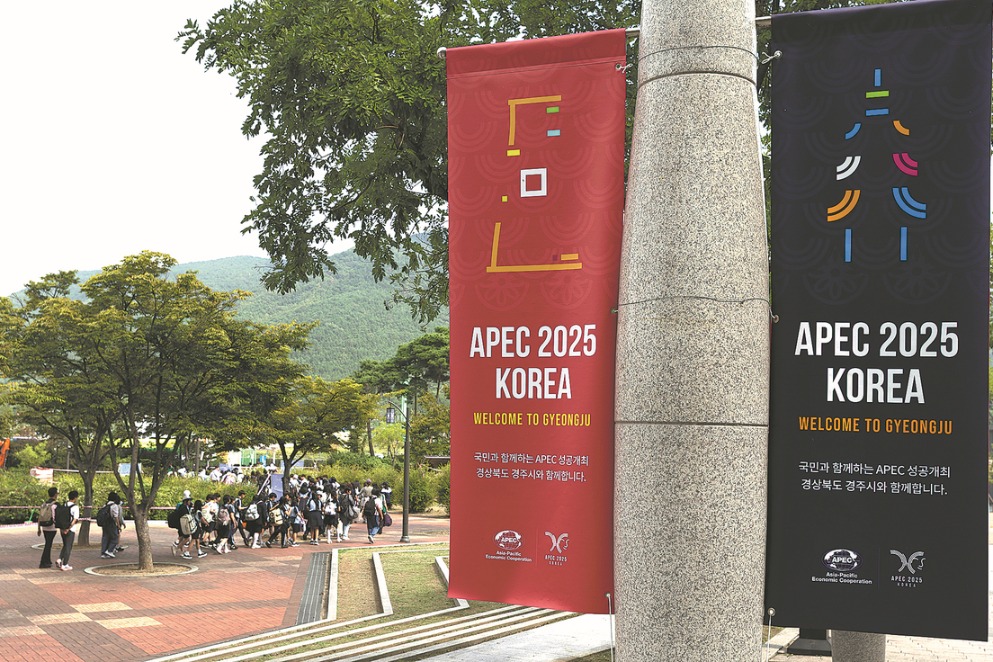
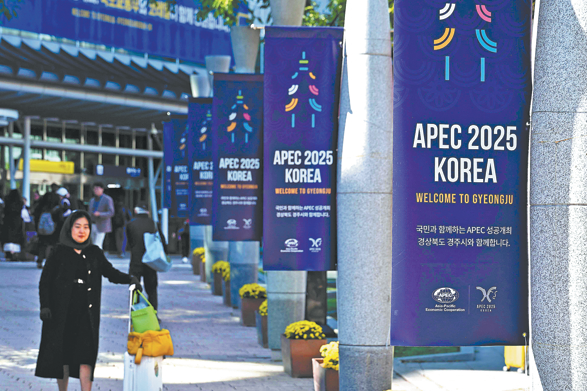
Based on this understanding, the 32nd APEC Economic Leaders' Meeting, under the theme "Building a Sustainable Tomorrow: Connect, Innovate, Prosper", is being held in Gyeongju, the Republic of Korea. Guided by this theme, the discussions will focus on three strategic priorities: advancing science, technology and innovation capacity through deeper scientific exchange; fostering R&D collaboration via open innovation to tackle pressing global challenges; and strengthening regional ties by maximizing the socioeconomic benefits of emerging technologies.
This agenda was deliberately crafted in response to the broader global economic slowdown, acknowledging the Asia-Pacific region's dual reality of notable resilience and mounting pressures.
APEC's 2025 report directly links US tariff policies to a projected nosedive in Asia-Pacific export growth, from 5.7 percent in 2024 to a mere 0.4 percent in 2025. For an export-driven economy such as the ROK, this represents a clear challenge, which is one major reason why it is actively fostering regional cooperation.
As close neighbors, the ROK and China share robust economic ties. This is evidenced by bilateral trade of $328.08 billion in 2024, a 5.6-percent increase that solidifies China's position as the ROK's largest trading partner for 21 consecutive years and restores the ROK as China's second-largest.
This extensive partnership is further exemplified by the network of over 228 sister-city relationships recorded by October 2025. The APEC meeting host city of Gyeongju, for instance, maintains such partnerships with multiple Chinese cities, including Chizhou in Anhui province, Zhangjiajie in Hunan province and Xi'an in Shaanxi province. Their joint efforts extend across fields such as the economy, culture, education and heritage preservation.
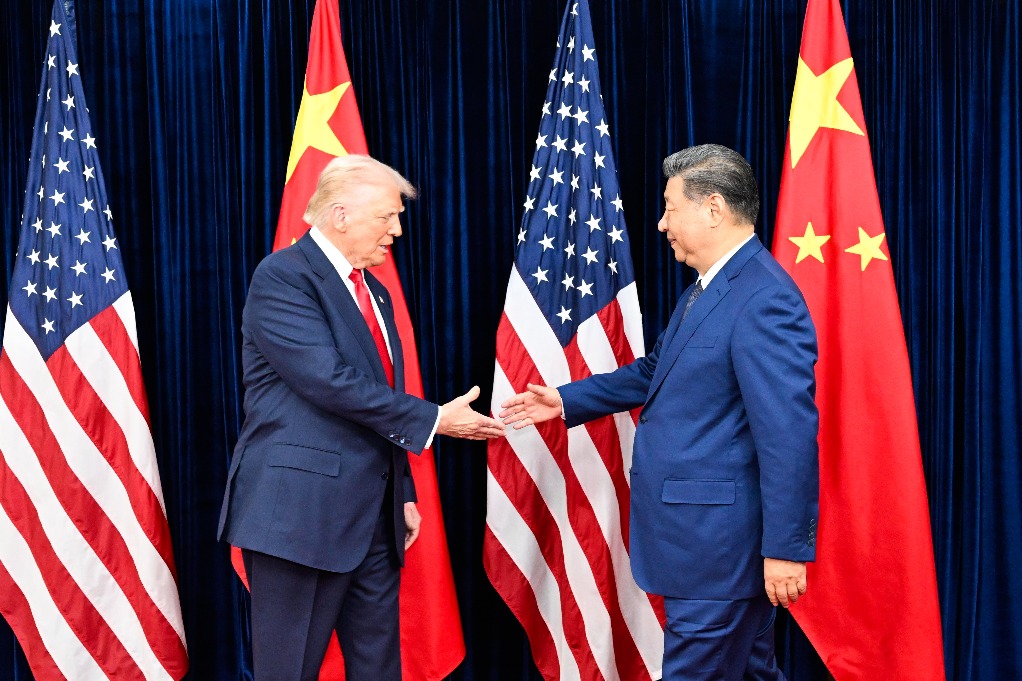
The conclusion of the 32nd APEC Economic Leaders' Meeting in Gyeongju will hand off the APEC baton to China. Against the backdrop of the US controversial tariff policies, which have severely distorted international trade rules and challenged global supply chain security and stability, the two APEC neighbors share common imperatives across various domains. These include environmental safety, food security, economic and technological cooperation, as well as international trade and investment.
As the world's second-largest economy and the primary trading partner for most Asia-Pacific countries, China has long championed an open global economy and genuine multilateralism, playing an indispensable role in steering economic globalization toward a sustainable path. An ADB report underscores China's pivotal role, identifying it as the source of over 60 percent of the region's economic growth, 37.6 percent of its merchandise trade increase, and 44.6 percent of its services trade growth.
Against the backdrop of several key milestones — the 80th anniversary of the founding of the United Nations and the victory in the World Anti-Fascist War, the 10th anniversary of the UN Sustainable Development Goals, the fifth anniversary of China's dual carbon goals (carbon dioxide emissions peaking before 2030 and carbon neutrality before 2060) and the upcoming launch of China's 15th Five-Year Plan (2026-30) for Economic and Social Development — the Global Governance Initiative was proposed by Chinese President Xi Jinping at the Shanghai Cooperation Organization Tianjin Summit held on Aug 31 and Sept 1. The initiative champions the principles of staying committed to sovereign equality, international rule of law, multilateralism, a people-centered approach and real results.
As a successive contribution following the Global Development Initiative, the Global Security Initiative and the Global Civilization Initiative, the Global Governance Initiative represents another major public good provided by China to the world. It further enriches and develops a theoretical framework and implementation strategy for building a community with a shared future for humanity, injecting stability into a world of turbulence and transformation.
Major APEC economies are called on to leverage a collective drive at the 32nd APEC Economic Leaders' Meeting to map out the forum's responses to pressing issues, new regional cooperation efforts, and the future regional path. Building on this, a unified stance must be forged to enable practical subsequent cooperation, with APEC delivering a fit-for-purpose "Asia-Pacific model" for global governance.
The author is an associate research fellow at the Institute of World Economics and Politics at the Chinese Academy of Social Sciences and the National Institute for Global Strategy at the CASS. The author contributed this article to China Watch, a think tank powered by China Daily.
The views do not necessarily reflect those of China Daily.
Contact the editor at editor@chinawatch.cn.