The melody of our heritage







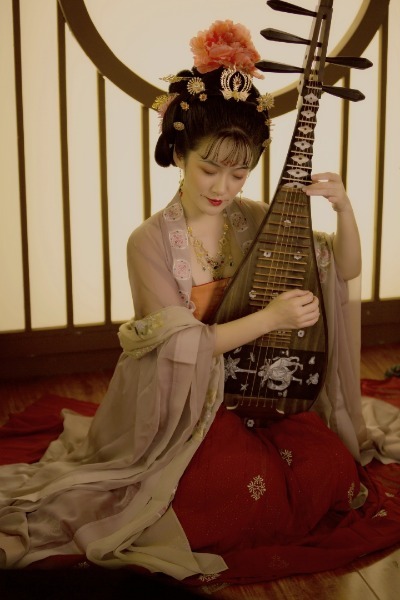
After she graduated from the Chinese University of Hong Kong with a master's degree in history in 2012, she found a job with internet giant Tencent doing entertainment work, and garnered experience in marketing.
"At that time, the internet company was developing rapidly, and I got to know some tips about marketing. One that impressed me the most was that we needed to combine hot topics and our strength to promote our own works," says Liu.
So she started to use folk instruments to play popular music, but soon gave up since she found the structure of pop music not suitable for traditional Chinese instruments. In 2019, she decided to make original Chinese music and display it in the form of short videos.
"I want to make more people aware of the traditional instruments of China. Then, I want to lead more people to enjoy Chinese music created by such instruments," says Liu.
She has designed a series of videos called "Chinese people's musical instrument". A representative work of the series is Prelude to the Konghou of Li Ping, a short video based on a namesake poem written by poet Li He in the Tang Dynasty (618-907). The poem depicts royal court musician Li Ping's splendid proficiency in playing konghou, an ancient plucked stringed instrument which became extinct, but has been re-created by modern techniques and is again played by musicians.
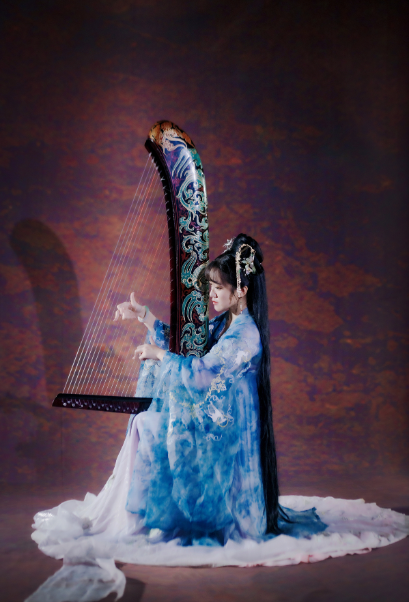
In the video, Liu wears Tang-style clothing and plays her original music with a konghou, like a scene shown in a mural in the Mogao Grottoes in Dunhuang, Gansu province. As she is collaborating with the Dunhuang Academy in this work, she also shows pictures of konghou on the Dunhuang murals in the video.
"In the poem, the poet compares Li Ping's music created by konghou to the sound of jade shattering on the Kunlun mountains, and the phoenix's shriek. Although many people learned this poem at school, they don't know what it sounds like actually, so I want to show them," says Liu.
The video has been chosen by many Chinese teachers to show in their classes to help students better understand poems from the Tang Dynasty.
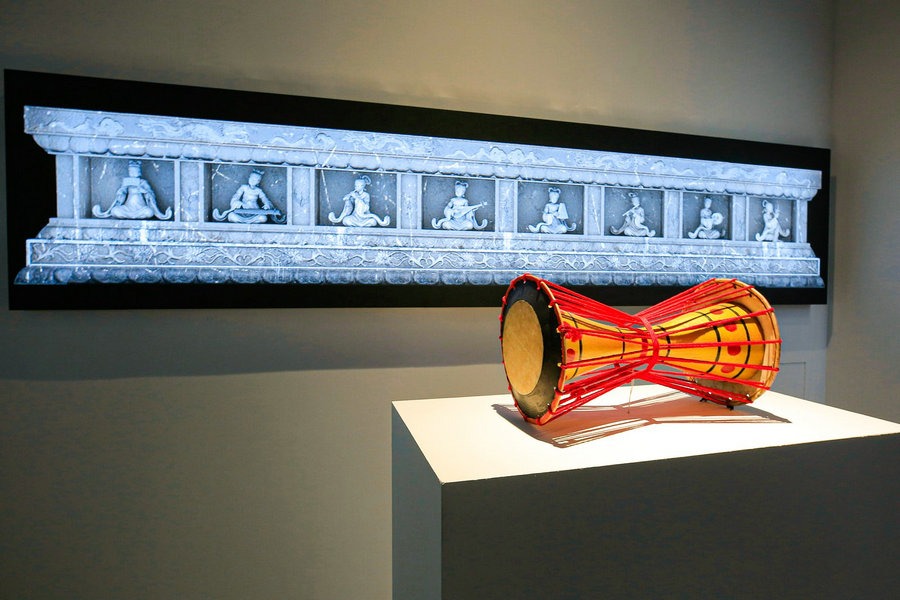
The series also includes a short video showing images of music and dancing on the mural of the Mogao Grottoes, in which she displays the original music created by ancient instruments that appear most often on the Dunhuang murals, like the pipa, konghou, flute and lianhuaruan (a plucked string instrument that looks like a lotus).