Shanxi attractive for business and tourists
By Liu Shuchun ( China Daily )
Updated: 2010-04-19
|
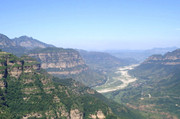
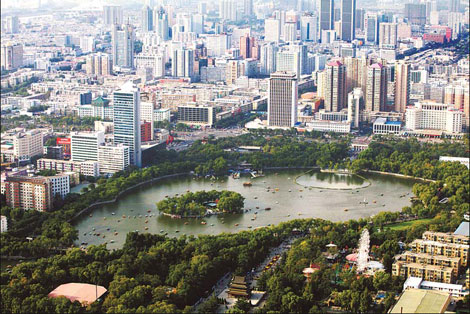
A panoramic view of Taiyuan, capital of North China's Shanxi province. |
|
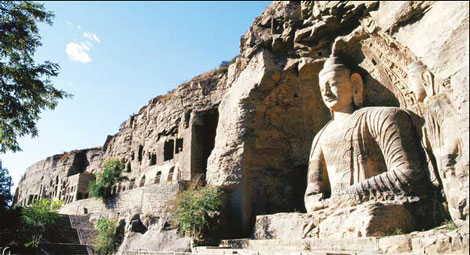
Located in Datong, the Yungang Grottoes attract hundreds of thousands of visitors every year. |
Sixty years after the New China was founded in 1949, life for people in north China's Shanxi province has changed beyond recognition.
The province's gross domestic product reached 705.58 billion yuan ($103.46 billion) in 2008, compared with only 1.6 billion yuan in 1952; its fiscal revenue reached 151.88 billion yuan in 2008 from a mere 8.47 million yuan in 1949.
In the past 28 years, life has changed dramatically. Urban residents' disposable personal income rose to 13,119 yuan in 2008 from 379 yuan in 1980 whilst farmers' per capita income reached 4,097 yuan in 2008 from only 155.78 yuan in 1980.
The province has one of the most abundant supplies of resources in the country, and as a place with a history of thousands of years, Shanxi attracts business people and tourists alike.
A total of 118 kinds of mineral resources have been found in Shanxi. It has greater reserves of coal, aluminum bauxite, refractory clay, bauxite, potassic rock and coal bed methane gas, than anywhere else in the country, with each of them accounting for more than 20 percent of China's total.
Of the province's 156,690 sq km of land, 40 percent has coal reserves. The verified reserve of coal is 282 billion tons, 27 percent of the country's total.
The province produced about 10 billion tons of coal between 1949 and 2007, accounting for a quarter of China's total output.
In 1978, Shanxi produced 10.66 billion kW of electricity and in 2008, the figure was 179.68 billion kW. No other place exported more coal and electricity to other provinces and regions than Shanxi.
Though best known for its coal, Shanxi has also been growing into an important trading port that has a good trade relationship with more than 120 countries and regions.
The province currently has around 1,500 export-oriented enterprises, more than 1,000 joint ventures and 10,000 companies that produce goods for export. About 3,000 foreign companies also have a base there, including Coca Cola and Caterpillar.
Shanxi is a large exporter of coal, metal products, clothes, tires and ceramic products. In recent years, the province has exported more mechanical and electrical products including instruments and meters, as well as hi-tech products.
Shanxi has benefited from China's reform and opening-up policy, making the most of its abundant coal supply and developing the tourist industry.
Most recently the province has begun to move away from its heavy reliance on resources and develop a diversified economy, which is more environmentally friendly and efficient.
History and culture
Shanxi has a rich cultural heritage that attracts visitors from both within and outside China.
Shanxi preserves many historic sites including ancient buildings, murals, painted sculptures and rock caves. More than 70 percent of China's intact ancient buildings dating back to before the Song dynasty (960-1279) are in Shanxi, and 119 of them are under State protection.
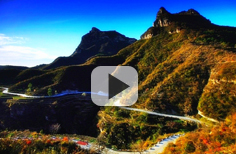
The province's Wutai Mountain, Yungang Grottoes, mural paintings at Yongle Palace and one of China's five sacred mountains Hengshan all attract hundreds of thousands of visitors each year.
The capital city of Taiyuan, 500 km southwest of Beijing, borders the Taihang Mountains in the east and the Luliang Mountains in the west. The Fenhe River runs through the city from north to south.
Taiyuan was founded in 497 BC during the Spring and Autumn Period (770 BC-467 BC). Several places of interest are in the town, including the Tianlongshan Grottoes, built during the period of the Eastern Wei Dynasty (534-550), and the Longshan Grottoes, which are China's largest Taoist grottoes and were built during the Yuan Dynasty (1271-1368).
|
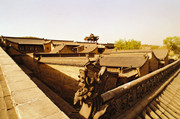
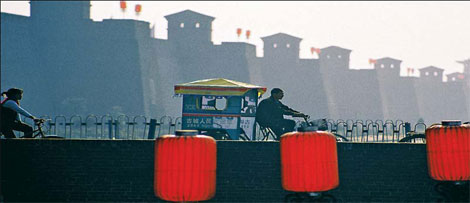
The Ancient Pingyao City has withstood the test of time and is now a fascinating destination for travellers. |
|
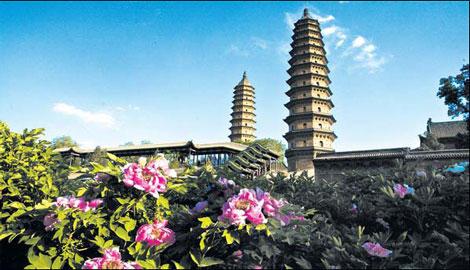
Peonies blossom against a backdrop of the Shuangta Temple. |
(China Daily 04/19/2010 page24)