Legendary lure
By Wang Ru ( China Daily )
Updated: 2012-09-27
|
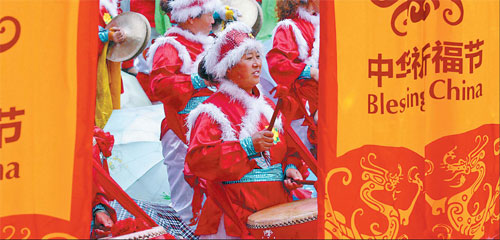
The feast day celebration features traditional drum and dance performances in Chenghuang Temple, Changzhi county, Shanxi province. Photos by Jiang Dong / China Daily |
Emperor Guangwu, first emperor of the Eastern Han Dynasty (AD 25-220), is said to have been saved after praying to the mountain god in Changzhi. That's just one of the many legends of the county in Shanxi province. Wang Ru finds out more.
Having lived in my hometown Taiyuan, the provincial capital of Shanxi, for more than 20 years, I thought I knew Changzhi - a southeastern county within the same province.
Shanxi boasts rich historical sites, like the Yungang Grottoes in Datong and the ancient city of Pingyao.
To me, Changzhi is known for only two things: cool temperatures in the summer because it is situated on Taihang Mountain and delicious local snacks, such as donkey meat rolls. That probably explains why I was not too excited on my flight there. I underestimated the place.
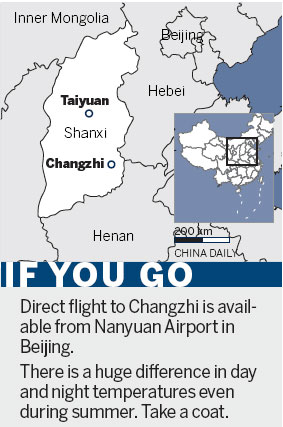
Upon landing in Changzhi, it started to rain. I decided to take a bus to the famous Chenghuang Temple, a 30-minute drive from the city.
The name Chenghuang means God of City, a deity who is believed to be in charge of protecting the living and the dead.
It is not only an important Taoist belief as nowadays temples dedicated to Chenghuang have become tourist attractions in many cities. Chenghuang Temple in Shanghai is probably the country's most famous, mainly for the delicious snacks sold in the vicinity.
The one in Changzhi is situated on top of a mountain. Why is the temple built on a remote mountain, and why is it known as "the capital of Chenghuang temples"?
According to legend, when Han Dynasty official Wang Mang usurped the throne, Liu Xiu - who later became Emperor Guangwu, the first emperor of the Eastern Han Dynasty (AD 25-220) - ran to the mountain. He became so thirsty that he could not run any farther.
Seeing the pursuers approaching, Liu found a shabby temple, of which door was covered with a huge spider web. The panicking Liu, desperate for a place to hide, poked a hole in the web to enter the temple.
With the soldiers close at hand, Liu kneeled down to pray to the mountain god to protect him and vowed to dedicate Chenghuang temples throughout the world to the god.
Miraculously, the spider web at the door sealed up to its original state before Liu entered. Liu believed that the mountain god saved his life and he fulfilled his promise to name the temple as the center of all Chenghuang temples.
Today, the temple, which was rebuilt during the Qing Dynasty (1644-1911), is still known as a place of good fortune.
One will have to climb 108 stone steps to reach the main gate - quite a challenge for those who have not been exercising regularly.
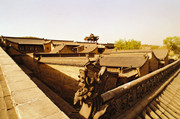
The temple is a huge quadrangle, with a theater house, a main hall, a deposit scripture house and an offering pavilion to worship the god.
The exquisite carvings and paintings on the beam columns depict the history of the peaceful but mountainous ancient city.
Every summer, pilgrims gather at the temple during its feast day to worship Chenghuang.
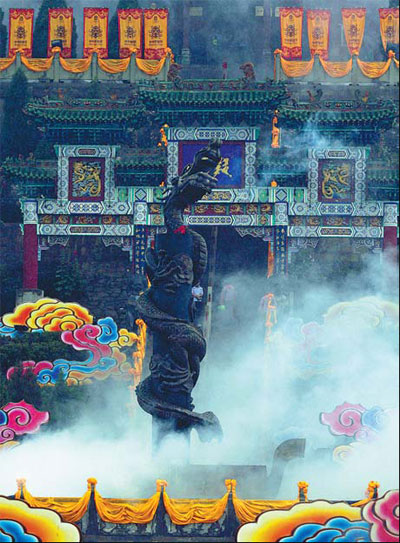
This year's festival features a giant joss stick with a dragon motif that signifies a bright future and happiness.
I am not spiritual, but standing amid the thickening fog in the mountain somehow makes me feel that I am standing on sacred and mysterious ground.
The opening ceremony of the feast day comprises traditional drum and dance performances. I must admit that the skills of the middle-aged women drummers beat the best drum players I have ever heard.
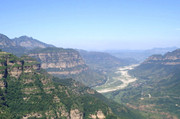
The natural environment of the mountain area has been well preserved although it was once a place rich in coal and iron mines. I can attest to that because on my way to the temple, I witness a huge stork flying above me before landing on its nest on top of a huge tree.
Apart from the story about Chenghuang Temple, Changzhi, known as Lu'an in the past, is a place full of fairytales.
Among the more famous ones is the legend about the Three Sovereigns - Shennong, Suiren and Fuxi - said to be god-kings or demigods who used their magical powers to improve people's lives.
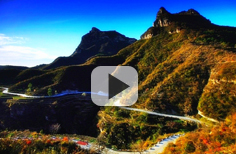
In the northeast of Changzhi is Huangyadong national forest park, where the stunning Danxia landforms - comprising red stones - complement the primitive forests.
While I was in Changzhi, I managed to sample some local delicacies, which I found to be tasty and healthy, such as date cakes, donkey meat hotpot and my favorite, bean jelly.
For lodging, I checked into a hotel built with container boxes. It is a brilliant way of optimizing space in an eco-friendly way.
In terms of quality, it is not compromised in any way. Each room is designed by professional hotel designers from Beijing, with the best materials and furniture. The best part of it is the location - it is adjacent to the magnificent temple.
After a tiring journey, I made myself a cup of hot tea and sat by the window of my room to admire the peaceful scenery outside.
I took back my words - Changzhi is more than cool temperatures and delicacies. It is a place filled with fairytales that refresh the mind and soul.
Contact the writer at wangru@chinadaily.com.cn.
|
A dragon-themed joss stick is the opening ceremony's centerpiece. |
(China Daily 09/27/2012 page19)