Coal still king in Shanxi as sector goes modern
By Xu Xiao ( China Daily )
Updated: 2012-10-26
|
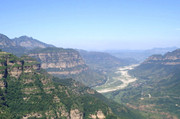
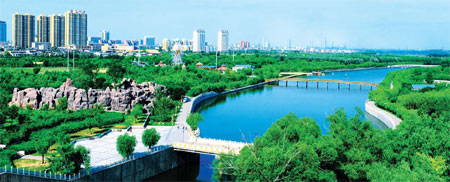
Coal-rich city Xiaoyi in Shanxi province was highly polluted, but its natural environment is now improving through afforestation and good water quality.Provided to China Daily |
|
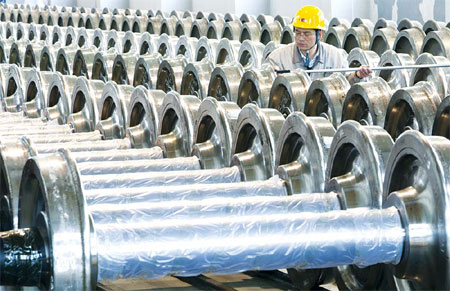
A technician checks products at Taiyuan Heavy Machinery Group, a large excavation machinery and equipment manufacturer in Shanxi. Provided to China Daily |
|
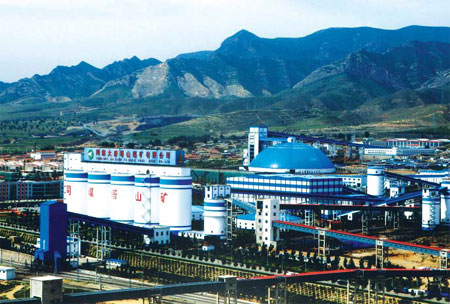
Datong Mine Group's recycling zone in the province. Provided to China Daily |
Consolidation, closures boost efficiency and the environment
The most common sight and sound at Datong railway station is heavy trains carrying thousands of tons of coal, blowing their whistles as they leave the coal capital of North China's Shanxi province.
On the 130,000 kilometers of roads in Shanxi, 300,000 trucks are also carrying coal from mines and yards to other provinces.
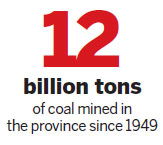
Among Shanxi's 119 cities and counties, 94 produce coal. Since 1949, the labyrinth of mines has produced 12 billion tons of coal and the roads and rails have moved 9 billion tons to places outside the province.
For most of that time, accidents, wasteful techniques and the disparity between the wealthy and poor have been hurdles to Shanxi's economic and social development.
As a result, consolidation of the industry and closure of inefficient, even illegal, mines has been high on the provincial government agenda.
One result is Yongning Group, one of just three big coal companies left in Shanxi's Lishi district, an important cluster of mines in the province. Before 2009 the district had some 80 mines.
Yongning since has extended its business from coal extraction to diverse industries including machinery manufacturing, electric cables and modern agriculture.
Authorities closed more small mines in 2011, entering what the Shanxi government calls the "big mine stage". The 2,600 mines that were before owned by 2,200 companies were reduced to 1,053 operated by 130 companies.
Efficiency has been greatly improved - on average, mines are now producing 1 million tons of coal annually, up from 300,000 tons before.
As well, 75 percent of byproducts are recycled or used, a surge from the previous 25 percent.
Mine safety has been improved, with fatality rate falling 80 percent from 2008.
Sluggish market
Yet the consolidation and sluggish demand has led to declining employment and reduced overall production.
Despite challenges, Yangquan Group generated 83.8 billion yuan ($13.4 billion) in revenue in the first half of 2012, an increase of 38 percent over the same period of last year.
"Basing ourselves on coal mining while developing diversified industries makes us confident about facing the market pressure," said Zhao Shiping, president of the group.
Yangquan purchased a couple of enterprises in the coal chemical industry, which along with logistics operations, contributed greatly to the group's total revenue.
The seven-largest coal groups in Shanxi have now formed a coal chemical industry chain. Last year, non-mining revenue reached 43 percent of their combined total, a 13-point rise from 2009.
At the same time Shanxi has been gradually shifting its focus from coal to building materials, food and tourism.
Investment in those sectors increased almost 50 percent last year, surpassing the traditional coal and electricity industries. Total revenue from tourism hit 81.7 billion yuan in 2011, a 32 percent increase over 2010.
Improved environment
Due to such heavy exploitation of coal, the province's environment had long been a target for criticism.
Yet with the industrial upgrading and restructuring, the environment has improved.
"I used to think that Shanxi was heavily polluted because it produces coal, but this time I got a different impression of Taiyuan," said Peng Fei, a runner from Shanghai who competed in an international marathon in the capital of the province in September.
The change is the result of consistent efforts in environmental restoration.
At the end of August, a seventh enterprise was closed in the city due to its pollution of the environment.
Near the site of another closed company, a coal and electricity recycling park, a modern logistics park and a forest park are under development.
It is part of the Taiyuan city government's major push called "enabling the people to breathe fresh air".
The forestry rate of Shanxi has surpassed 18 percent, while its main waterway, the Fenhe River, no longer dries up, another signal that the natural environment is recovering.
xuxiao@chinadaily.com.cn