Coal and steel city turns into winter wonderland







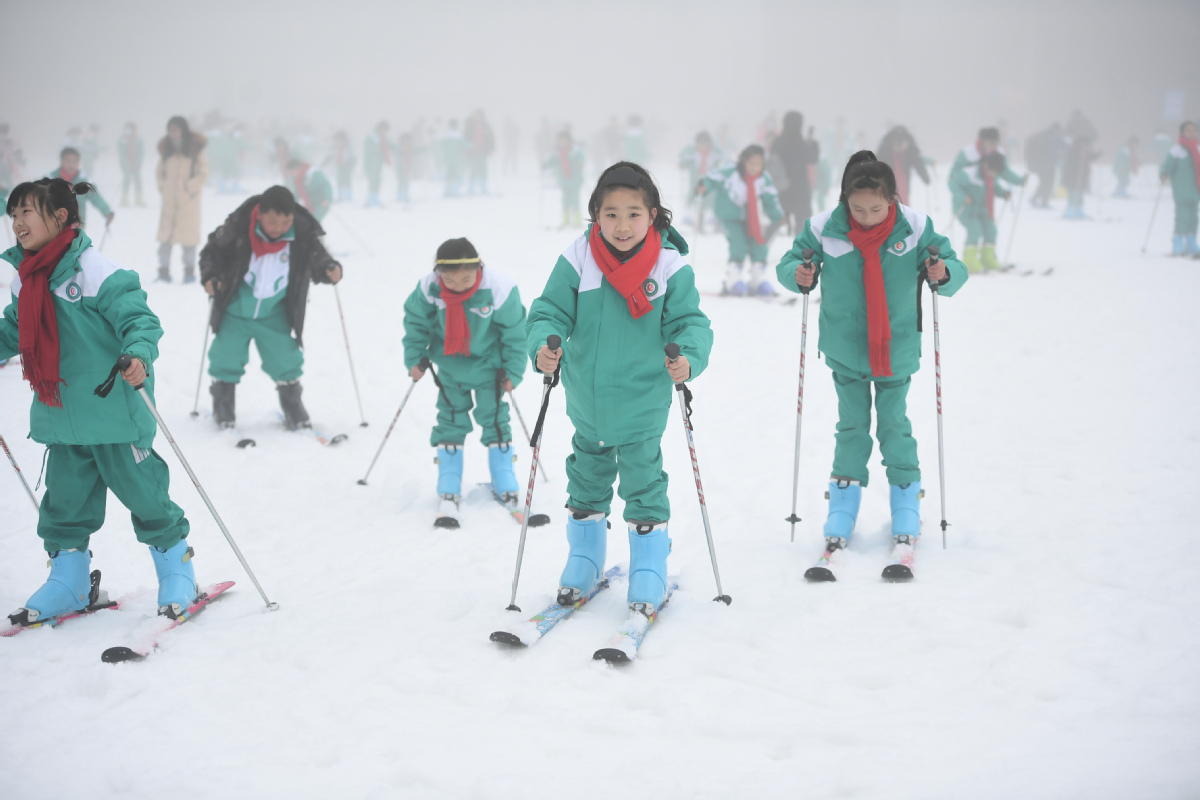
Liupanshui, once a resource-intensive city in Southwest China's Guizhou province that relied heavily on coal and steel for economic growth decades ago, is becoming a top destination for hundreds of thousands of visitors nationwide, thanks to the city's transformation toward a beautiful, ecological tourism attraction.
For some people living in the southern parts of China, Liupanshui has become a place to fulfill their snow dreams, triggered by the Beijing Winter Olympic Games last month.
During the New Year's Day holiday, Meihuashan and Yushe ski resorts-the two newly built ski resorts in Liupanshui-received 18,640 visits, 21.5 percent higher than in the same period last year.
"Liupanshui was established in the 1960s. As the city was rich in coal, steel and water resources, through years of development, it became a traditional industrial city. With consumption upgrade in recent years, the city is transforming into a tourism hot spot, showing a completely new look," said Li Gang, Party secretary of Liupanshui.
"Now, ski tourism is becoming a name card for Liupanshui," said Chen Tingting, the city's vice-mayor.
Liupanshui started to tap local winter tourism resources in 2017. The city has developed three natural ski resorts and 21 venues, with a total area of 630,000 square meters.
Official data showed that in 2021, the city received a total of 76.42 million visits, up 101 percent on a yearly basis. Tourism revenue surged by 187.17 percent year-on-year to some 72 billion yuan ($11.4 billion).
When telling about the story of turning Liupanshui from a traditional industrial base to a winter paradise, Li said the focus is to find a balance between resource exploration and environmental protection, and achieve high-quality social and economic development.
"With the upgrading of tourism demand, traditional sightseeing-based tourism is gradually shifting toward a new mode involving tourism, wellness, leisure, vacation and consumer experience."
"We have been actively adapting to changes to meet tourism demand, making innovations in consumption formats, product supply and business modes, and improving tourism supply to meet demand upgrades," Li said.
Currently, there are 13 4A-level scenic spots and nine provincial-level holiday resorts in Liupanshui, Li added.
Liupanshui was known as a getaway to beat the heat and a host city for summer marathons, Chen said. Now with its winter tourism gaining popularity nationwide, the city will further enrich its offerings of winter tourism products.
In the future, Liupanshui will make more efforts to strengthen its advantages in tourism resources and enable its visitors to enjoy "cool summers and warm winters "at the same time. More summer resorts and outdoor winter sports destinations will be built to better support the city's new name cards-"China's cool capital" and "Southern snow city", said city officials.
"Also, the hospitable Liupanshui people welcome everyone anytime to ski and bathe in hot springs with family members and friends. They will experience considerate service and a warm winter," Chen said.
Wang Peng, an associate professor at Renmin University of China, said Liupanshui is serving as a "prototype room" of transformation for traditional resource-intensive cities in central and western China.
"It is setting a great example for cities with heavy industries to advance with time and explore a new development path, by integrating and reallocating existing resources and tapping into new opportunities."
"For example, with the Winter Olympics raising people's enthusiasm for winter sports, it is a wise choice for Liupanshui to keep pace with the times and work in winter tourism. The city's success story of transformation also strengthened the confidence of other cities looking for a breakthrough in development," Wang added.
Wang Jin contributed to this story.