
Cities, prepare for a rainy day
By Joanna Masic ( China Daily )
Updated: 2012-08-17
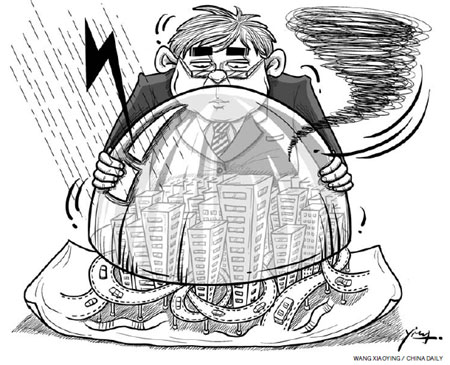
In recent weeks, extreme weather has taken many Chinese cities by surprise. On July 21, a heavy downpour in Beijing caused extensive flooding and claimed many lives. It also devastated homes and businesses and disrupted transport and essential services. Last week, while floods wreaked havoc in Shiyan, Hubei province, a series of typhoons lashed the cities on China's eastern coast, forcing widespread evacuations and resulting in severe damage and economic loss.
These events have left the public wondering whether urban infrastructure has the capacity to cope with extreme weather and whether weather warning and disaster response systems are adequate.
Chinese cities are not the only ones facing difficulties in preparing for extreme weather and responding to floods. Asian cities are particularly vulnerable because of their high density of population, weak infrastructure and because large numbers of people live in flood-prone areas.
Last year's floods in Bangkok and last week's floods in Manila showed how vulnerable these cities are. Even Singapore, a city that many would agree is planned to the world's best standards and experienced to deal with torrential downpours, has been hit by several flash floods since 2010.
In more developed regions, floods in urban areas have claimed many lives and caused economic losses for inhabitants, governments and insurance companies. As in Beijing, many of these floods have been blamed on higher-than-average rainfall over short periods of time. Despite their established and well-developed flood management plans, these cities are realizing that they are not well-equipped to deal with floods as they thought.
Urban storm water drainage systems are typically built to withstand the maximum rainfall expected once in a few years. The standards vary depending on the conditions and information available when the infrastructure is designed.
However, in many parts of the world, heavy rain is occurring more frequently and with higher intensity. Urban areas are growing faster than the upgrade of designs or increase in infrastructure capacity.
In areas that are developed quickly with asphalt and roofs replacing the soil, which allows for natural drainage, the original designs may no longer meet the new drainage requirements. In such areas, urban flooding can be severe, with urban expansion into natural flood plains and hilly areas prone to landslides only making it worse.
Beijing has expanded quickly over the past 20 years. The lack of a good enough drainage system to drain out the huge volume of rainwater that fell in just a few hours was what caused the recent flood. This disaster suggests that it is time for Beijing to review how it copes with floods and how its current and future infrastructure can be made more resilient.
What should be done in the aftermath of such a disaster?
The first step is to analyze the weather, topography, infrastructure and man-made reasons, with special attention to the areas worst affected. The existing drainage systems, infrastructure design standards and urban planning regulations need to be reviewed. And weather and climate change data should be collected, analyzed and interpreted.
This information can be used to produce an up-to-date map of flood-prone areas that takes into account climate change-induced weather changes. Importantly, this should identify potential flood risks from outside the city, in the wider river basin, such as deforestation and upstream dikes. So new management structures for river basins may be needed.
Roadside drains in high risk areas need to be expanded and better maintained. In already developed areas, where it is not possible to expand or retrofit existing drains, strategies are needed to deal with extreme events when they happen. This includes identifying locations that can serve as flood plains and diverting people and traffic around them.
Drainage standards should be adopted and strictly enforced, construction quality improved and new approaches to urban planning and building design piloted.
In addition to upgrading and maintaining infrastructure, flood warnings must reach individuals at risk in time and emergency services should respond quickly to find them. This will require municipal agencies, emergency services, traffic bureaus and the media to have clearly defined flood warning and response plans. Besides, considerable training and practice is needed to ensure these plans work and to increase public awareness.
Preparations for urban flooding comes at a cost. But the cost of ignoring the problem will certainly be higher, because climate events that were once considered exceptional become increasingly normal. With urban populations growing, and extreme and unusual weather occurring more frequently, we can expect urban floods to affect Chinese cities more frequently.
But vulnerability can be reduced by investing in infrastructure improvement, careful urban planning and zoning, improving disaster warning and response systems and expanding insurance and other forms of disaster risk financing. And cities that choose to mitigate risks will reap significant economic and social benefits.
The author is urban development specialist of the Asian Development Bank Resident Mission in China. The views are the author's own.
(China Daily 08/17/2012 page9)