A new study adds to the evidence that red-hot chili peppers can boost health and longevity, Mike Peters reports.
Like spicy food? New research suggests that besides giving a flash of heat to your favorite dishes, chili peppers could also help you live longer.
For centuries, peppers and spices have been prized for their power to treat some diseases, but only one other study - conducted in China and published in 2015 - has previously examined chili-pepper consumption and its association with mortality. The new US research, published recently in the journal PLoS One, corroborates the earlier study's findings.
Scientists at the Larner College of Medicine at the University of Vermont found that consumption of hot red chili peppers is associated with a 13 percent reduction in total mortality - primarily in deaths due to heart disease or stroke.
Using data from the National Health and Nutritional Examination Survey, the researchers looked at 16,179 participants who were at least 18 years old, and followed them for up to 23 years.
The data show that those who ate more of the spicy ingredient tended to be "younger, male, white, Mexican-American, married, and to smoke cigarettes, drink alcohol, and consume more vegetables and meats ... had lower HDL-cholesterol" in comparison to participants who did not consume red chilies.
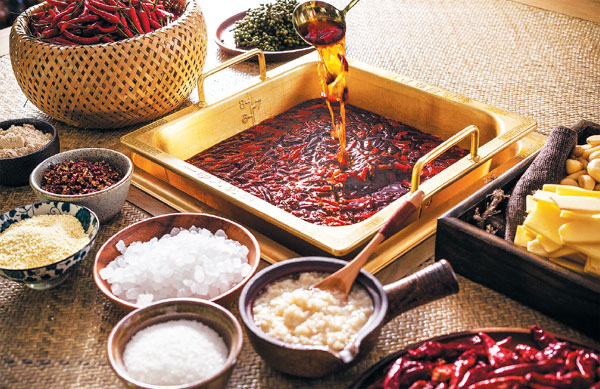
The scientists also found that the participants who consumed hot red peppers benefited from a 13 percent reduction in risk of death.
"Of course," says spicy-food fan Jacob Steiner, a German expat in Beijing who lunches regularly at Q-Mex restaurant. "That's why I've been eating habanero chicken, with one of the hottest peppers that can be found in the world's supermarkets."
His girlfriend, a medical student who had joined him for the meal, jokes that he looks as pale as he did before lunch and now she doesn't want to get a burning sensation by kissing him.
Spicy foods are popular in many parts of China and sales of hot sauces and spicy rubs are growing in the United States and elsewhere.
Chicago celebrity chef Rick Bayless told CBS News that he's always cooked with spicy ingredients because "it makes me feel good".
Bayless notes that when his 28-year-old restaurant first opened, people would ask which was the spiciest dish on the menu so they could avoid it.
"Now people ask 'What is the spiciest dish on the menu?' because that's our best-seller," he says with a smile.
Some scientists have cautioned that some research may invite confusion about cause and effect.
Fang Yu, director of dietetics at the Peking University Cancer Hospital, told China Daily in 2015 that general well-being may play an important role in dietary choice.
"It's possible that some people eat more spicy food because they are inherently healthier than those who do not, especially in terms of their digestive systems," he said.
In fact, neither the US nor the China study determined what might cause the "positive association" between chili peppers and life expectancy. Researchers note that capsaicin - the principal component in chili peppers - is believed to play a role in cellular and molecular mechanisms that prevent obesity and modulate coronary blood flow. The latest study also notes that hot red peppers have antimicrobial properties that "may indirectly affect the host by altering the gut microbiota."
"Spicy food is extremely popular in China. That prompted us to conduct the study," says Lu Qi, the author of the earlier study, in an email exchange with China Daily in 2015.
Lu and his team studied 487,375 participants aged from 30 to 79 enrolled in the China Kadoorie Biobank from 2004 to 2008. Each person filled out a questionnaire that asked about overall health, physical measurements, and eating habits pertaining to spicy food, red meat, vegetable and alcohol intake.
The researchers followed up about seven years later, taking into account factors such as age, marital status, education level and physical activity and excluding those with a history of cancer, heart disease and stroke.
An analysis of the data showed that people who ate spicy foods at least once or twice a week had a 10 percent reduced risk of death compared to those who consumed spicy foods less than once a week. Those who ate spicy foods almost every day had a 14 percent lower risk of death.
Lu, an associate professor of medicine at Harvard Medical School, says that doesn't mean everyone should pile on the spices at dinner time to improve their health and increase their longevity.
"For those who are affected by digestive disorders such as a stomach ulcer, I would be cautious about eating spicy foods," Lu told CBS News recently.
In fact, a number of research projects have identified a correlation between spicy food and certain diseases. Research published in 1994 indicated that frequently eating spicy food may increase the risk of contracting stomach cancer, while research conducted in 2006 suggested that regular ingestion of capsaicin may accelerate the migration of breast cancer cells to other parts of the body.
Generally, however, the indications are positive.
"Chili pepper - or even spicy food - consumption may become a dietary recommendation and/or fuel further research in the form of clinical trials," says Mustafa Chopan, coauthor of the most recent study.
Contact the writer at michaelpeters@chinadaily.com.cn
Shan Juan and Cheng Yingqi contributed to this article.




Copyright 1995 - . All rights reserved. The content (including but not limited to text, photo, multimedia information, etc) published in this site belongs to China Daily Information Co (CDIC). Without written authorization from CDIC, such content shall not be republished or used in any form. Note: Browsers with 1024*768 or higher resolution are suggested for this site.
License for publishing multimedia online 0108263 Registration Number: 130349